Alpha, Beta and Gamma Radiation Compared
Compare alpha and beta particles with gamma photons, including charge, penetration, sources, and basic safety concepts.
Alpha, Beta and Gamma Radiation Compared
SCIENCE EXPLAINED • US ENGLISH • EDITORIAL SNAPSHOT: NOVEMBER 1, 2026
Alpha, beta, and gamma radiation differ in what is emitted, how it carries energy, and how it interacts with matter. Alpha radiation consists of helium nuclei, beta radiation consists of high-speed electrons or positrons, and gamma radiation consists of high-energy photons. All can be ionizing, but their behavior is different enough that one universal statement about 'radiation penetration' is misleading.
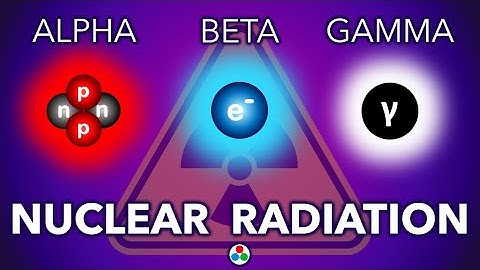
Alpha radiation: heavy charged particles
An alpha particle has two protons and two neutrons, with a charge of +2 in units of the elementary charge. Because of its mass and charge, it tends to deposit energy over a short distance in matter. Even a sheet of paper or the outer dead layer of skin can stop many alpha particles from an external source.
The caveat is crucial: alpha-emitting substances can be dangerous if inhaled, swallowed, or introduced through a wound. 'Easily stopped outside the body' is not equivalent to 'harmless.' Exposure depends on where the emitting material is and what tissues receive energy.
Beta radiation: light charged particles
Beta-minus radiation involves electrons; beta-plus radiation involves positrons. These particles are much less massive than alpha particles and can travel farther through some materials. Their interactions can cause ionization and, when high-energy electrons are slowed down, secondary X-ray radiation called bremsstrahlung.
The most appropriate engineering controls depend on particle energy and source geometry. Materials used for beta shielding are not chosen solely by thickness, because secondary radiation can matter. A casual internet guide should not substitute for a qualified radiation-protection assessment.
Gamma radiation: neutral photons
Gamma rays are electromagnetic photons without rest mass or electric charge. They do not behave like charged alpha or beta particles. In many contexts, gamma rays can penetrate much farther through materials, and the intensity decreases with appropriate shielding rather than stopping at a simple fixed thickness.
The effectiveness of a barrier depends on photon energy, material composition, thickness, and geometry. Lead and concrete are familiar examples of attenuation materials, but they are not magic all-purpose barriers. Medical and industrial systems are designed using calibrated dosimetry and formal controls.
Comparison at a glance
| Type | Physical form | Charge | Introductory behavior |
| Alpha | Helium-4 nucleus | +2 | Short range; major internal hazard |
| Beta | Electron or positron | −1 / +1 | Moderate penetration; may produce X-rays |
| Gamma | High-energy photon | 0 | High penetration; attenuated by shielding |
Nature: alpha = helium nucleus; beta = electron or positron; gamma = photon. Electric charge: alpha +2; beta −1 or +1; gamma 0. Typical stopping behavior: alpha often stopped by paper or superficial skin, beta by a suitably selected modest barrier, gamma generally requiring more substantial attenuation. These are introductory patterns; source energy and exposure route determine actual hazards.
Common confusion about decay
A parent nucleus undergoing alpha decay changes its proton and neutron counts. Beta decay changes the proton-neutron balance. Gamma emission often releases energy from an excited state without changing elemental identity. An unstable nucleus can emit more than one kind of radiation along a decay chain, so lists of emission types are not an exclusive classification of whole materials.
Why the comparison table has limits
Tables are valuable for remembering particle charge and broad penetration patterns, but safety decisions depend on far more than a label. A sealed external source, a contaminated surface, and material inhaled into the lungs create different exposure situations. The chemical identity of the source and radiation energy also matter. Students should use the table to understand physics—not to design a shield for an unknown radioactive source.
Frequently asked questions
Which is the most penetrating? Gamma photons are commonly the most penetrating of these three in introductory comparisons, but exact behavior depends on energy and material.
Is beta radiation always an electron? Beta-minus is an electron; beta-plus is a positron.
Which is most dangerous? There is no single answer without exposure route, energy, activity, duration, and dose information.
Explore related science topics
For a closer look at connected concepts, read radioactive decay explained, and gamma-ray fundamentals.