Bruins vs Avalanche: 2026-27 NHL Matchup Guide
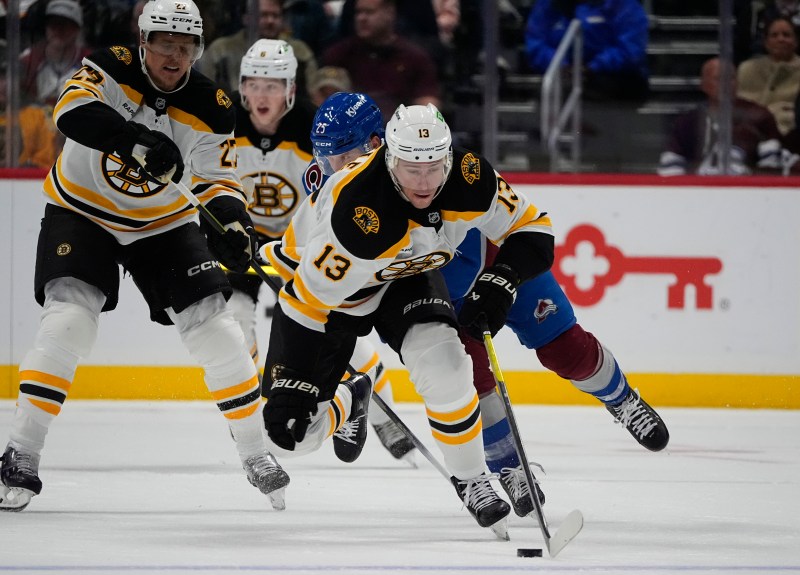
Bruins vs Avalanche for the 2026-27 NHL season: schedule context, key storylines and results only when confirmed by official game reports.
Bruins vs Avalanche: 2026-27 NHL Matchup Guide
Updated November 1, 2026 | NHL 2026–27 regular season
Boston Bruins and Colorado Avalanche have 2 listed 2026–27 regular-season meetings: December 1, 2026, January 20, 2027. This guide keeps the schedule, venues, available confirmed results and questions about the matchup in one place. Reverse-order searches use the same page; they are not a second set of fixtures.
The next meeting on the verified schedule is December 1, 2026. Rather than treating a future lineup or television listing as settled, the discussion below focuses on what the clubs must accomplish on the ice. Confirm start times, scratches and broadcasts on game day.
Full 2026–27 season-series schedule
| Date | Away team | Home team and arena | Status / score |
| December 1, 2026 | Colorado Avalanche | Boston Bruins — TD Garden | Scheduled — not yet played |
| January 20, 2027 | Boston Bruins | Colorado Avalanche — Ball Arena | Scheduled — not yet played |
For the next scheduled game, Colorado Avalanche visit Boston Bruins at TD Garden. The home-ice setting matters because the home club has the final change at stoppages, allowing it to seek preferred line matchups. That advantage is tactical rather than a prediction of the winner.
Why this matchup has its own story
Boston faces the Colorado Avalanche as an interconference opponent, not a direct Atlantic Division rival. Road-trip scheduling and different time zones can matter to lineup planning, but neither gives a confirmed edge without game-specific evidence.
Colorado's speed changes how aggressively a defenseman can challenge at the offensive blue line. The supporting forward can either rescue an aggressive pinch or leave the middle lane exposed.
Colorado challenges defensive spacing through quick shifts of direction in transition. The first defender wants to hold the blue line, but the supporting forward must prevent a pass into the middle before an Avalanche rush gains speed.
Playing in Denver introduces altitude and travel considerations, although their effect on a particular score should not be asserted without evidence. What viewers can actually observe is whether shifts shorten and puck decisions change late.
For Boston, the October 2026 team reports featured David Pastrnak and Charlie McAvoy in prominent roles. Their presence in a later lineup should not be assumed from that snapshot. The hockey question is how well the Bruins' passing options survive pressure on the first breakout.
Three hockey details to monitor
First, evaluate blue-line entry decisions during Boston Bruins vs. Colorado Avalanche. A controlled carry needs a supporting pass, while a dump-in needs an organized puck chase. Neither option is automatically superior. The measure of success is whether the attacking team establishes a useful second play.
Second, examine the penalty-kill and power-play entries for Boston Bruins and Colorado Avalanche. A shot from the point is not automatically dangerous, and a blocked attempt does not finish the defensive job unless the short-handed group clears the puck. Compare chances around the crease with safe attempts from outside the circles.
Third, track goaltender workload and rebounds without ranking goalies solely by save percentage from one game. A goalie facing unscreened long-range shots has a different assignment from one confronting repeated passes across the slot. Goaltending performance belongs alongside the shot locations, traffic and possession sequence.
Results, scoring and how to read the numbers
A final score summarizes the outcome but cannot, by itself, explain Boston Bruins vs. Colorado Avalanche. Read the period breakdown, even-strength chances, turnovers and the location of shots. A club can spend more time attacking yet concede the better opportunities if its defenders lose coverage after a turnover. Conversely, a few goals in a short stretch do not prove sustained control for the full 60 minutes.
If a contest reaches overtime or a shootout, use the official result classification. A shootout-deciding goal should not be entered as a regulation player goal. This distinction matters when a season series is updated across several different dates, particularly for readers comparing individual goal totals.
How to follow the correct game
Use the dated NHL schedule and game center for Boston Bruins vs. Colorado Avalanche to reconfirm the local start time, broadcasts, scratches and final score. Times can differ between Boston, Chicago and Western venues; do not copy a puck-drop time from a different meeting. Official national and regional availability can also change during the season.
This season-series page owns both directions of the team-name search. A separate player-statistics page is justified only when it serves a genuinely different need and includes verified data beyond the same table, preview and FAQ. Publishing two near-identical reverse-order matchup guides risks confusing search engines and readers.
Frequently asked questions
When are Boston Bruins and Colorado Avalanche scheduled to play?
The 2026–27 dates in the teams' official schedules are December 1, 2026, January 20, 2027. Changes should be checked against updated league listings.
Where do Boston Bruins and Colorado Avalanche play these games?
December 1, 2026 at TD Garden in Boston Bruins's home market; January 20, 2027 at Ball Arena in Colorado Avalanche's home market.
Who won the most recent Boston Bruins–Colorado Avalanche meeting?
No completed final score for this specific 2026–27 pairing is independently verified in this draft. Check the final NHL gamebook rather than relying on a live-score snapshot.
Related NHL matchup guides
Blackhawks vs Bruins: 2026-27 Season Games and Results
Bruins vs Blue Jackets: 2026-27 NHL Matchup Guide
Editorial snapshot: November 1, 2026. Update completed-game results and future broadcast details before publishing.