Can Cats Eat Apples? Flesh, Seeds and Portion Concerns
Can Cats Eat Apples? Flesh, Seeds and Portion Concerns: remove seeds/core. Read the guide.
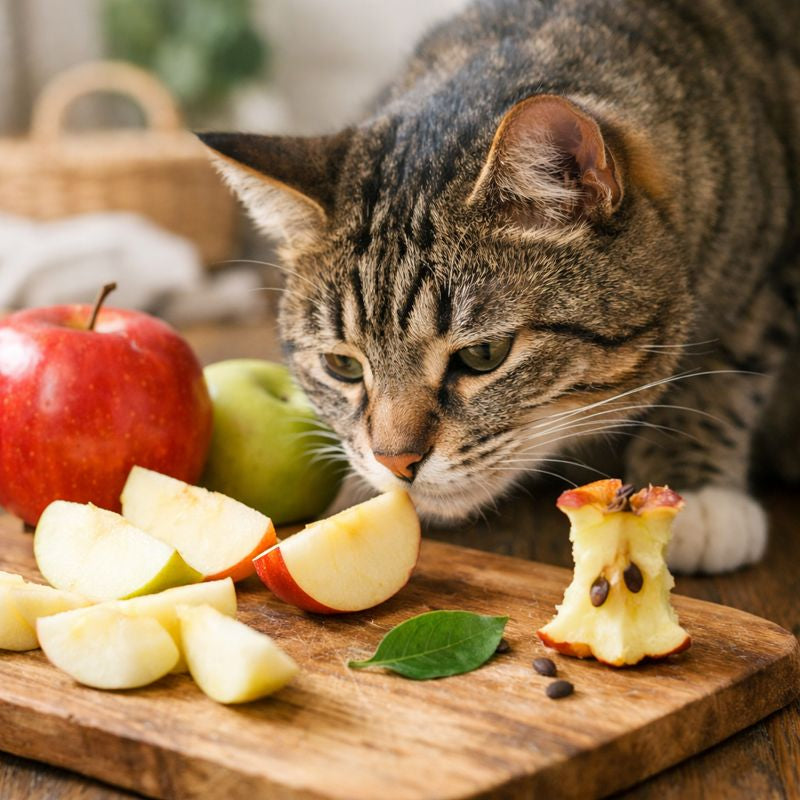
Can Cats Eat Apples? Flesh, Seeds and Portion Concerns
A small plain piece of apple flesh is generally a low-priority treat for cats, which have no nutritional need for fruit.
What this food means for cats
Remove seeds, core, stem and thick choking-size pieces. Avoid sweetened pies, sauces and products with unsafe added ingredients.
Cats are obligate carnivores and are not miniature humans in how they use carbohydrates and nutrients. The question is usually whether a small exposure poses a problem, not whether a fruit, herb or snack should become part of the regular diet. The ingredients and concentration are decisive.
Ingredient forms and mixtures
Examine preparation and added substances before offering anything. Desserts, sauces, extracts, essential oils and sugar-free foods can create different risks from a plain ingredient. Do not assume the harmlessness of a plant's culinary leaf automatically applies to its concentrated oil or another plant part.
Keeping meals balanced
A complete and balanced cat food is designed to supply the animal's essential nutrients. Treats should remain occasional and small enough not to displace meals. Sudden changes are particularly unhelpful when a cat has food intolerance, inflammatory bowel concerns or a medical diet.
If your cat ate some
If the cat has consumed an unknown quantity, note the time, estimated amount, form and other ingredients. Keep packaging and contact the veterinarian for suspected toxins or concentrated substances. Never force oral liquids, home antidotes or vomiting in a cat without professional instruction.
Health warning signs
Digestive upset, drooling, repeated vomiting, unusual breathing, weakness or refusal to eat may require assessment. Cats often conceal discomfort, so a rapid behavior change can matter even without dramatic visible signs. Urgent concerns should not wait for an internet reassurance based on a different form of the ingredient.
Do not infer that because the flesh is tolerated, the entire apple or dessert is safe.
Better feeding routines
For everyday feeding, keep curious cats away from food preparation scraps and store strong fragrances, medicines and concentrates securely. Choose treats meant for cats and confirm the feeding plan if there is diabetes, kidney disease, obesity or a prescription diet.
Applying the advice in real life
The safest household routine is to feed the cat first, then put human snacks away rather than waiting for begging. A cat that steals food is not necessarily missing nutrients; scent, curiosity and learned attention can drive the behavior. Use measured cat-safe rewards and avoid sharing foods whose full ingredients you cannot confirm.
If gastrointestinal signs follow a new ingredient, stop the experiment and record what was eaten and when. Persistent symptoms call for veterinary care, especially for kittens, older cats and animals already taking medication. Repeated 'just a little' tasting is not a useful way to establish safety or nutrition.
Frequently asked questions
Do cats need this food in their diet? No. Cats need a complete, species-appropriate diet, not human food or supplements.
What is the difference between a small taste and a hazardous exposure? The amount, product formulation, added ingredients and the cat’s health all matter. Concentrated oils and mixed foods deserve particular care.
When should an owner call a veterinarian? When the food may be toxic, the amount is uncertain or the cat develops any concerning symptoms.
Related guides
Can Cats Eat Honey? Nutrition and Safety Considerations
Can Cats Eat Pineapple? Fruit and Digestive Considerations
Can Cats Eat Peanut Butter? Ingredients and Safety
