Carbon Plate Running Shoes: How They Work and Who Needs Them
Carbon Plate Running Shoes: How They Work and Who Needs Them. Learn key fit, comfort, performance and buying considerations without unsupported performance
Carbon Plate Running Shoes: How They Work and Who Needs Them
Carbon plate running shoes are built for efficient road-racing motion, but the plate alone is not the reason a shoe may feel fast. Here is how to evaluate the whole shoe, its fit, and its practical trade-offs.
What carbon-plated running shoes actually do
Carbon plate running shoes are road-racing designs that combine a stiffening element, usually made from carbon fiber, with lightweight, resilient midsole foam and a shaped rocker. They are often called supershoes, but the plate is only one part of the system. The foam compresses and rebounds, the geometry influences how the foot rolls forward, and the plate alters how the forefoot bends. None of these features guarantees a faster finish for every runner.
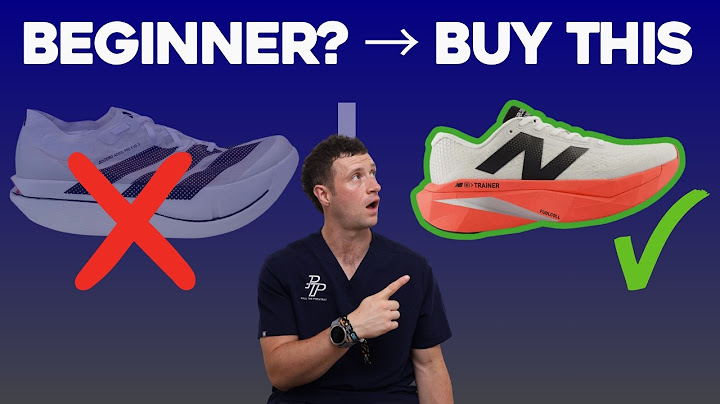
The most useful distinction is between a race-specific shoe designed to feel efficient at sustained faster paces and a comfortable daily trainer intended to tolerate frequent, varied sessions. A plated racer can be rewarding on a race day yet feel awkward during slow recovery miles or on uneven sidewalks. Try to match the intended use rather than treating a carbon plate as an automatic upgrade.
What research says about performance
A 2026 systematic review and meta-analysis of carbon-plated footwear reported average reductions in metabolic demand of roughly 2–3% in controlled running experiments. This is an average physiological result, not a promise of an equivalent percentage improvement in an individual runner’s race time. Many tested shoes also differed in foam, shape and weight, so researchers could not assign the entire effect to the plate alone.
For practical buying decisions, treat lab results as background evidence and fit testing as decisive. One runner may feel a smooth transition and stable toe-off, while another notices pressure beneath the arch or an unstable heel. Body mechanics, speed, fatigue, and terrain can all change the experience.
Who should consider a pair
A carbon-plated racer may suit runners with an upcoming road 5K, half marathon or marathon who already have a dependable training shoe and want a race-oriented option. It can also be useful for occasional workouts when testing the feel at relevant pace. Beginners do not need plated shoes to train effectively, and there is no requirement to replace a supportive, well-fitting trainer.
Choose a road racing shoe for road racing; slick or lightly rubberized racing outsoles are not a substitute for a trail shoe on technical ground. Check the outsole for grip in local weather, and avoid assuming all plated shoes behave alike.
Fit and sizing: test the entire foot
Compare the shoe against your usual running size, but do not rely on the printed size alone. Leave enough room at the toes to accommodate swelling during longer runs. Check that the heel stays secure on an incline and that the midfoot does not feel constricted when you lace the shoe for race pace.
If possible, test both a warm-up jog and a few short controlled accelerations. Rockered shoes sometimes feel normal at speed but restrictive when walking. Inspect potential rubbing at the Achilles, little toe, and instep before committing to a marathon.
Trade-offs and realistic expectations
Expect higher prices than many daily trainers, potentially shorter useful racing life depending on the foam and outsole, and a narrower range of comfortable use. A stiff or highly rockered platform can also feel unstable during sharp turns. There is not enough basis to claim that carbon plates always cause or prevent injury; personal comfort and sensible progression matter.
Break in the footwear with several short runs before a target event. Keep a backup shoe on race day, and do not debut an unfamiliar model in a long-distance race.
Buyer checklist
First identify your primary race distance and typical target pace. Next compare toe room, heel hold, midfoot support and forefoot flex sensation. Inspect traction, return policy and available sizes. Finally, choose the model that feels reliably comfortable over several sessions, rather than relying solely on a carbon-plate label or marketing percentage.
For a model-specific evaluation framework, see Adidas Adizero Adios Pro 4: /topic/adidas-adizero-adios-pro-4-review/. For an older-model purchasing checklist, see HOKA Carbon X 3: /topic/hoka-carbon-x-3/.
Frequently asked questions
Do carbon-plated running shoes make everyone faster?
No. Laboratory averages do not guarantee an individual race-time improvement. Fit, pacing, experience and comfort all matter.
Are carbon-plated shoes suitable for daily training?
Some runners can use them for selected workouts, but a comfortable daily trainer often makes more sense for routine easy mileage.
Can beginners use carbon plate shoes?
Yes, provided they fit well, but beginners do not need them to build fitness or complete a race.
How long do carbon-plated shoes last?
There is no universal mileage limit. Inspect cushioning response, outsole traction and wear, and follow model-specific guidance.
Editorial notes and source check
Research consulted: Metabolic effects of carbon-plated running shoes (systematic review, 2026), https://pmc.ncbi.nlm.nih.gov/articles/PMC12827780/
This guide is informational. No firsthand shoe testing or individually measured performance benefit is claimed. Verify current sizing, stock and product details before making a purchase.
