How Dirty Santa Works at a Holiday Party
Understand Dirty Santa rules, gift-stealing options, and how groups can choose fair house rules.
How Dirty Santa Works at a Holiday Party
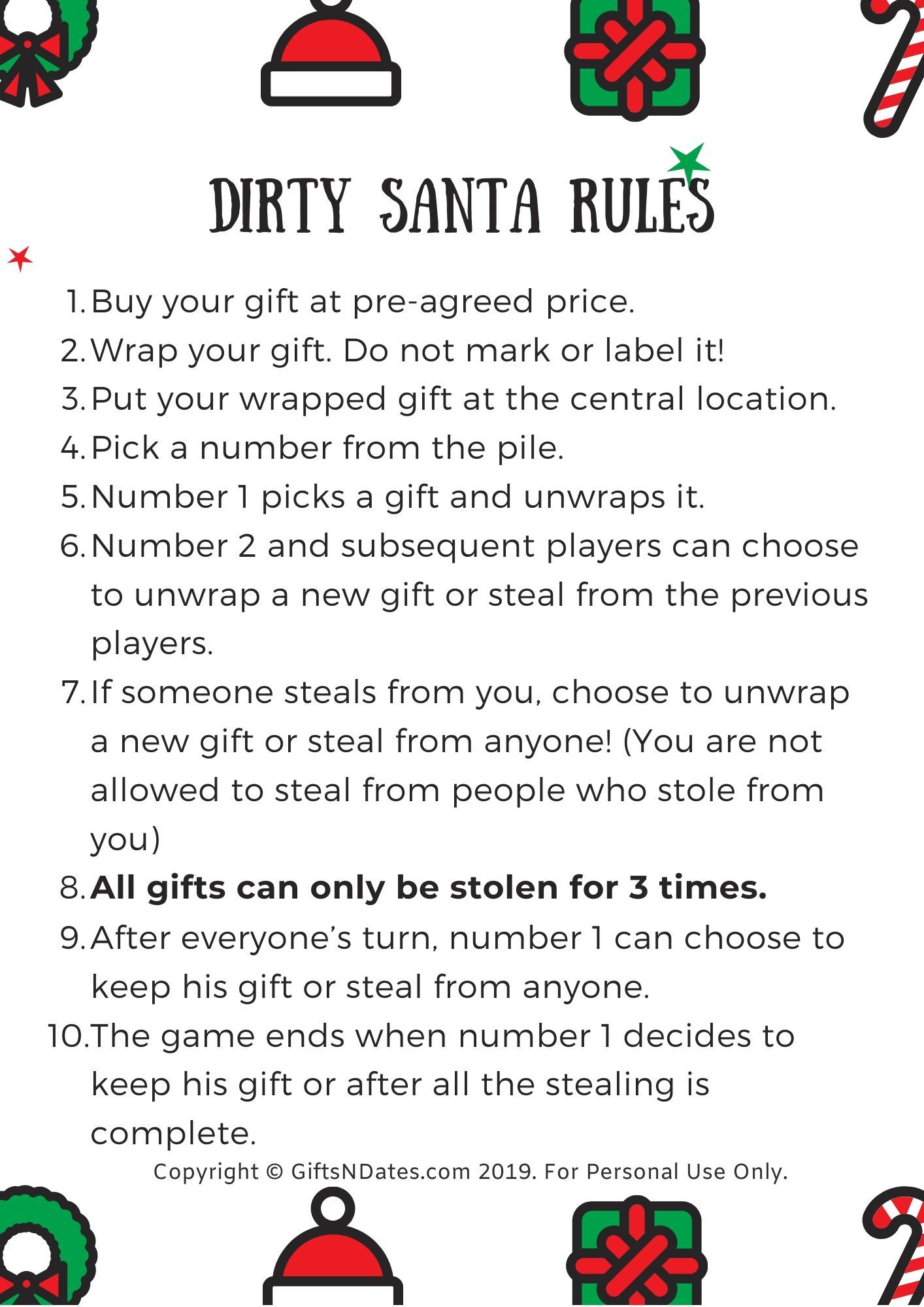
A gift exchange runs smoothly when everyone knows exactly what happens on their turn. This guide explains dirty santa rules in plain language, with clear choices for hosts and guests. Because households and regions use different versions, agree on the rules before anyone opens a gift.
Before guests arrive, decide the budget, whether gifts stay anonymous, and who makes the final call when a rule is unclear. A simple printed rule card prevents most confusion.
Setup and wrapped gifts
Guests contribute wrapped gifts to a shared pile, usually within a common price cap. Hosts should clarify whether “Dirty Santa” means a playful or competitive exchange to this group.
A quick invitation might say: bring one wrapped gift within the budget, choose something suitable for the entire group, and do not write your name on the wrapping.
Turn order
Numbers determine the opening sequence. Decide in advance whether a player may steal an exposed gift instead of opening a new one.
The first player usually opens a gift. For later turns, clarify whether the player can select an unopened gift or take one already in play.
Stealing options
If a gift is stolen, say exactly how the displaced player continues and whether immediate steal-backs are allowed. Ambiguity makes the middle rounds chaotic.
A practical rule is that the person who loses a gift chooses again immediately, but cannot immediately reclaim the same item. Announce any exceptions before playing.
Endgame variations
Some parties freeze a gift after a certain number of steals; others handle the final player differently. These are local variations rather than official rules.
A cap on steals can keep the game moving. Use a visible tally or ask the host to track each gift so participants are not arguing over counts.
Explaining rules to guests
Before the first draw, give a one-minute example and post the rules on a card. Guests should know how the exchange ends.
Explain what happens after the final number is called. Some groups stop there; others allow one last choice. Neither is mandatory unless the host adopts it.
A simple example sequence
Invite guests to bring one wrapped gift
Assign numbers visibly
Open the first package
Allow the next person to unwrap or steal as agreed
Mark a gift frozen when it reaches the house steal cap
Common questions
Are the rules the same at every party?
No. Hosts can set steal limits, turn order details, and final-swap options. Ask for the written house rules before play.
What should the host explain first?
State the gift budget, opening order, what happens after a steal, and exactly when the game ends. A practice round helps.
Explore related guides
Gift Exchange Ideas That Work for Different Groups