Current Time in the United States: Time Zones Explained
Check current local time, time zones, DST details and practical differences. Current Time in the United States: Time Zones Explained.
Current Time in the United States: Time Zones Explained
Quick answer
There is no single US clock: the contiguous states commonly use Eastern, Central, Mountain and Pacific Time, while Alaska, Hawaii and territories add additional zones.
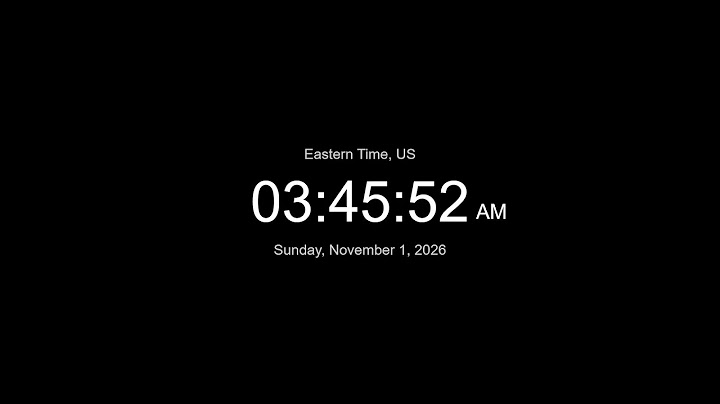
To read the hour in the United States accurately, select the city and its IANA time zone in a live clock. A date-aware clock accounts for seasonal changes where they apply. The dated examples below explain how the offsets work during different parts of 2026.
Which local time zone should you use?
Different cities and regions may or may not share the same clock. The table uses each city’s civil time zone, which is more reliable than assigning a whole country one fixed number.
| City or region | IANA time zone | Jan 15, 2026 | Jul 15, 2026 |
| New York (Eastern) | America/New_York | UTC−05:00 | UTC−04:00 |
| Chicago (Central) | America/Chicago | UTC−06:00 | UTC−05:00 |
| Denver (Mountain) | America/Denver | UTC−07:00 | UTC−06:00 |
| Los Angeles (Pacific) | America/Los_Angeles | UTC−08:00 | UTC−07:00 |
| Anchorage (Alaska) | America/Anchorage | UTC−09:00 | UTC−08:00 |
| Honolulu (Hawaii) | Pacific/Honolulu | UTC−10:00 | UTC−10:00 |
Worked time examples with an exact date
A single UTC instant translates to different local clock readings. Each example starts at 2:00 p.m. UTC on the date stated, making seasonal differences easy to compare.
New York (Eastern): January 15, 2026 → Thu Jan 15, 9:00 AM EST (UTC−05:00); July 15, 2026 → Wed Jul 15, 10:00 AM EDT (UTC−04:00).
Chicago (Central): January 15, 2026 → Thu Jan 15, 8:00 AM CST (UTC−06:00); July 15, 2026 → Wed Jul 15, 9:00 AM CDT (UTC−05:00).
Denver (Mountain): January 15, 2026 → Thu Jan 15, 7:00 AM MST (UTC−07:00); July 15, 2026 → Wed Jul 15, 8:00 AM MDT (UTC−06:00).
How it compares with New York
| New York reference | Time in New York (Eastern) |
| January 15, 2026 at 9:00 AM ET | January 15 at 9:00 AM (EST) |
| July 15, 2026 at 9:00 AM ET | July 15 at 9:00 AM (EDT) |
| November 15, 2026 at 9:00 AM ET | November 15 at 9:00 AM (EST) |
As these dated conversions show, a time difference can change during the year if the two places use different daylight-saving rules. A national event should show a time-zone abbreviation and preferably a UTC-based timestamp that each viewer can convert.
Useful scheduling checks
Arizona and Hawaii do not follow the same seasonal pattern as most of the mainland. “US time” is therefore not a precise appointment time.
For a meeting, flight, livestream or delivery in the United States, keep the city, local date and time-zone label together. A calendar invitation that includes the correct time-zone identifier can adjust for daylight saving automatically; a plain text message saying “3 PM” cannot.
US time-zone maps are useful for orientation, but the jurisdiction matters. Hawaii generally stays on HST year-round; most of Arizona stays on MST without DST; American Samoa and Puerto Rico have distinct territorial clocks.
A reliable way to read the current time
Choose a live clock configured to the correct IANA zone (for example, “America/New_York”), verify the displayed date as well as hour, and check whether the calendar event is fixed to a city or to your device’s time zone. A time-zone abbreviation without a date can be ambiguous around seasonal transitions.
Frequently asked questions
Do all places in the United States use the same time?
The locations listed in the zone table show the important local distinctions. Check a specific city if you are traveling across a regional boundary.
What UTC offset does the United States use?
It depends on the city and, where daylight saving is observed, the date. The dated January and July offsets above show the distinction for 2026.
Why is the local time different from New York?
UTC offsets and daylight-saving schedules control the difference. New York changes from EST to EDT, while the destination may follow another rule or remain fixed all year.
Related time guides
These related guides answer adjacent questions without repeating the focus of this page: