Electric Catfish: How Its Electric Organ Works and Where It Lives
African freshwater fish electric organ, hunting, defensive behavior.
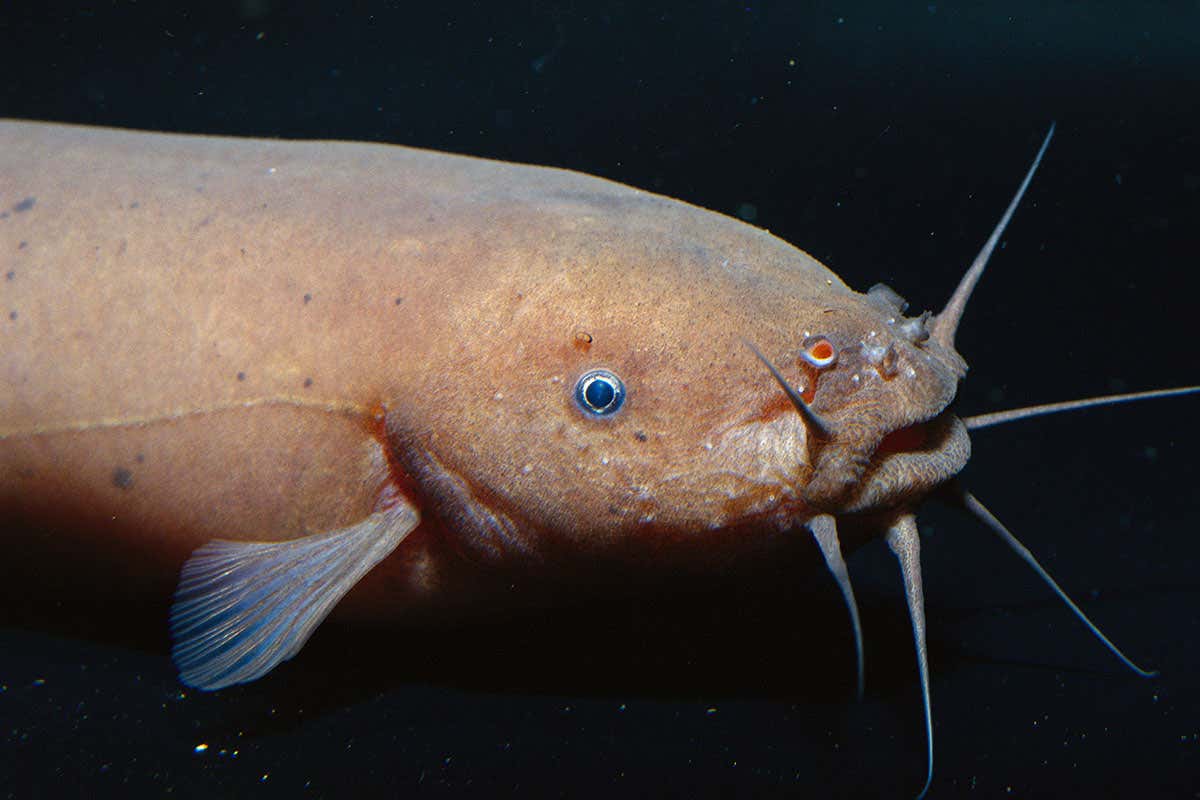
Electric Catfish: How Its Electric Organ Works and Where It Lives
Electric catfish belong to an African freshwater fish lineage known for an electric organ that can produce defensive and prey-related discharges. The important distinctions are its biological group, the habitat it uses and its place in aquatic food webs.
Classification and distinguishing features
Body structure is a reliable starting point, but common names often cross taxonomic boundaries. Separating true relatives from similar-looking organisms prevents mistakes in descriptions and image captions.
Water habitat and distribution
They inhabit African freshwater systems, with habitat varying among species. Murky or low-light conditions make nonvisual senses valuable.
Water conditions shift over seasons and depths. The same coastline can contain several distinct habitats only a short distance apart.
Feeding and the food web
They prey on other aquatic animals and use electric discharges as part of their biology. Their electric organ is not the same structure as an electric eel's.
Food-web diagrams are simplified models. Real diets vary and may include scavenging or changes between young and adult stages.
Life cycle and biological adaptations
Activity may be nocturnal or concentrated around cover. Different species vary in size and behavior, so one captive observation cannot define the family.
For many aquatic organisms, larvae or juveniles occupy different environments from adults, so survival depends on more than one place.
What is known—and what is not
Population estimates and threat statements require a specified species and location. Aquarium care, collection, fishing and wildlife laws are separate questions from basic identification.
Electric catfish and electric eels evolved electrical capabilities in different fish lineages. Comparing them can illuminate convergent evolution, but their organs and geographic distributions should not be merged.
Research and habitat context
Classification helps explain why similarly named animals may use very different structures and strategies. Avoid treating a local observation as a universal rule; many aquatic species are poorly surveyed across parts of their range.
Protect wild aquatic animals by observing without collecting them, disturbing their breeding grounds or moving them between ecosystems.
Quick takeaways
They inhabit African freshwater systems, with habitat varying among species.
They prey on other aquatic animals and use electric discharges as part of their biology.
Do not handle wild electric catfish or experiment with shocks.
Frequently asked questions
What is Electric Catfish?
Electric catfish belong to an African freshwater fish lineage known for an electric organ that can produce defensive and prey-related discharges.
Where is it found?
They inhabit African freshwater systems, with habitat varying among species.
What does it eat or how does it feed?
They prey on other aquatic animals and use electric discharges as part of their biology.
