Enceladus Moon: The Hidden Ocean and Its Icy Plumes
Saturn’s moon Enceladus hides a global ocean and jets water-rich plumes into space. Here is what scientists know—and what they do not.
Enceladus Moon: The Hidden Ocean and Its Icy Plumes
Enceladus is a small icy moon of Saturn with an extraordinary secret: evidence points to a global ocean beneath its frozen shell. Jets of water-rich material escape from fractures near the south pole. NASA's Cassini spacecraft sampled that material, giving scientists a way to investigate an ocean without drilling through kilometers of ice.
The clues beneath the ice
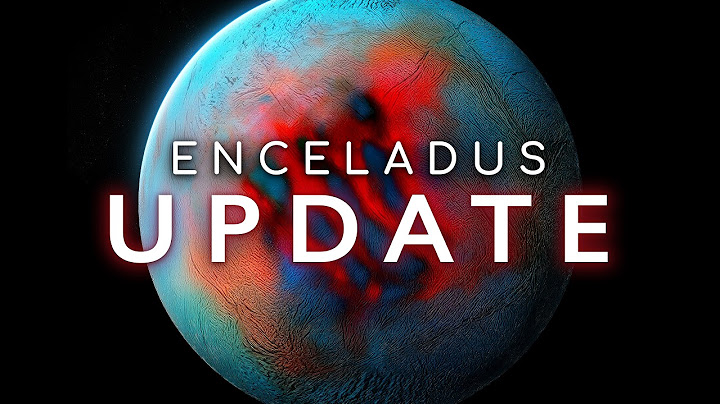
Enceladus looks bright because fresh water ice coats much of its surface. Yet its south polar terrain is geologically active. Long fractures nicknamed 'tiger stripes' cut through that region, and plumes rise from the surface into space. Cassini observed the jets and studied material passing through them. Together with measurements of the moon's gravity and slight rotational wobble, these data strongly support a liquid-water ocean beneath the shell rather than isolated small pockets of melted ice.
What the plumes contain
Plume measurements revealed water vapor, ice grains, salts, organic compounds and other chemical ingredients. Scientists have also reported evidence pointing to phosphorus and molecules relevant to ocean chemistry. Detecting organic molecules is not the same thing as detecting biology: many carbon-containing compounds form by nonliving processes. The plumes are valuable because they carry material from an environment that would otherwise be exceptionally hard to reach with spacecraft instruments.
Why the ocean may stay warm
Enceladus is too distant from the Sun for ordinary solar heating to keep a subsurface ocean liquid. Its orbit around Saturn exposes it to changing gravitational forces that can flex the moon and generate tidal heat. Cassini data also support hydrothermal activity where ocean water interacts with the rocky interior. Such reactions can release chemical energy. Those ingredients make the moon a strong target in habitability research, although scientists still have important questions about conditions at depth.
Habitability is not a life detection
A potentially habitable environment contains possible resources for life as we know it, such as liquid water, chemistry and energy. It does not prove any organism exists. Cassini was not built to identify microscopic life unambiguously, and a future mission would need carefully selected instruments, contamination controls and repeatable measurements. Comparing Enceladus with Europa, another ocean world, is useful, but each moon has its own geology and evidence record.
A sample from an inaccessible sea
The unusual advantage of Enceladus is that material from near its hidden ocean enters space naturally. A spacecraft can cross the plume and collect chemical evidence without first developing an ocean-drilling system. Even so, a plume sample may contain altered or mixed material, and the instruments used to analyze it have limitations. Researchers compare multiple species, concentrations and environmental models before inferring ocean conditions. A future life-search mission would need especially strict standards, because contamination and nonbiological chemistry can produce deceptively interesting signals. Ocean evidence is strong; the presence of any organism remains untested.
Key takeaway
Enceladus is exciting because the case for an ocean is based on several independent measurements. Claims of confirmed extraterrestrial life go beyond the evidence.
Frequently asked questions
Does Enceladus have an ocean?
Multiple spacecraft measurements support a global subsurface liquid-water ocean.
Has NASA found life on Enceladus?
No. Organic chemistry and possible habitability are not proof of living organisms.
Why are its plumes important?
They bring ocean-related material into space, where instruments can analyze it without drilling through the ice.