What JRPG Means and How the Genre Works
Learn what JRPG means, why the label is debated and how JRPGs differ from other kinds of role-playing games.
What JRPG Means and How the Genre Works
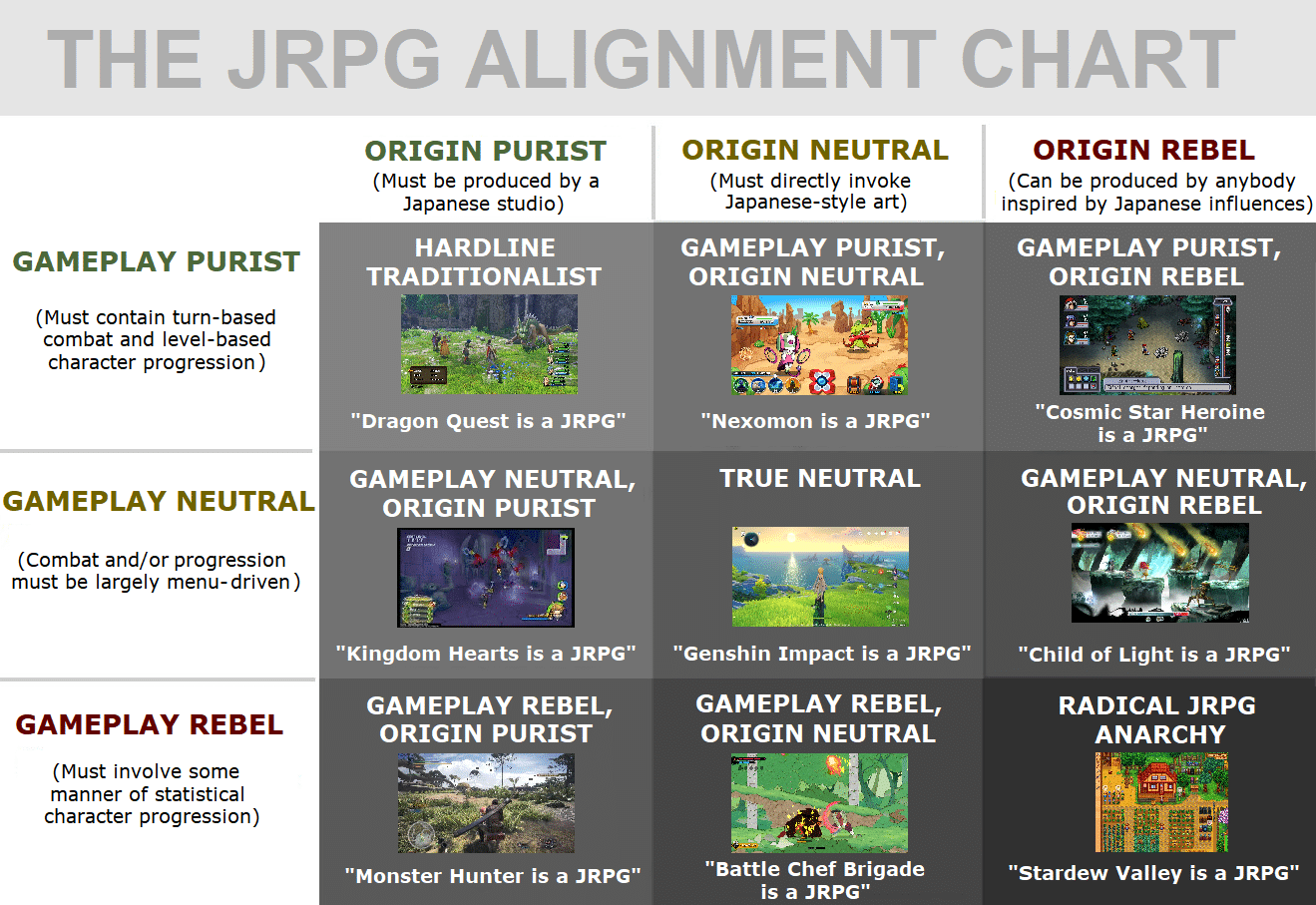
JRPG stands for Japanese role-playing game. In everyday gaming conversation, it can describe RPGs developed in Japan or games using design traditions associated with Japanese RPGs, such as character-focused stories, party progression, and stylized presentation. Those two definitions overlap, but they are not identical—and neither defines one rigid gameplay formula.
Typical patterns, not universal rules
Many JRPGs focus on a cast of recognizable characters, a central storyline, and abilities that develop over time. Some use turn-based combat, while others use action systems or hybrid approaches. A party may travel through a carefully authored route rather than exploring an enormous seamless map. These are tendencies, not mandatory ingredients.
JRPG versus Western RPG
Western RPG and JRPG are shorthand labels, not clean scientific categories. Skyrim emphasizes player-created identity and broad exploration; Persona 5 Royal emphasizes a defined protagonist and character relationships. But Baldur's Gate 3 has a fixed party-centered structure with tremendous player choice, and Japanese RPGs can feature open exploration or custom protagonists. It is better to compare design features than stereotypes about countries.
Does an RPG need to be turn-based?
No. Final Fantasy VII Remake uses a real-time/command hybrid, and several action RPGs from Japan prioritize direct combat. The genre label describes a lineage and set of expectations rather than one button layout. Before buying, check whether you control a single hero or a party, and whether decisions happen in real time.
A good first JRPG
For traditional turn-based fantasy, look at Dragon Quest XI S. For a social-story structure, consider Persona 5 Royal. For a shorter classic, consider Chrono Trigger. What matters is enjoying the story and progression loop—not proving that one title fits a strict definition of the term.
Why the label can cause arguments
A game made in Japan can deliberately borrow design traditions associated with Western computer RPGs, and a game made elsewhere can resemble classic console JRPGs. Geography, marketing, and mechanics are related but not interchangeable. When recommending a game, describe its actual combat, party structure, and narrative rather than using “JRPG” as if it settles every question. A precise description is more helpful to someone choosing what to play.
Related reading
For background and nearby questions, continue with best JRPG recommendations and original Devil Summoner: Soul Hackers.
Frequently asked questions
Does JRPG simply mean made in Japan?
That is one common usage, but players also use the term for a recognizable design tradition.
Can a JRPG have action combat?
Yes. Turn-based combat is common historically, not required.