Missouri vs Ole Miss 2026: Final Score and Game Highlights
Ole Miss beat Missouri 31–3 on October 17, 2026. Review the verified result, key stats and a factual game recap.
Missouri vs Ole Miss 2026: Final Score and Game Highlights
Ole Miss beat Missouri 31-3 on October 17, 2026, at Vaught-Hemingway Stadium in Oxford. The score was lopsided, but the more revealing number was on the ground: the Rebels rushed for 257 yards while limiting Missouri to 39. Three Trinidad Chambliss touchdown passes and a strong defensive outing turned the homecoming matchup into one of Ole Miss's clearest SEC wins of the season to that point.
At a glance
| Date | October 17, 2026 |
| Final | Ole Miss 31, Missouri 3 |
| Location | Oxford, Mississippi |
| Halftime | Ole Miss 21, Missouri 3 |
| Ole Miss rushing | 257 yards |
| Missouri rushing | 39 yards |
Missouri vs Ole Miss 2026: quarter-by-quarter result
Missouri opened its scoring with a first-quarter field goal and finished the game without another point. Ole Miss scored seven in the first, 14 in the second and ten in the fourth. The final breakdown—31-3—shows both the Rebels' offensive consistency and how effectively their defense kept the Tigers from converting yardage into points.
The homecoming setting added a distinctive occasion to the matchup, but it did not determine the game. The 21-3 halftime margin came from an Ole Miss offense that completed sustained scoring drives and a defense that prevented Missouri from finishing drives even when the Tigers moved the ball through the air.
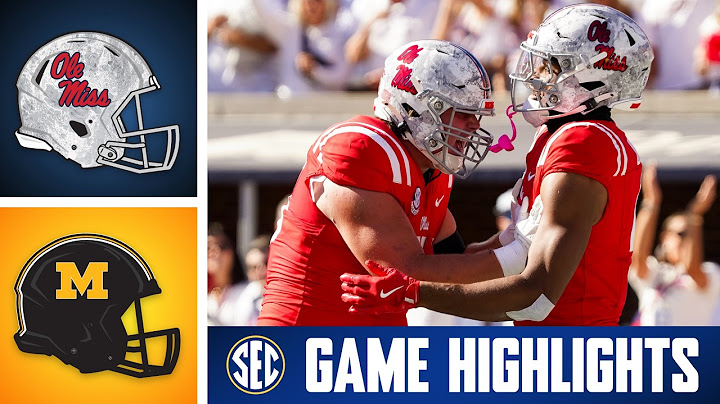
How Trinidad Chambliss and the passing game produced points
Chambliss completed 20 of 36 passes for 241 yards and three passing touchdowns. The touchdowns came through Caleb Odom, Horatio Fields and Caleb Cunningham, allowing Ole Miss to score with different targets rather than leaning on one matchup. Chambliss added a rushing touchdown later in the game, giving him four total scores.
Missouri did accumulate 339 passing yards behind Austin Simmons, but the stat did not translate into points. Comparing the two passing totals without the score and red-zone results would miss the defining feature of the contest: Ole Miss was far better at converting meaningful possessions into scoring plays.
The rushing mismatch at the center of the win
Kewan Lacy rushed for 122 yards on 16 carries and Makhi Frazier added 101 on 15. Two 100-yard rushing performances helped the Rebels total 257 rushing yards to Missouri's 39. The home team also finished with 498 total yards to Missouri's 378, according to the official game center.
That ground-game advantage mattered because it sustained Ole Miss drives and made the Missouri offense play with an increasing deficit. Rather than calling the outing 'balanced' without evidence, the box score shows exactly where the separation occurred. Missouri's own passing volume made its limited rushing success even more pronounced.
Defensive stops that kept Missouri out of the end zone
Ole Miss protected its lead even after Missouri recovered a fumble in the third quarter. The Tigers failed to turn the short-field opportunity into points. In the fourth, Ole Miss added a touchdown on a Chambliss run and a Lucas Carneiro field goal, while Missouri remained scoreless after the opening period.
The official school account also notes a late interception by Landon Barnes in the red zone. That play underlined a larger pattern: Missouri could move the ball at times but failed to finish. A three-point result is about defensive execution, not merely an opponent's lack of passing attempts.
The win in the middle of an eventful October
Ole Miss arrived at the Missouri game after a 52-17 road win at Vanderbilt, then followed the homecoming victory with a 34-27 loss at Texas the next Saturday. The three scorelines were very different, yet they offered a useful view of the Rebels' offense: explosive against Vanderbilt, forceful on the ground against Missouri and capable of a major comeback at Texas.
That sequence also explains why the 31-3 final stands out. The Missouri game combined more than 250 rushing yards with an almost complete denial of points to the opposing offense. Whatever happened in subsequent contests, the win in Oxford remains defined by the combination of ground production and timely defensive stops.
Two statistics that can be easy to misinterpret
Missouri's 339 passing yards might appear respectable in isolation, but they came in a game where the Tigers scored only three points. Ole Miss's defense allowed completed passes while consistently protecting its end zone. On the other side, the Rebels' rushing total of 257 was not one isolated long play: Lacy and Frazier both crossed 100 yards, which shows that the production came from multiple ball carriers.
That is why the comparison between 257 and 39 rushing yards is a stronger summary of the game than the passing-yard leaderboard. Ole Miss produced 27 first downs and converted nine of fourteen third downs, while Missouri managed 17 first downs and six of seventeen third downs. The gap in sustaining possessions offers a useful numerical explanation for the final 31-3 margin.
Frequently asked questions
What was the Missouri vs Ole Miss score in 2026?
Ole Miss won 31-3 on October 17, 2026.
How many rushing yards did Ole Miss have against Missouri?
Ole Miss rushed for 257 yards, compared with Missouri’s 39.
Who scored touchdowns for Ole Miss?
Trinidad Chambliss threw touchdown passes to Caleb Odom, Horatio Fields and Caleb Cunningham and scored once on the ground.