Parthenogenesis in Animals: How It Works and Species Examples
Unfertilized egg development, types, examples and limits.
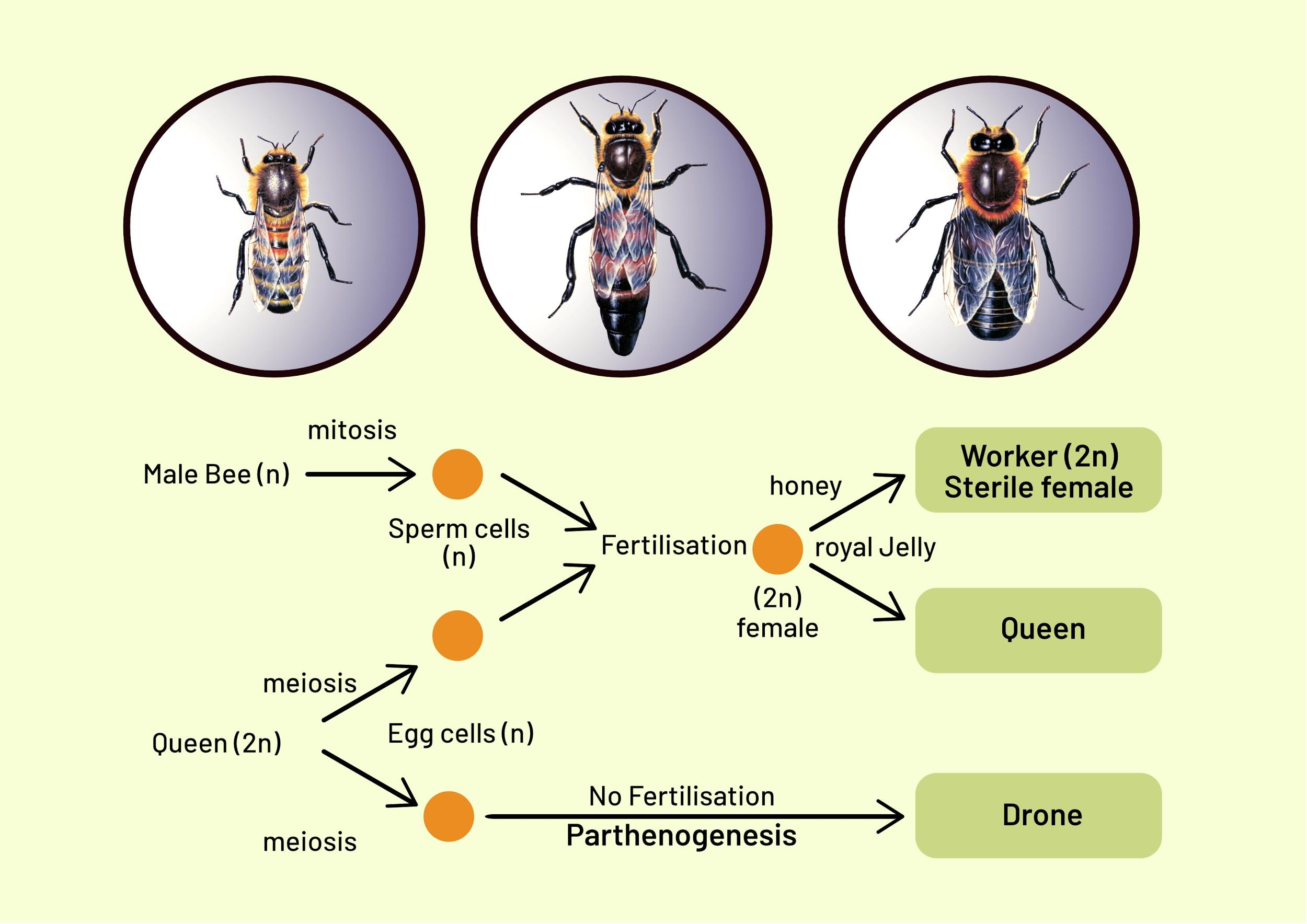
Parthenogenesis in Animals: How It Works and Species Examples
Parthenogenesis is development from an unfertilized egg. The key is a precise definition supported by examples that do not confuse related concepts.
Meaning and key distinctions
It occurs naturally in some invertebrates and vertebrates but is not the only form of asexual reproduction.
Definitions matter because everyday terms can cover different scientific mechanisms. Start with what is being classified, then ask what evidence would make one interpretation preferable to another.
Where the concept applies
The mechanism and frequency vary by lineage; examples include certain insects and lizards and occasional documented cases in other vertebrates.
Ecological processes can look different when researchers change the geographic or time scale being studied.
How it works in an ecosystem
Offspring arise without normal fertilization, but genetic outcomes differ among mechanisms. Some produce very similar offspring, while others restore diploidy through more complex processes.
Real ecosystems are networks with feedback loops. Changes in one part can alter several others.
Examples and changing conditions
Parthenogenesis can influence population growth and genetic diversity. Its ecological importance depends on the species' broader life cycle.
Mechanisms need to be distinguished from outcomes. Similar-looking outcomes can arise for different reasons.
Common misconceptions
It occurs naturally in some invertebrates and vertebrates but is not the only form of asexual reproduction.
A useful explanation distinguishes direct observation from interpretation. For classroom answers, clearly state the definitions being used rather than treating ambiguous classifications as universal truths.
Parthenogenesis should be distinguished from budding and fragmentation: its starting point is an egg. The definition is narrower than 'any reproduction without a mate' and wider than 'making an exact genetic clone.'
How to use the term accurately
A clear definition is the first step; a good example then shows where the boundary of that definition lies. Scientific terms are useful only when assumptions are stated and examples match those assumptions.
Mechanism note: parthenogenesis can involve different chromosomal processes; offspring are not necessarily exact clones.
When checking an example, name the organisms and conditions involved rather than relying only on a textbook diagram.
Quick takeaways
The mechanism and frequency vary by lineage; examples include certain insects and lizards and occasional documented cases in other vertebrates.
Offspring arise without normal fertilization, but genetic outcomes differ among mechanisms.
Do not claim that parthenogenesis always creates perfect clones or allows every female animal to reproduce alone.
Frequently asked questions
What is parthenogenesis?
Parthenogenesis is development from an unfertilized egg.
Where can the idea be applied?
The mechanism and frequency vary by lineage; examples include certain insects and lizards and occasional documented cases in other vertebrates.
What is an important limitation?
Do not claim that parthenogenesis always creates perfect clones or allows every female animal to reproduce alone.
