Purina Pro Plan Calming Care for Dogs: What to Know
Explain the BL999 probiotic supplement, official dog product format, time to assess benefits and limitations, without calling it a chew.
Purina Pro Plan Calming Care for Dogs: What to Know
Purina Pro Plan Veterinary Supplements Calming Care for dogs is not a calming chew. It is a canine probiotic supplement supplied in individual powder sachets. The manufacturer identifies the strain as Bifidobacterium longum BL999 and describes the product as support for calm behavior. If you are comparing Calming Care with soft chews, the first difference is the product category: a specific probiotic strain delivered daily versus a chew containing other supplement ingredients.
The quick facts: a sachet, not a tablet
Purina's dog product page lists one 1.0 g sachet containing 1 × 10^9 colony-forming units of Bifidobacterium longum BL999. Its directions describe daily administration according to the label or veterinarian. Purina also says it may take up to six weeks to see the full effect. These are manufacturer statements about this particular dog formula; they should not be generalized to every probiotic or interpreted as guaranteed treatment.
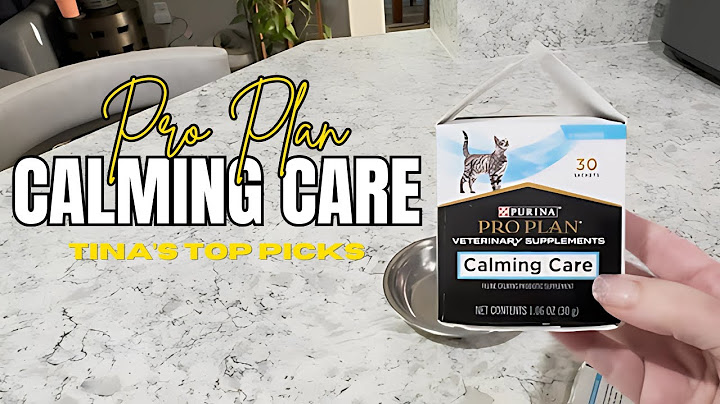
Purina sells a separate cat product in its Calming Care family. Do not substitute a cat listing, or a general FortiFlora product, for the dog formula simply because the company name is the same. Verify the species and exact product name on the box.
Facts versus interpretations
| Topic | What the manufacturer states | What it does not establish |
| Format | Powder in single-use sachets | Not a chew or an instant sedative |
| Strain | B. longum BL999 | Other probiotics are not interchangeable |
| Label count | 1 × 10^9 CFU per sachet | A bigger CFU count always works better |
| Routine | Daily use; benefits may take weeks | Immediate relief in a crisis |
| Intended role | Support for dogs showing anxious behaviors | Cure for diagnosed anxiety disorders |
A probiotic can be biologically interesting without being the right sole intervention for an individual dog. Research on a named strain should be evaluated in the context of the design, population, outcome measures and product used. Marketing claims—even when rooted in research—should not replace diagnosis and a treatment plan.
Why the strain matters more than the word “probiotic”
Probiotic effects are not automatically shared across species or strains. A label that names BL999 is more specific than one that says only “good bacteria.” Still, strain identification is just one part of evaluation. Ask whether the relevant research examined clinically meaningful behaviors in dogs, how long treatment lasted and whether the sample reflected dogs with your pet's actual problem.
A dog pacing during occasional household changes is not necessarily comparable with a dog in panic when left alone. Behavior logs can help distinguish improvement in ordinary adaptability from the kind of persistent fear that requires a qualified clinician. No product should be credited for every change in a dog's routine or mood.
What a daily-use routine involves
The manufacturer's dog label states one packet daily or as directed by a veterinarian. For publication safety, owners should use the package and professional advice rather than copied web directions if labeling changes. Ask how the powder should be served with the dog's normal diet and whether it fits any food sensitivities. Consistency matters if you intend to evaluate a multiweek product, but continuing when side effects appear is not appropriate.
Purina advises stopping and consulting a veterinarian if the animal's condition worsens or fails to improve; it also notes that safety in pregnant or breeding animals has not been established. This makes a pre-trial veterinary discussion especially important for dogs with medical or digestive conditions, unusual behavior changes or concurrent medications.
What should count as improvement?
Choose two or three observations before starting. For a dog with ordinary situational nervousness, you might log how quickly it settles after a visitor leaves, its willingness to use a familiar safe space, or the time needed to recover from minor noises. Use the same conditions where possible. Do not deliberately expose the dog to stressful events to create a test.
Keep records of veterinary changes, diet changes and training sessions as well. A product that is taken for weeks will overlap with other events; without a baseline, one successful afternoon can be mistaken for proof. Ask the veterinarian whether there is enough meaningful benefit to continue and what to do if progress is limited.
Where Calming Care fits in a bigger plan
A predictable environment, reward-based training and medical assessment remain central. For strong separation anxiety, storm phobia or fear-related aggression, a probiotic powder should not delay professional treatment. Merck Veterinary Manual describes behavior therapy, environmental management and, when clinically indicated, medication as parts of a comprehensive plan. That approach is not contradicted by considering a supplement as an adjunct.
Some owners prefer a sachet because it does not involve giving an extra chew. Others have dogs who resist powder mixed with food. Convenience and tolerability are valid considerations; they do not decide which intervention will be effective.
Related reading
For the wider ingredient landscape see Calming Supplements for Dogs. For a format comparison visit Dog Calming Products. If your search specifically concerns chewable treats, use Best Calming Treats for Dogs instead of treating this probiotic as a chew.
Frequently asked questions
Is Purina Calming Care a calming chew?
No. Purina's dog product is a probiotic powder delivered in individual sachets, not a chewable treat.
What is BL999?
It is the named Bifidobacterium longum strain identified by Purina in the dog Calming Care formula. Do not assume another probiotic contains the same strain.
How quickly should I expect a result?
Purina says the full effect may take up to six weeks. That is not a promise that every dog will respond; consult your veterinarian about an appropriate trial.
Can Calming Care replace behavior treatment for separation anxiety?
No. Serious distress needs veterinary evaluation and a tailored behavior plan, with medication considered when appropriate.
Is the dog formula the same as the cat formula?
No. Buy and follow the instructions for the species-specific product recommended for your pet.