Siamese Cat Personality — Vocal, Social and Curious
Siamese Cat Personality: breed tendencies versus individual cat behavior. Read the guide.
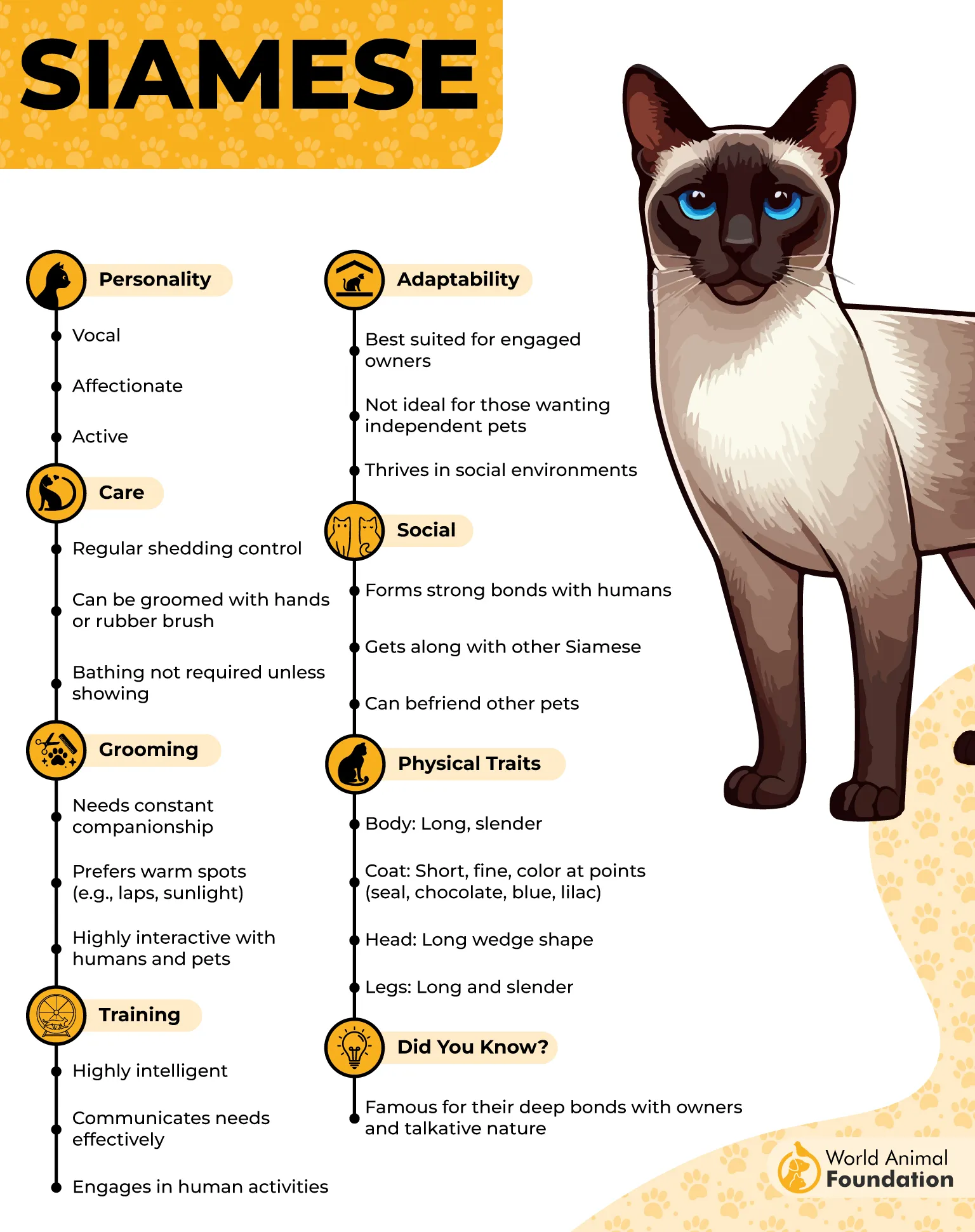
Siamese Cat Personality — Vocal, Social and Curious
Siamese cats are often vocal and interactive, but personality varies from cat to cat.
Appearance and ancestry
Daily play, climbing spaces and predictable attention can reduce frustration in active individuals. Early experiences and home environment matter as much as breed labels.
A coat, face shape or eye color helps describe a cat, but does not always establish its ancestry. Many mixed-breed cats display traits associated with pedigreed populations. Focus on health, observed behavior and suitability for the household before treating a photograph as proof of breed.
Health and ethical adoption
Ask where an animal came from, what screening has been done and how it responds to handling, play and novelty. Responsible breeding practices should reduce preventable suffering; a rare or dramatic physical feature can carry welfare tradeoffs. Rescue organizations may offer adult cats whose personalities are already better known.
Indoor enrichment
Indoor enrichment is essential across breeds: climbing routes, scratching posts, hiding places, puzzle feeding and regular interactive play. Grooming needs differ by coat, and dental and litter-box care remain important even for cats that appear low maintenance.
Temperament and social needs
Personality claims should be read as patterns rather than promises. Some cats are vocal or highly social, others prefer quiet predictable routines. Introduce new people and pets gradually, give retreat spaces and allow a cat to choose how much physical contact it wants.
Health concerns
Monitor changes in appetite, grooming, breathing, gait and jumping behavior. A cat in pain may become less playful or spend more time hiding without crying out. Discuss breed-associated conditions and any concerns about head shape or joint structure with a veterinarian.
Repeated or sudden vocalization also deserves a health and stress assessment.
Choosing a companion
The strongest adoption decision matches the individual cat to a realistic lifestyle. Consider grooming bills, regular vet visits, pet insurance or a savings reserve, and the time needed for calm introductions. Appearance should be the final filter, not the first.
Applying the advice in real life
When researching a particular look, compare it with welfare indicators: open nostrils, easy movement, normal grooming, relaxed interactions and the ability to exercise. A healthy cat should not have to struggle because a feature is fashionable. Ask the breeder or rescue to explain temperament and known health history without broad promises that every individual will act alike.
Build an indoor environment that allows choices—high and low resting places, more than one scratching surface, quiet retreats and opportunities to stalk toys. In multi-cat homes, distribute resources so cats are not forced to compete for access. This matters whether the animal has a pedigree or no documented breed at all.
Frequently asked questions
Does one guide apply to every individual? No. Species, age, genetics, environment and health history change what is appropriate.
What should an owner observe over time? Track appetite, movement, behavior, comfort and the conditions in which the animal lives.
When is professional help appropriate? When signs suggest pain, injury, serious illness or when the correct care requirements are uncertain.
Related guides
Flat-Faced Cat Breeds: Features, Health and Welfare
Scottish Fold Cats: Folded Ears and Important Health Issues
Blue-Eyed Cat Breeds: Genetics, Examples and Care
