Squirrel Monkey: Species, Diet, Habitat, and Behavior
Differences among Saimiri species.
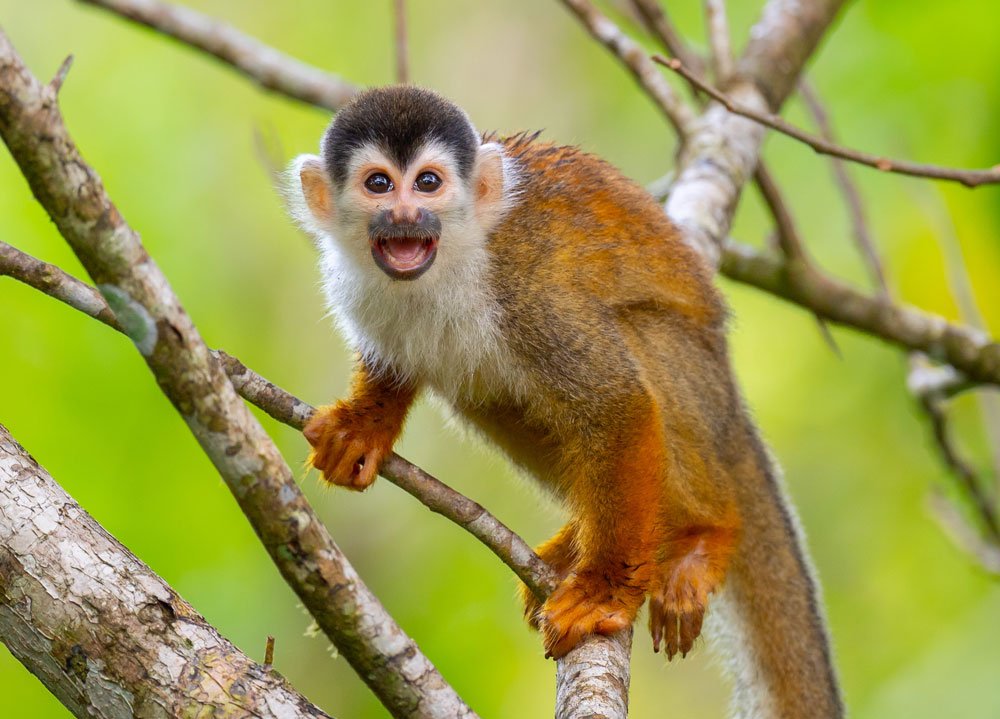
Squirrel Monkey: Species, Diet, Habitat, and Behavior
Squirrel monkeys are small, active New World primates rather than a single uniform species. This profile focuses on wild biology rather than pet ownership or livestock purchasing.
What makes it recognizable?
Their contrasting face pattern, long tail and rapid movement distinguish them from capuchins.
A field identification becomes stronger when body shape, geography and behavior agree. A single picture or a common name can be misleading, especially when young animals look different from adults.
Where does it live?
Different squirrel monkey species inhabit tropical forests of Central and South America. Understory, river-edge and canopy use depend on species and local habitat.
A habitat description should distinguish the animal’s full geographic distribution from the particular places it uses during feeding and breeding.
Diet and ecological role
They eat insects, other small animals and fruit; feeding can involve searching leaves and branches. Seasonal food supply affects travel and grouping.
The relationship between feeding and habitat is two-way: animals select foods, and their movement can influence vegetation and other wildlife.
Behavior and reproduction
Social groups may be large, but size and mating patterns vary among species. Their tails help balance; squirrel monkeys do not normally use them to grip like a prehensile hand.
Researchers distinguish typical social patterns from short observations. A group seen at one moment does not necessarily represent the species’ permanent social system.
Conservation and common misconceptions
Their contrasting face pattern, long tail and rapid movement distinguish them from capuchins.
Good conservation writing separates verified population trends from a list of possible pressures. Local land management can matter even when a species remains present across a wide geographical range.
A squirrel monkey should not be identified as a capuchin simply because both are small tropical primates. Check facial markings, body proportions, and whether a description refers to a particular Saimiri taxon.
How to read wildlife evidence
Look for multiple diagnostic traits before making an identification. Individuals may show differences caused by sex, age and local conditions. No current global threat status is asserted here without checking a current assessment. For editorial publication, confirm the exact species and assessment date.
Observe wild mammals from a safe distance and never treat a species profile as handling or pet-keeping advice.
Quick takeaways
Different squirrel monkey species inhabit tropical forests of Central and South America.
They eat insects, other small animals and fruit; feeding can involve searching leaves and branches.
Use species-level sources for precise body size, range and threat status.
Frequently asked questions
What is Squirrel Monkey?
Squirrel monkeys are small, active New World primates rather than a single uniform species.
Where is it found?
Different squirrel monkey species inhabit tropical forests of Central and South America.
What does it eat or how does it feed?
They eat insects, other small animals and fruit; feeding can involve searching leaves and branches.
