Theia Planet: The Giant Impact Theory of How Our Moon Formed
Was Theia real? Explore the leading giant-impact explanation for the Moon’s origin and the evidence scientists are still testing.
Theia Planet: The Giant Impact Theory of How Our Moon Formed
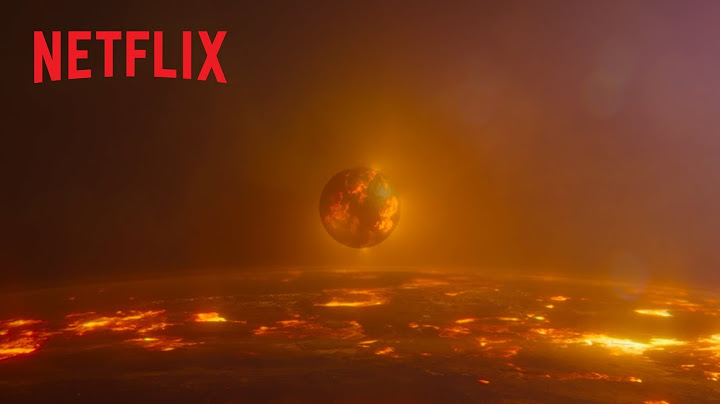
Theia is the name scientists often give to a hypothetical large body that collided with the young Earth billions of years ago. In the leading giant-impact family of models, debris from that event helped form the Moon. Theia is not a discovered planet with an observed orbit or a confirmed photograph; it is a reconstructed object used to test how the Earth–Moon system formed.
The basic giant-impact picture
Early in solar-system history, planetary embryos were still growing through collisions. One sufficiently large impact involving Earth could have thrown hot rock and vapor into orbit. Over time, orbiting debris could assemble into the Moon, while the remaining material became part of Earth. The often-cited timeframe is about 4.5 billion years ago. Different computer models produce different impact angles, speeds and amounts of mixing, so a single dramatic animation should not be mistaken for an exact replay of the event.
What evidence motivates the model
Moon rocks reveal important similarities between lunar material and Earth's outer layers, including isotope patterns. The Moon has relatively little metallic iron compared with Earth, and the system's angular momentum needs explanation. These constraints make a giant impact attractive, but also raise challenging questions about how thoroughly the two bodies mixed. A strong scientific model must account for multiple measurements at once rather than selecting one coincidence and ignoring competing data.
Why Theia's exact identity is uncertain
No specimen has been tagged 'Theia,' and scientists cannot directly observe a collision from the solar system's earliest days. Researchers test high-energy impacts, more glancing collisions and variations involving multiple impacts. They also investigate how material might remain within Earth's mantle or be thoroughly homogenized. Proposed links between present-day interior structures and an ancient impact are research ideas, not settled proof that recognizable pieces of a lost planet survive.
What the theory does—and does not—answer
The giant-impact approach explains a plausible pathway to a large Moon orbiting a rocky planet, but questions remain about its precise chronology, the distribution of volatiles and the Moon's subsequent evolution. Lunar samples, seismology and improved simulations continue to refine the story. This is distinct from claims that a 'missing planet' is hiding somewhere today; Theia is a hypothesized early building block consumed or transformed during the origin of the Earth–Moon system.
Why the Moon is such a demanding clue
Any lunar origin theory needs to explain why the Moon is so large relative to Earth, why its metallic core is small compared with Earth's and why measured isotopes in lunar rocks closely resemble terrestrial values. Computer models can create a moon from impact debris, but matching all three constraints is harder than producing an attractive animation. Researchers also ask how much material came from the impactor versus proto-Earth and how quickly a new Moon would have accumulated. This is why several giant-impact variants remain in discussion even though the basic collision scenario is widely used.
Key takeaway
The important distinction is between strong support for impact-based lunar formation and uncertainty about the exact impactor and sequence of events.
Frequently asked questions
Was Theia a real planet?
Theia is a hypothetical impactor inferred from models of lunar formation, not a directly observed planet.
Did Theia create the Moon?
A giant impact involving an early Earth and another body is a leading explanation, but details are debated.
Where is Theia now?
In the impact scenario, its material was mixed into Earth, ejected into lunar-forming debris or otherwise redistributed.