What to Consider Before a Crown Hair Transplant
Understand crown hair transplant consultations, including donor supply, coverage expectations, procedure risks, and alternatives.
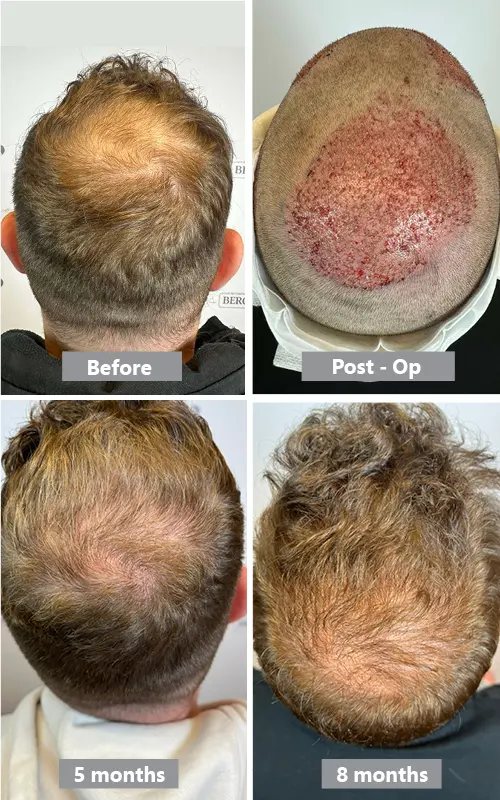
What to Consider Before a Crown Hair Transplant
Thinning at the crown—the top-back area of the scalp—can be especially frustrating because the change may be visible in overhead photographs before it is obvious in the mirror. A hair transplant may be an option for selected patients, but choosing surgery from a photograph alone is premature. A professional evaluation should identify the pattern and cause of hair loss and establish whether the remaining donor hair can support realistic coverage.
Confirm why the crown is thinning
A dermatologist can distinguish common pattern hair loss from conditions that need different treatment. A thinning crown does not necessarily mean the same process is occurring at the hairline. Rapid shedding, inflammation, and scarring are reasons to seek assessment before elective surgery. Documenting the pattern over time can help a specialist discuss stability and progression.
Who might be a candidate?
Transplant planning depends on age, health, hair-loss pattern, donor density, expectations, and whether ongoing loss is controlled. A surgeon should explain how many grafts might be available and what area they could reasonably cover. The goal is often improved visual density, not restoring the exact childhood hair count. No ethical provider can guarantee the same result for every patient.
Crown coverage has special challenges
Hair at the crown grows in a swirling pattern, which affects how transplanted hairs are positioned and how much coverage appears natural. The size of the area and surrounding hair density influence the appearance of results. Using too much donor hair in one area may limit future options if thinning progresses elsewhere. Ask the surgeon to show examples of crown cases with a similar starting pattern and hair type.
Consultation questions for a surgeon
Ask who will perform the crucial parts of the procedure, what technique is recommended and why, how donor resources will be preserved, what complications are possible, and what aftercare is required. Discuss potential scarring, infection, shock loss, uneven density, and the possibility of more treatment later. A written estimate should distinguish surgeon fees, follow-up care, and any planned medication.
Alternatives and realistic timing
Medical treatment, cosmetic fibers, hair styling, and waiting while monitoring progression may be appropriate in some cases. The American Academy of Dermatology emphasizes that treatment depends on the diagnosis and that surgery is not suitable for every pattern of hair loss. Start with a qualified hair-loss clinician, not a transplant sales pitch; our internal specialist guide provides a provider-selection checklist.
Quick decision checklist
Confirm diagnosis and progression
Discuss donor-hair limitations
Review written risks and realistic coverage
Frequently asked questions
Will a transplant completely restore crown density?
Results vary with donor resources, surgical planning, and progression of underlying loss; complete restoration cannot be guaranteed.
Can I skip a medical diagnosis and book a transplant?
A careful assessment should come first so the surgeon understands why the hair is thinning.