Types of Penguins: Species, Sizes, Habitats, and Differences
Penguin family variety from equatorial to Antarctic.
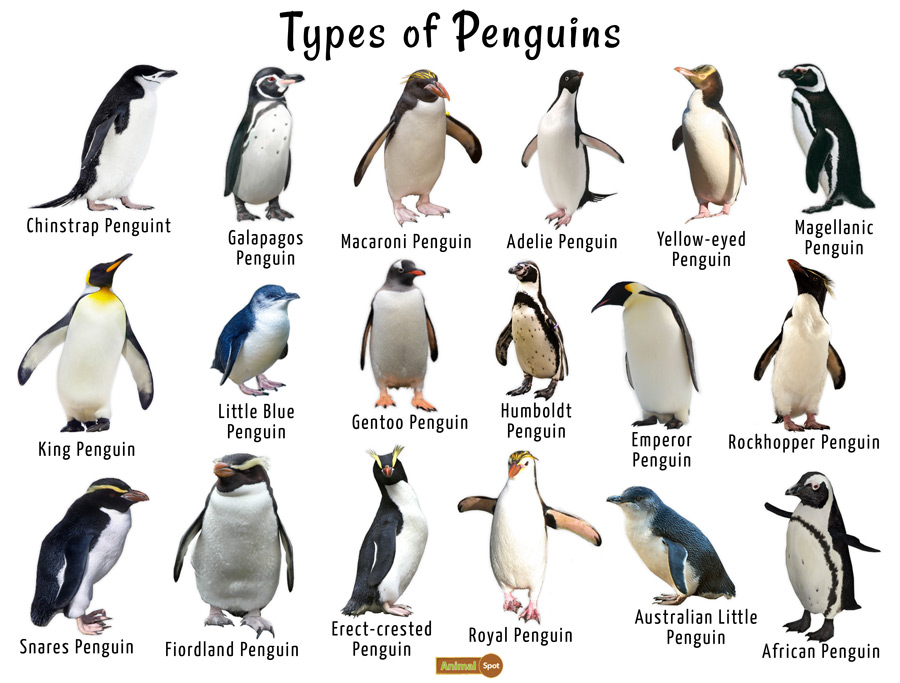
Types of Penguins: Species, Sizes, Habitats, and Differences
Penguins are flightless marine birds of the Southern Hemisphere, not one species with one typical size. Its identity and ecology become clearer when appearance, habitat and seasonal behavior are considered together.
Identification and classification
Their streamlined bodies and flipper-like wings suit underwater swimming.
For reliable bird identification, combine shape, plumage, calls, habitat and season. Molting, sex, age and lighting can change the appearance of the same species considerably.
Habitat, range and seasonality
Species occupy habitats from Antarctic coastlines to temperate islands and even equatorial regions. Cold weather is common but not a universal requirement.
Bird ranges often change between breeding and nonbreeding seasons, which is why an observation checklist should include date as well as location.
What it eats and why that matters
They feed on fish, krill or squid in proportions that vary by species and season. Ocean currents and breeding locations influence prey choice.
Food choice connects an individual bird to the broader habitat: insects, seeds, carrion or aquatic animals may be available only under particular conditions.
Breeding and behavior
Breeding strategies include burrows, rock nests and large exposed colonies. Incubation and parental care vary significantly among species.
Breeding behavior should be observed without approaching eggs, young or occupied nesting sites. Disturbance can make a useful observation harmful.
Risks, uncertainty and misconceptions
Their streamlined bodies and flipper-like wings suit underwater swimming.
When using conservation data, specify the region and the date of the assessment. A stable global classification may coexist with declines in particular nesting or wintering areas.
The emperor penguin and small temperate-zone penguins illustrate how varied this group is. Avoid using one Antarctic species as a model for every penguin's nesting style or temperature tolerance.
How to observe it responsibly
The most dependable field mark is rarely a single color. Shape, behavior and season provide the context needed to avoid look-alike mistakes. Taxonomy, migration patterns and conservation status can be revised. Source dates are especially important for these claims.
Use binoculars or distant observation where possible; do not disturb breeding birds or handle wild birds.
Quick takeaways
Species occupy habitats from Antarctic coastlines to temperate islands and even equatorial regions.
They feed on fish, krill or squid in proportions that vary by species and season.
A chart with an exact species count depends on taxonomy and date.
Frequently asked questions
How do penguin species differ?
Penguins are flightless marine birds of the Southern Hemisphere, not one species with one typical size.
Where is it found?
Species occupy habitats from Antarctic coastlines to temperate islands and even equatorial regions.
What does it eat or how does it feed?
They feed on fish, krill or squid in proportions that vary by species and season.
