What Does a Star Look Like Up Close? Surface, Plasma and Images
Stars are glowing plasma, not solid fireballs. See what scientists can actually image and what artist concepts get wrong.
What Does a Star Look Like Up Close? Surface, Plasma and Images
A star seen close up would not look like a five-pointed symbol or a solid glowing ball. The Sun—the only star whose visible surface we can examine in detail—shows roiling plasma, bright and dark mottled cells, sunspots and activity shaped by magnetic fields. Other stars are usually too far away for photographs to resolve comparable features across their disks.
The photosphere and granulation
A star is a massive body of hot plasma held together by gravity. The layer producing much of the visible light is called the photosphere, not a hard physical crust. High-resolution solar images reveal granules: brighter cells where hot plasma rises, surrounded by darker boundaries where material cools and sinks. Granulation changes rapidly and reflects convection below the visible layer. The scale and pattern depend on temperature, gravity and stellar type, so not every star would look exactly like the Sun.
What sunspots and magnetic activity reveal
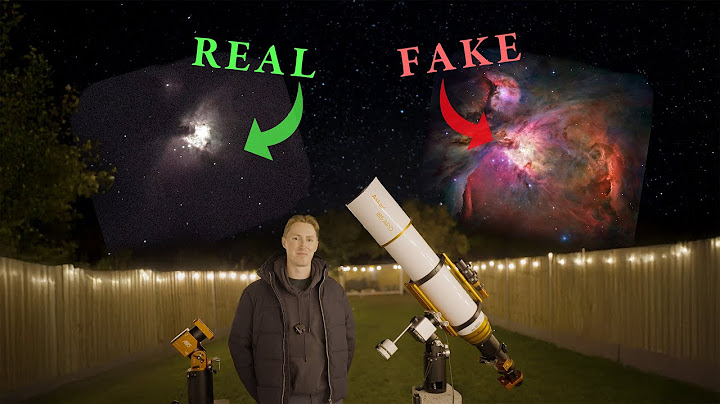
Sunspots are relatively cooler, darker-looking regions associated with concentrated magnetic fields. They are not holes in the star. Solar observations may also show bright magnetic structures, loops in hotter atmospheric layers and eruptions. Images of different phenomena use different wavelengths, each tracing a different physical region. A purple or green solar photograph may be a scientifically useful false-color representation rather than what an unprotected human eye would perceive.
Why distant stars look like points
Even large stars occupy tiny angles when viewed across light-years of distance. Atmospheric turbulence and optical resolution usually prevent a telescope from separating their disks into surface details. A few nearby giant stars have been imaged using special techniques, but those results do not resemble the detailed movies of the Sun. Popular close-up animations often combine observational constraints with computer models. A viewer should look for the instrument, wavelength and an 'artist's illustration' label.
A note about observing safely
Never look directly at the Sun through a telescope, binoculars or ordinary camera optics without equipment designed and fitted specifically for safe solar observation. Professional solar observatories use specialized filters and instruments to handle the Sun's intense radiation. The safest way to study detailed star images is through official processed mission imagery with clear captions, scales and wavelengths.
How scientists photograph the Sun without guessing
Solar spacecraft observe different wavelengths because separate layers and temperatures produce different forms of radiation. Visible-light images emphasize the photosphere and sunspots; ultraviolet and extreme-ultraviolet images reveal hotter plasma features. Their colors may be chosen to represent wavelengths people cannot see naturally. This is not arbitrary fabrication—it is a visualization of real measured intensity, with a specific instrument and color key. The most useful image caption identifies what wavelength was observed and whether the picture is a measured image, a model or an artist's concept. That lets readers enjoy spectacular visuals without misreading them as ordinary daylight photography.
Key takeaway
For the separate question of stars missing from astronaut photographs, camera exposure—not stellar appearance—is the primary issue.
Frequently asked questions
Does a star have a solid surface?
No. Its visible photosphere is a layer in hot plasma, not solid ground.
Why do stars twinkle as points?
Most are unresolved due to their distance; atmospheric turbulence makes their light flicker from Earth.
Are colorful solar images fake?
Not necessarily. Many are real measurements displayed with assigned colors for particular wavelengths.