Why Can’t You See Stars in Space Photos? Camera Exposure Explained
Stars are visible in space, but they often disappear from photos because of exposure settings and bright foregrounds.
Why Can’t You See Stars in Space Photos? Camera Exposure Explained
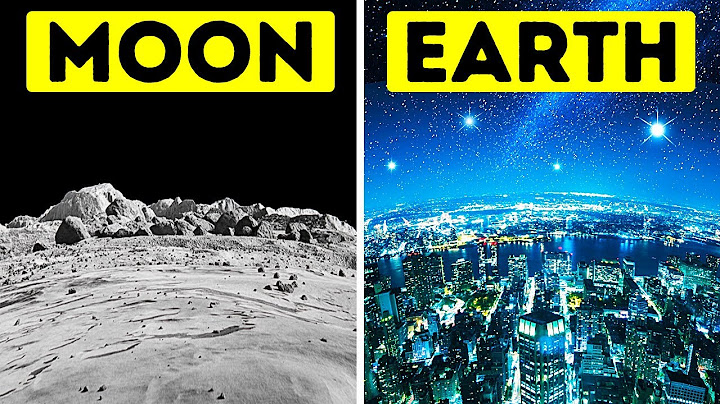
Astronauts can see stars in space, but many photographs taken in orbit or on the Moon show black skies without visible stars. The usual reason is camera exposure: the settings needed to record a bright spacecraft or sunlit lunar ground can make much dimmer stars disappear from the picture. That is a photography effect, not an absence of stars.
Why bright foregrounds change the exposure
A sunlit astronaut suit or lunar surface reflects strong sunlight, while individual stars deliver comparatively little light to a camera sensor. To preserve detail in the bright subject, photographers choose short exposures and settings that do not collect enough light for faint star points. The sky can therefore render black even when stars are physically present in the same direction. On Earth, a similar effect occurs when photographing someone under a streetlamp at night: the person appears clear while faint background stars vanish.
What happens with a longer exposure
A longer exposure or higher sensitivity can reveal stars, provided the camera is steady enough and the sensor is not saturated by bright foreground objects. But the sunlit subject may then turn into a washed-out patch. Modern cameras have wide but finite dynamic range, and every image involves choosing what to expose correctly. Some spacecraft pictures of stars are made with the camera deliberately aimed away from nearby bright surfaces and with settings optimized for the dim target.
Is the lack of air the explanation?
Earth's atmosphere can scatter sunlight and make daylight skies bright, while space lacks that same broad blue daylight glow. Yet a black background alone does not guarantee that a camera will detect stars. The brightness difference and exposure settings are the decisive factors in many iconic space photographs. Astronauts viewing through a window under dark-adapted conditions and cameras photographing brightly lit equipment are not conducting the same observation.
How to check a misleading photo claim
Consider the subject, illumination, shutter speed and whether the image is a single exposure or a composite. A science camera photographing a dim nebula and a news camera recording an EVA have very different purposes. Photos with visible stars and photos without them can both be authentic. Claims that missing stars prove a staged mission ignore basic constraints of capturing light from extremely bright and extremely faint objects in one frame.
Try the camera-exposure thought experiment
Photograph a bright object against a dark night sky using settings that preserve the object's details. Then lengthen the exposure enough to reveal faint stars. The trade-off becomes obvious: the foreground becomes overexposed or blurred while the stars emerge. Space cameras face the same contrast constraint even without a blue terrestrial sky. A photograph is a record of the light collected under chosen settings, not a perfect recreation of everything a human observer might see after their eyes adapt to darkness. That is why images with no stars are not inherently suspicious.
Key takeaway
The key is not where the camera was, but what it was trying to expose correctly.
Frequently asked questions
Can astronauts see stars?
Yes, under suitable viewing conditions; star visibility differs from camera exposure.
Why are stars absent in many Moon photos?
Short exposures chosen for brightly sunlit subjects do not capture faint star light.
Does a black sky prove the photo is fake?
No. Black backgrounds without stars are normal in high-contrast space photography.