Arctic Char Fish: Where It Lives and How It Differs From Salmon
Arctic Char Fish. Interpret char fish as Arctic char; explain salmonid traits, cold-water habitat and migratory.
Arctic Char Fish: Where It Lives and How It Differs From Salmon
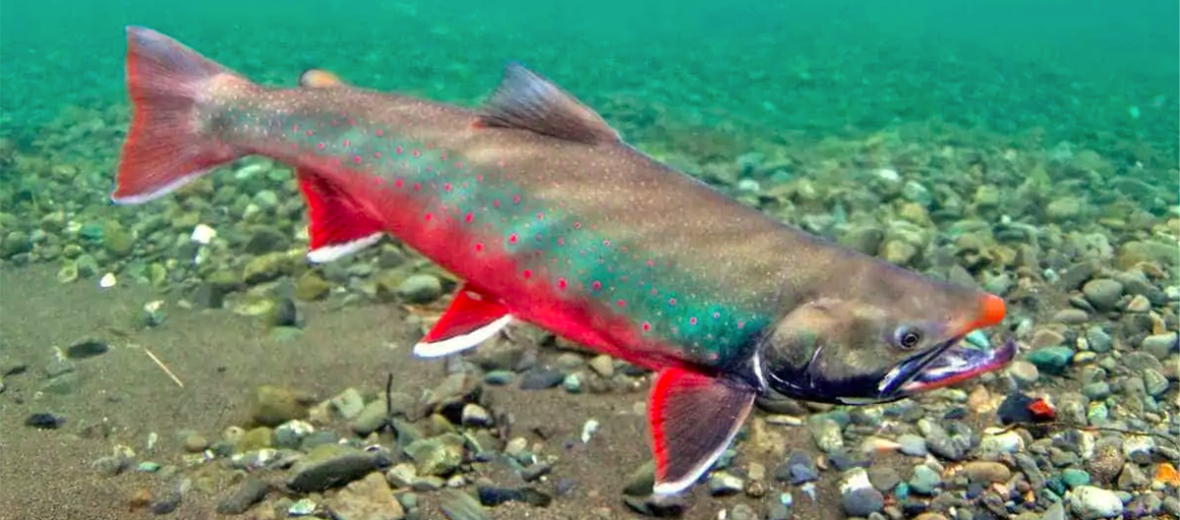
Arctic char, Salvelinus alpinus, is a salmonid related to trout and salmon.
What Arctic char is
It often has pale spots on darker sides, though coloration varies greatly among populations and spawning stages. The word “char” can refer to several Salvelinus species, so a short search for “char fish” needs that distinction.
Cold-water habitats
Arctic char inhabits cold northern lakes, rivers, and coastal waters. Some populations remain in freshwater all year; others migrate to the sea to feed and return to freshwater to spawn. These different strategies can occur within related populations, helping explain why the species varies so widely in body size and appearance.
What char eat and how they grow
Young char may feed on aquatic insect larvae and small crustaceans. Larger individuals can take fish and other prey when available. The timing of food production in Arctic lakes is short and seasonal, so growth may be slow. Local conditions matter more than a single universal growth or lifespan figure.
Char versus salmon and trout
An Arctic char is not simply a “salmon with spots.” Although all belong to Salmonidae, they differ in anatomy, ecology, and sometimes spawning behavior. A field guide should combine species range, fin and jaw traits, body markings, and habitat. Check local fishing rules before harvesting char, especially where populations are small.
Why one range map is not enough
Anadromous char may move between marine feeding grounds and freshwater spawning areas, while landlocked populations remain in lakes. A habitat map that marks only the sea can miss resident populations; one that marks only lakes may miss seasonal coastal migrations. Temperature also affects which areas remain suitable. Readers comparing fishing reports should record whether the fish came from a lake, river, or coastal estuary. The same common name can describe different life-history forms without those forms being separate species.
Observe the habitat, not just the name
A reliable identification should combine the animal’s range, habitat, appearance, and behavior. A common name or single photograph may hide several similar species. Water temperature, depth, and season can also change what an observer finds. For information about conservation or harvest rules, consult the authority responsible for the specific species and area.
Putting scientific names and ranges in context
Marine populations can move, change with ocean temperature, or contain closely related species that are hard to tell apart. When an article describes a habitat or food-web role, treat it as a typical pattern rather than a promise about every individual. Conservation and seafood guidance are also distinct: a species can have biological importance while regional fishing rules and consumption advisories vary independently. Check the latest species-specific agency material before acting on either.
Frequently asked question
Does Arctic char always live in the ocean?
No. Many populations spend their entire lives in freshwater; others migrate between fresh and saltwater.
