Are Rabbits Rodents? The Science Explained
Are rabbits rodents? Learn why rabbits belong to Lagomorpha, how they differ from rodents and what hares and pikas have in common.
Are Rabbits Rodents? The Science Explained
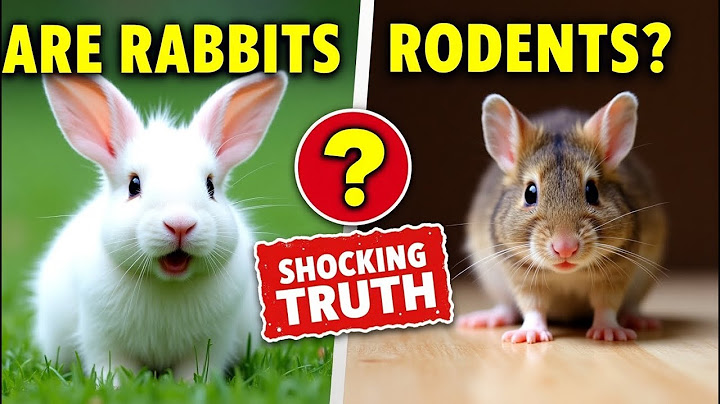
No—rabbits are not rodents. They belong to the mammalian order Lagomorpha, along with hares and pikas. Mice, rats, squirrels, guinea pigs, and beavers belong to Rodentia. Both groups have prominent front teeth and gnawing behavior, which explains the confusion, but they represent distinct branches of mammalian evolution.
What makes an animal a lagomorph?
Lagomorphs include the rabbit and hare family, Leporidae, and the pika family, Ochotonidae. Wild European rabbits and the domestic breeds descended from them are lagomorphs, as are North American cottontails. The classification describes evolutionary relationships, not how friendly, furry, or small an animal is. A rabbit can resemble a large rodent at a glance, but appearance alone is not how zoologists decide which order an animal belongs to.
The extra pair of upper incisors
One memorable anatomical distinction is the teeth. Rabbits have two large upper incisors with an additional smaller pair set just behind them. Rodents generally have a single pair of upper incisors. Lagomorphs also differ from rodents in details of skull structure, digestion, and evolutionary history. These differences are useful teaching tools, but an owner should not inspect a pet's mouth forcefully just to check the teeth. A rabbit-savvy veterinarian can examine dental health safely.
Why rabbits and rodents are often lumped together
Both eat plant foods, chew frequently, and may have dense coats, whiskers, and fast reproduction. Older popular writing sometimes groups them together as 'gnawing animals.' The everyday word 'rodent' has also become a loose label for almost any small mammal in a garden. That shortcut is not scientifically accurate. Rabbits are herbivorous lagomorphs, while the rodents form their own large and diverse order, including species with very different diets and habits.
How rabbits compare with hares and pikas
Rabbits and hares are close relatives but not interchangeable. Hares are generally more adapted to running in open habitats and often give birth to more developed young, while many rabbits use nests and burrows. Pikas are small, round-eared mountain- or steppe-dwelling lagomorphs, not small rabbits. These categories help explain why the term 'rabbit' is not a scientific synonym for every long-eared animal. Domestic house rabbits descended from the European rabbit, not from North American cottontails.
The practical takeaway for pet owners
Correct classification is interesting, but it also reminds us that care cannot be copied from a hamster or guinea pig guide without checking species-specific needs. Rabbits have particular fiber requirements, dental considerations, handling vulnerabilities, and social behavior. A rabbit's diet and living arrangement should be based on rabbit-care references, not on whatever a shop labels 'small animal.' Use the dedicated care and feeding guides for practical decisions.
Key takeaway
Correct naming makes science easier to understand, but the bigger benefit is recognizing that a rabbit is not interchangeable with another small mammal in nutrition, handling, or medical care.
Frequently asked questions
Is a bunny a rodent?
No. Bunny is an informal word for rabbit, and rabbits are lagomorphs.
Are rabbits related to mice?
Both are placental mammals, but they belong to different orders.
Are guinea pigs rodents?
Yes. Guinea pigs belong to Rodentia, unlike rabbits.
What animals are lagomorphs?
Rabbits, hares, and pikas are the living lagomorph groups.
Do rabbits have four upper incisors?
They have a main upper pair and a smaller additional pair behind it, a useful feature distinguishing them from rodents.