Baby Hamster Care: Newborns, Weaning and Safety
Understand newborn hamster development, safe monitoring, weaning basics, and when mother and babies need veterinary help.
Baby Hamster Care: Newborns, Weaning and Safety
Newborn hamsters are exceptionally vulnerable to disturbance. If an unexpected litter appears, the most useful first response is not to pick up the babies for a photograph. Give the mother a quiet, secure home, uninterrupted access to food and water, and prompt professional advice if she or the pups appear unwell. The details below concern welfare after birth, not instructions for intentional breeding.
The first days: protect the nest and reduce stress
Newborn pups are hairless, have closed eyes, and rely entirely on maternal care. A mother may move them, cover them, or stay hidden with them for extended periods. Keep the room quiet and avoid lifting the nest, changing the enclosure layout, or introducing visitors. For at least the earliest week, minimize contact except for essentials or an actual emergency; guidance on exactly when gentle contact becomes suitable varies with species and circumstances.
Do not open a nest simply to count pups. Avoid strong smells, repeated cage inspections, and unnecessary handling. If cleaning is required for safety, remove only immediately hazardous wet or spoiled material without disturbing the nesting chamber. The goal is to preserve a familiar, stable environment.
Help the mother without interfering with her babies
Keep a balanced species-appropriate hamster food available in adequate amounts, and ensure water is easy for the mother to reach. Ask an exotic-mammal veterinarian about increased nutritional needs rather than improvising high-protein recipes. Scatter some familiar dry food in predictable locations so the mother does not need to search far from her litter. Check that the drinking setup is working without repeatedly approaching the nest.
Never assume a mother has abandoned her young simply because she leaves them temporarily to eat or drink. Nor should you try to hand-feed a pup with household milk, a syringe, or a social-media recipe. Tiny animals can aspirate liquid easily, and inappropriate formulas can cause serious harm. If the mother is missing, visibly sick, or not caring for pups, contact an experienced exotic veterinarian immediately for species-specific advice.
A safe enclosure for a mother and litter
Eliminate fall hazards, deep open water dishes that pups could enter, exposed gaps, sharp platforms, and items that could collapse onto the nest. Use soft, appropriate nesting bedding without long fibers that can entangle legs or necks. The enclosure should remain ventilated and at a stable temperature, away from predators, loud music, and direct sun. Keep other hamsters away unless a veterinarian gives specific instructions; the assumption that another hamster can help raise the litter is unsafe.
Avoid transporting the entire family unnecessarily. When unavoidable for a medical emergency, use a secure ventilated carrier with familiar bedding and follow clinic instructions about keeping the mother and pups together.
Development, weaning, and separation planning
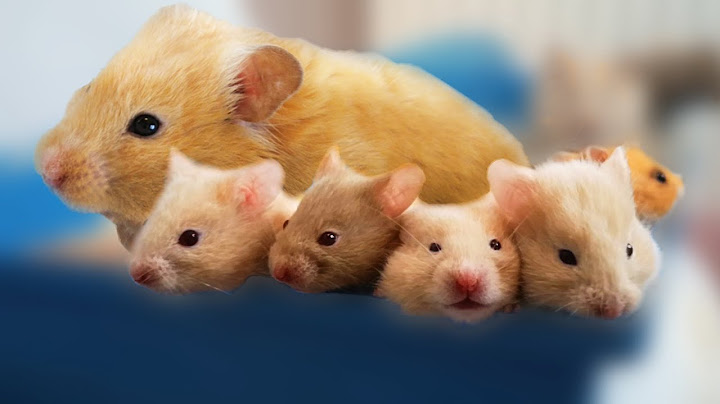
Hamster pups gradually develop fur, open their eyes, become more mobile, and start exploring solid foods. Timing varies among species and individuals. Veterinary references commonly describe weaning around three to four weeks for many pet hamsters, but that range is not a license to separate an unwell or underdeveloped pup on a fixed calendar date.
Plan early for suitable individual housing once the pups are old enough. Hamsters become reproductively capable remarkably young, and unplanned mixed-sex group housing can lead to repeat litters or fighting. A veterinarian or experienced ethical rescue can help confirm sex, health, and an appropriate separation schedule. Do not rely on a pet-store label or an online photo to sex newborn pups.
What warrants veterinary advice
Contact a veterinarian promptly if the mother is not eating, appears weak or distressed, bleeds abnormally, has breathing difficulty, or shows diarrhea. A pup that is cold, injured, persistently separated from the nest, or visibly not thriving also needs assessment. Never put an apparently unwell pup back repeatedly while waiting for a dramatic symptom. Prepare a concise timeline, including when pups were first seen and what the mother has been doing.
Professional help is particularly important if the mother dies or cannot nurse. Hand-rearing neonates is difficult even for experienced caregivers and should not be attempted with improvised household feeding tools.
Common mistakes in the first month
Photographing the pups in the hand, fully cleaning the cage immediately after birth, moving the nest to a more decorative hide, and offering sudden food changes can all increase disruption. Another mistake is leaving the litter in the same mixed-sex enclosure as it matures because the pups still look small. Instead, maintain the calmest possible routine while preparing safe separate homes before they are needed.
Frequently asked questions
Can I touch baby hamsters right after birth?
Avoid unnecessary handling in the earliest days. Ask a veterinarian about timing if intervention seems necessary; emergency medical needs are an exception.
When do baby hamsters open their eyes?
Eyes open as pups develop, with timing differing by species and individual. A healthy progression matters more than a single exact date.
What do newborn hamsters eat?
Newborns depend on maternal milk. Do not use cow's milk or a homemade formula without expert veterinary direction.
When are baby hamsters weaned?
Many are weaned at roughly three to four weeks, but health and species should guide decisions with professional advice.
Should I clean the whole cage after the babies arrive?
No. Avoid disruptive deep cleaning in the sensitive early period; address genuine hazards gently and leave the nest undisturbed.
Related hamster guides
What Can Hamsters Eat? A Practical Diet Guide