Is the Backrooms a Real Place or an Internet Story?
Find out whether the Backrooms are real, what inspired the original eerie photo, and where the real-world room was located.
Is the Backrooms a Real Place or an Internet Story?
No. The Backrooms are a fictional internet horror concept, not an established hidden dimension that people can accidentally enter. The photograph that inspired the story, however, shows a real interior in Wisconsin. Confusing the real photograph with the invented world is central to why the myth has traveled so far online.
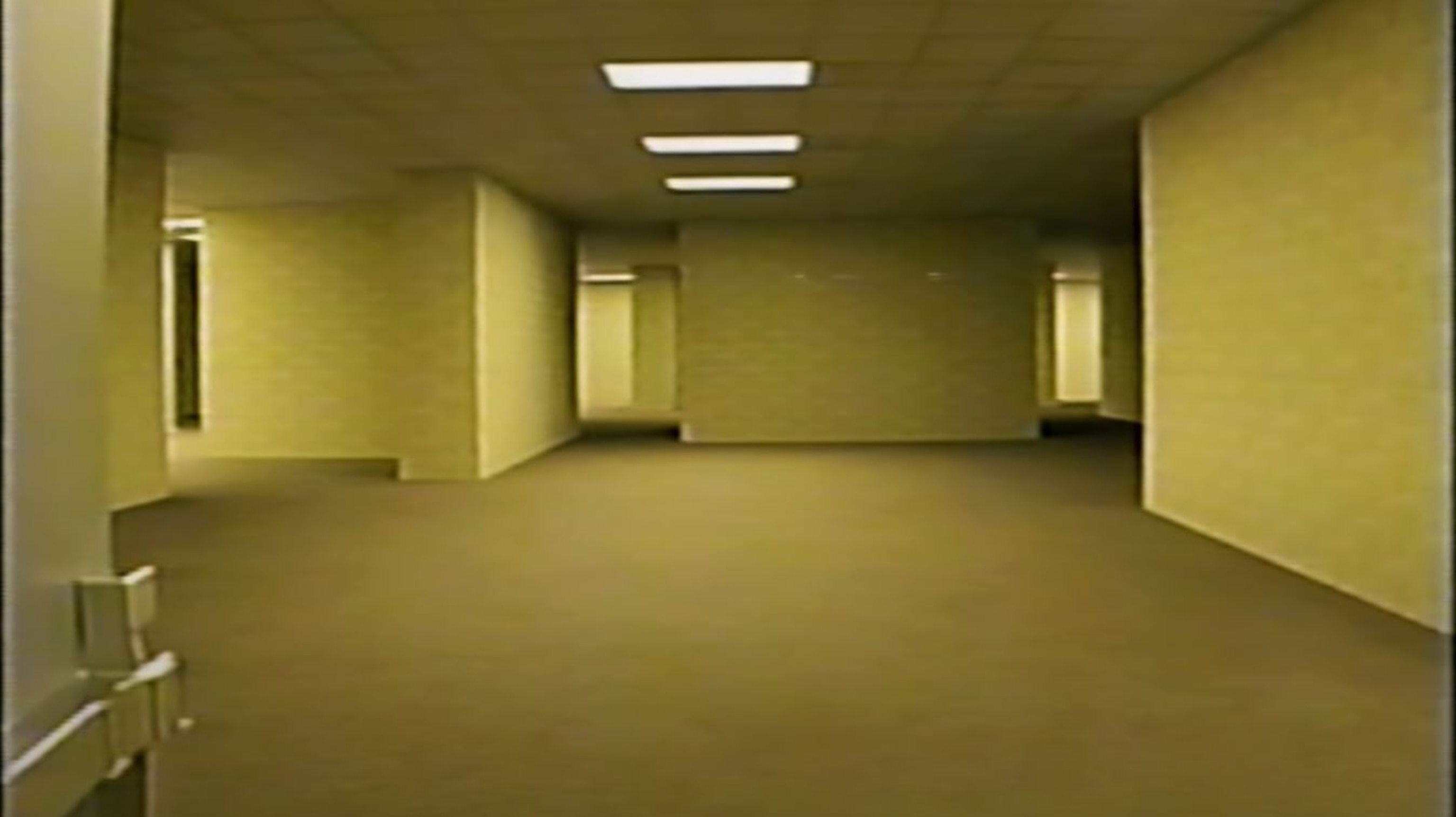
The room was real; the impossible maze was not
The familiar yellow-room photograph is tied to renovation work in a former furniture-store space in Oshkosh. Local reporting and archived material identify the building with a hobby store and a radio-controlled-car racing area. It was an ordinary place being remodeled, rather than a secret government facility or a paranormal entrance.
The building's appearance explains the visual puzzle. Repeating walls, a low ceiling, harsh lighting, and a conspicuous lack of people make the scene difficult to place. Viewers can recognize individual objects but not the building's purpose. That uncertainty is enough to inspire speculation, even without anything supernatural happening there.
Where the false-real-world story started
In 2019, anonymous online writing attached the notion of escaping reality's boundaries to an unsettling room image. Later contributors wrote about countless additional spaces. Videos presented fictional camera footage as if someone had recorded an actual expedition. Horror is especially effective when fictional documentation imitates normal evidence, but that presentation does not make its events historical.
The word “no-clipping” is a useful clue. It comes from digital games, where characters may pass through a collision boundary because of a software quirk. There is no demonstrated equivalent by which a person passes through a real wall into a limitless office labyrinth.
Why the Backrooms can feel possible
Many people have seen an empty school after hours, a dark office corridor, or a hotel hallway with identical doors. Such places already carry a small amount of disorientation. The Backrooms build on that shared experience by removing reliable landmarks and any sense of a normal destination.
Photographs and convincing computer-generated environments amplify the illusion. An image that looks like a security-camera still may feel documentary even when the creator's purpose is fictional storytelling. Ask where the image came from, whether the uploader identifies it as art, and whether independent reporting supports the claim.
Common misconceptions
The original room's location being identified does not prove the fictional world exists. A YouTube video with a date stamp is not automatically recovered footage. Nor does a particular numbered level have a universal, official physical address. The Backrooms remain a creative setting whose versions can differ.
The useful distinction is straightforward: investigate the photograph as a piece of internet history, and enjoy the story as horror. Neither requires treating made-up encounters or survival instructions as real-world advice.
Frequently asked questions
Can people physically enter the Backrooms?
There is no credible evidence of anyone crossing from our world into the fictional Backrooms. People can visit ordinary buildings resembling the aesthetic, but that is not the same as reaching the imagined maze.
Was the original image computer generated?
The photograph used in the early meme came from a real renovation project. Later images and found-footage sequences may be digital effects or fan artwork, which is why identifying the exact image matters.