Native American Tribes in California: Nations and Communities
Explore Native American nations and regions in California, contemporary communities, map resources and recognition differences.
Native American Tribes in California: Nations and Communities
California is home to many distinct Native American tribal nations and communities. California state judicial and agency resources identify 109 federally recognized tribes in the state, while other Indigenous communities have different recognition histories. A useful guide explains regional diversity, sovereignty, and the limits of mapping instead of presenting one long, unsourced list as complete for every year.
Native nations across California regions
California's Native communities are connected to coastal regions, the Central Valley, mountains, deserts, and river systems. Tribal nations in different places have distinct languages, historical experiences, and governmental structures. For example, Yurok and Karuk communities have important relationships with northern California rivers, while Kumeyaay communities have long histories in the southern border region.
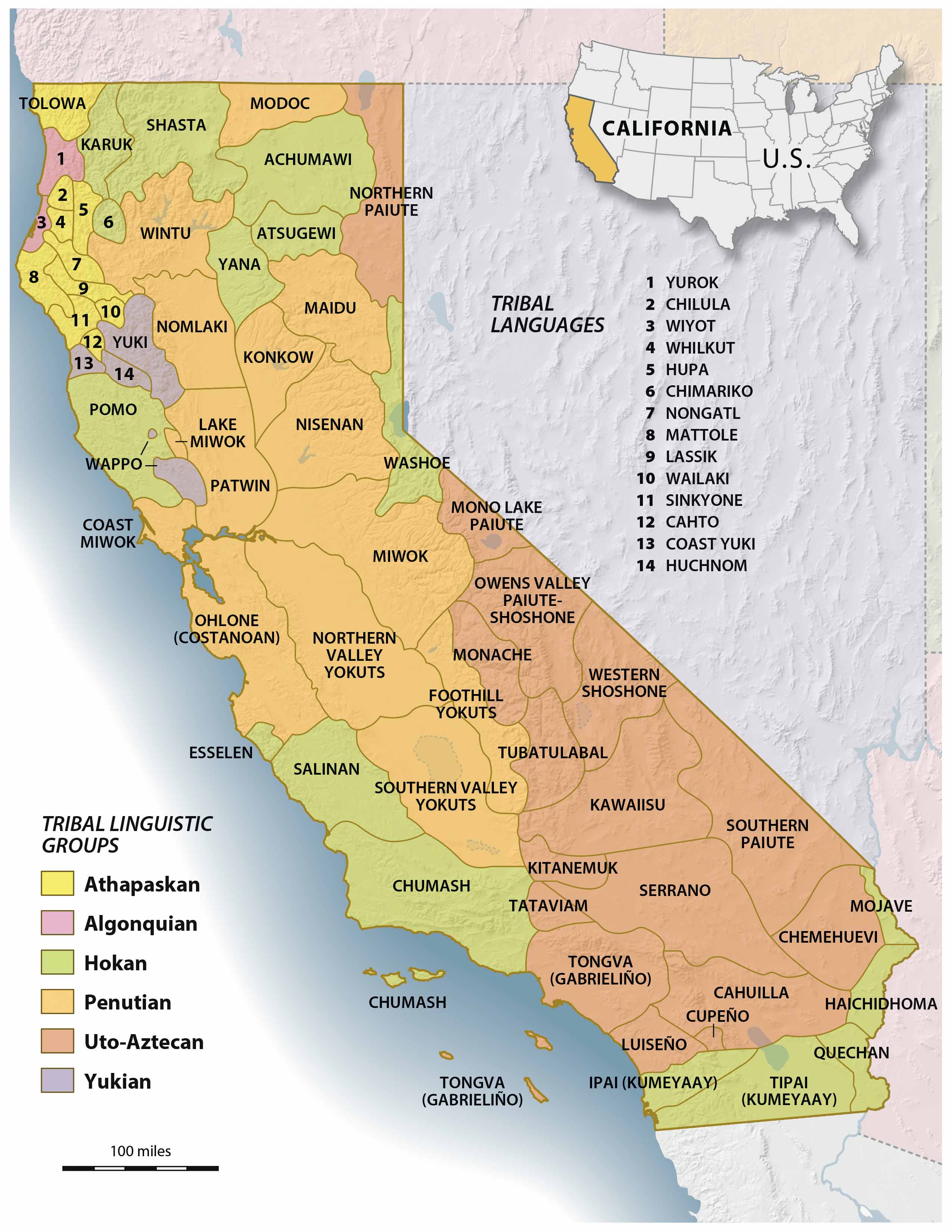
Modern county names can help readers locate a nation, but those political boundaries do not define all ancestral territories. Many communities have connections extending beyond contemporary state lines.
Federal recognition and other community histories
California court and public agency resources cite 109 federally recognized tribes. This is a useful current government count but should not be presented as the total number of Indigenous communities with a connection to California. Some communities were affected by federal termination policy, and others pursue recognition or maintain identities outside federal acknowledgment structures.
Recognition is a political and legal relationship, not a cultural quality rating. A reader researching a nation should start with its own government or cultural organization and note the status of the source's date.
What reservations and rancherias mean
California has tribal lands often identified as reservations, rancherias, or trust parcels. These are legal and historical categories with different origins. Small or fragmented land areas do not mean the associated nation is less significant. A map focused only on reservations will miss other communities and connections to place.
For a legal boundary, use official tribal and government mapping information. Educational ancestral territory maps can be useful for context but should not be relabeled as current reservation boundaries.
Present-day work and sovereignty
California tribal governments and Native organizations work on language education, cultural centers, environmental restoration, public safety, healthcare, and economic development. Relationships to salmon, rivers, coastal ecosystems, and fire stewardship may be particularly important in some regions, while other communities emphasize different needs and priorities.
Tribes are governing communities with diverse contemporary institutions; they should not be described solely as populations that disappeared or as tourist attractions.
How to research an individual California nation
Begin with the California Native American Heritage Commission or relevant state resources for broad orientation, then visit the tribal nation's own site. Verify name, status, geographic description, and contact information. In school materials, label a map's date and distinguish legal boundaries from ancestral territory. For a public event, check the community's current visitor guidance.
Readers looking for other state-specific Native governments can use the related Washington guide, but the two articles should not merge into a generic nationwide directory.
Frequently asked questions
How many federally recognized tribes are in California?
California government resources cite 109 federally recognized tribes; check the source date when quoting the count.
Are all California Native communities federally recognized?
No. Recognition histories differ and some communities are not federally recognized.
Does each California tribe have a reservation?
Not necessarily. Land arrangements include reservations, rancherias, trust parcels, and other circumstances.
Is a Native territory map the same as a tribal land boundary?
No. Educational territories and official legal boundaries represent different questions.
Related reading
Explore these focused guides for the next step in your research: