Can Iguanas Swim? How Different Species Use Water
Discover whether iguanas can swim, how green and marine iguanas differ, and why you should never force a pet into water.
Can Iguanas Swim? How Different Species Use Water
Yes, some iguanas swim very well. Green iguanas readily enter freshwater or brackish water in parts of their natural range, while Galápagos marine iguanas are uniquely adapted to forage for algae in the ocean. However, not every species of iguana uses water in the same way. Knowing that a wild iguana can swim is not a reason to force a pet iguana into a pool or bathtub.
This guide compares species, explains what swimming does for them, and addresses basic water safety. It is not a step-by-step plan for building a captive swimming pool. Our marine iguana profile explores that species' ecology in greater detail.
How a green iguana moves in water
Green iguanas are strong swimmers. Their long, muscular tails provide propulsion through lateral movements, while their limbs help with direction and positioning. In tropical habitats, water can connect shoreline vegetation, trees, and areas where an iguana seeks refuge. The Florida Fish and Wildlife Conservation Commission describes green iguanas as excellent swimmers that tolerate both fresh and saltwater.
The fact that green iguanas can submerge does not mean they must spend long periods underwater or that a home enclosure needs a deep pool. Wild behavior occurs under specific environmental conditions: access to safe exits, natural banks, sunlight, and an animal able to choose whether to enter water. Captive situations can be different, especially for a small, sick, stressed, or recently moved iguana.
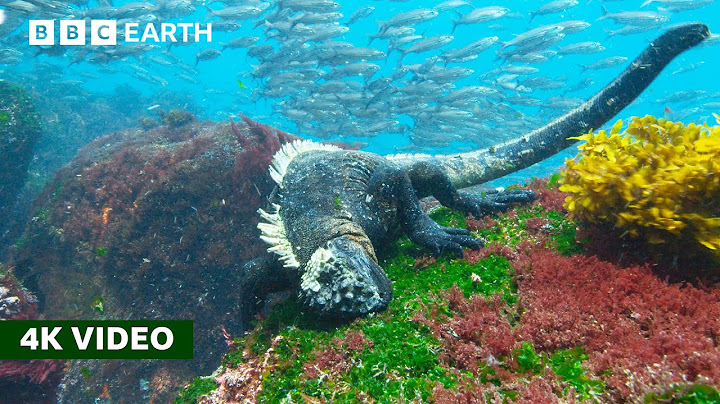
Marine iguanas are specialist ocean foragers
The Galápagos marine iguana occupies a much more demanding aquatic niche. It feeds mainly on algae and is able to swim through coastal water, grip submerged rock surfaces, and return to shore to regain heat. Its flattened tail and strong claws support this lifestyle. Depending on body size and local conditions, individuals may graze algae exposed by the tide or forage beneath the surface.
In the ocean, swimming is closely tied to food and survival. The water can be relatively cold, and long foraging trips cost energy. That is why the animal spends conspicuous time basking on black volcanic rocks before and after entering the sea. Marine iguanas have specialized salt glands to handle the salt in their diet. These features do not transfer to all other iguanas just because they share a common name.
Swimming versus soaking: not the same question
An iguana walking through shallow water, drinking from a basin, or soaking briefly is not necessarily demonstrating the same behavior as active swimming. Reptile owners sometimes use the words interchangeably in forum posts. These activities have different purposes and risks. A bowl suitable for drinking is not automatically safe for swimming; the depth, surface grip, temperature, and ability to leave all matter.
Water alone does not correct improper humidity, dehydration, temperature, lighting, or diet. A healthy enclosure uses a species-specific environmental gradient so the animal can move among areas according to its needs. UVB exposure and appropriate heating also matter to reptile health, as described by veterinary references. An unexpected change in appetite, activity, or skin condition needs a husbandry review—not an improvised swim session.
Why forced swimming is risky
A person may see an iguana paddling after it is placed in water and interpret that response as enjoyment. But paddling can be an escape behavior. Forced immersion can frighten an animal and expose it to risks, particularly if water is too cold, access to a dry surface is difficult, or the animal is exhausted. Open tubs, pools with steep slippery walls, strong currents, and cleaning chemicals create hazards.
Do not throw, drop, or hold a reptile underwater to 'exercise' it. Never leave an iguana unattended around water. If a pet needs bathing or hygiene support, ask a qualified reptile veterinarian or an experienced, reputable keeper for instructions that reflect the species, health condition, and enclosure. For a wild iguana, simply observe without interfering with its movements.
What water behavior tells you in the wild
A green iguana escaping into a canal may be avoiding a threat, not seeking playtime. A marine iguana entering the ocean may be heading to algae beds. A lizard resting close to water might be thermoregulating or choosing cover. Behavior should always be interpreted with habitat and species in mind, not through an assumption that every reptile swims for the same reason.
In Florida, green iguanas often move along canals and waterfront development. They can be conspicuous near docks, gardens, and seawalls, especially where vegetation provides food and hiding places. People should avoid reaching toward a cornered animal or encouraging a dog to chase it into water. Our iguana safety guide covers safer ways to share outdoor spaces.
The right question for pet owners
Instead of asking, 'Can my iguana survive a swim?' ask what the animal actually needs to remain healthy and secure. Verify the species, provide suitable drinking water and enclosure conditions, and ensure the reptile can retreat from unwanted contact. Aquatic exposure should never be a substitute for veterinary evaluation or appropriate habitat design.
Marine iguanas illustrate the fascinating end of the swimming spectrum. Their ability to forage at sea reflects evolution in the Galápagos, not a general care instruction for terrestrial pets. Keeping that distinction clear makes the answer both more accurate and safer.
Frequently Asked Questions
Can green iguanas swim in freshwater?
Yes. Green iguanas are capable swimmers and may use freshwater habitats and canals. Their ability does not mean a deep pool is necessary for a captive animal.
Do all iguanas swim underwater?
No. Swimming ability and aquatic behavior vary substantially among species. Galápagos marine iguanas are particularly specialized for ocean foraging.
Can an iguana swim in a swimming pool?
A swimming pool is not an appropriate place to test a pet's ability. Chemicals, slippery exits, stress, and unsuitable temperatures can create risks. Do not force an iguana into a pool.
Why do marine iguanas come back to rocks?
They bask to warm themselves after time in cooler ocean water and to support their next activity cycle.
Does soaking replace proper humidity and heat?
No. Soaking is not a cure-all. Species-appropriate humidity, temperature gradients, UVB, and hydration require a broader husbandry plan.