Galápagos Marine Iguana: The Ocean-Going Lizard
Explore how marine iguanas forage for algae, warm up on volcanic rocks, and survive on the Galápagos Islands.
Galápagos Marine Iguana: The Ocean-Going Lizard
The Galápagos marine iguana (*Amblyrhynchus cristatus*) is an extraordinary reptile found naturally only in Ecuador's Galápagos Islands. It is famous for swimming and feeding on algae in the ocean, then returning to volcanic shores to warm itself in the sun. That makes it ecologically different from the green iguanas many people see in trees or yards.
Marine iguanas are wild, protected animals, not pets suited to home aquariums. Understanding their daily routine reveals why coastal habitat, ocean conditions, and conservation work all matter. This article is a species profile; for a direct comparison with other swimming iguanas, see can iguanas swim?.
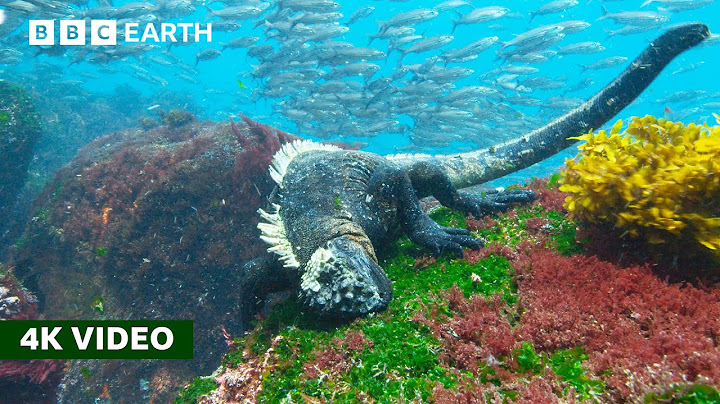
An iguana built for a shoreline life
Marine iguanas inhabit rocky coasts across the Galápagos archipelago. Their dark bodies are especially noticeable against black lava. The compressed tail helps drive movement through water, while sharp claws provide purchase on slippery rocks. They are capable on land but their special claim to fame is feeding in the marine environment rather than relying entirely on vegetation growing ashore.
Calling a marine iguana a 'sea dragon' is vivid, but it can obscure the animal's real biology. It is an herbivorous lizard that primarily grazes marine algae. It does not hunt fish or behave like a crocodile. Individuals differ in body size and the amount of ocean foraging they undertake; not every animal dives to the same depth.
How marine iguanas find their food
Marine iguanas swim from sunlit rocks toward algae-growing areas. Larger animals can forage farther out and underwater, holding to submerged rocks against currents. Smaller individuals may remain nearer shore or feed on exposed algae during low tide. The ability to swim does not make the ocean effortless. Cold water, waves, predators, and food availability all shape when and where an iguana forages.
Their blunt snouts and teeth help scrape or crop algal material rather than catch moving prey. Because the algae grow in saltwater, the iguanas inevitably take in salt. Specialized nasal salt glands allow excess salt to be expelled, often through a sneeze-like spray that leaves visible salt crystals near the snout. The 'sneezing iguana' behavior is a normal adaptation, not evidence that the animal has a cold.
Why basking is essential after the ocean
Marine iguanas are ectotherms: their body temperature depends heavily on the environment. Swimming in cooler water can lower body temperature, which reduces the energy available for activity. Before and after foraging, an iguana spends time on sun-warmed rocks, flattening or positioning its body to take up heat. Dark scales help absorb sunlight, while basking location and weather influence the pace of warming.
The temperature story matters, but it is not a recommendation to copy a beach climate in a pet enclosure. Green iguanas and Fiji banded iguanas inhabit different habitats and need professional species-specific care guidance. The marine iguana's cycle of sun, water, and algae is an ecological adaptation that cannot be replicated responsibly by placing a terrestrial pet into a bathtub.
Appearance changes across islands and seasons
The basic silhouette—crest, long tail, strong feet, and blunt head—remains recognizable, but marine iguanas are not all the same color. Some show conspicuous reddish or greenish tones during the breeding season, and the degree of coloration and size varies among island populations. A photograph of a brilliantly colored individual should not be treated as the standard appearance year-round.
This diversity matters for conservation surveys. Counts and photographic monitoring help researchers understand population status in places with different coastlines and environmental pressures. Observation should be done without approaching nesting sites, feeding animals, or pushing wildlife from the shore into the water. Responsible visitors follow the instructions of the Galápagos National Park and licensed naturalist guides.
El Niño, invasive predators and pollution
Strong El Niño events can alter ocean conditions and severely reduce algae available to marine iguanas. During food shortages, animals may lose body condition and populations can decline sharply. Marine plastic pollution, oil contamination, and introduced predators such as cats and dogs add pressure. Eggs and young iguanas are particularly vulnerable to predation by introduced animals.
Conservation organizations monitor populations, restore habitat where possible, and work to reduce the impact of invasive animals and marine pollution. These efforts are important precisely because the species has such a limited natural range: damage to the Galápagos coastal ecosystem cannot simply be offset by another wild population on a distant continent.
Why this animal is not a pet purchase option
Marine iguanas are part of a protected island ecosystem. Their natural feeding and thermoregulation depend on marine algae, rocky shores, and conditions impossible to reproduce with ordinary reptile products. Do not attempt to buy, collect, transport, or feed one. Scientific work and wildlife encounters must follow conservation and park regulations.
Another striking island iguana is the Fiji banded iguana. Although both are called iguanas, the Fijian species occupies forest trees, not ocean surf. Comparing them helps show how the same broader lizard family diversified into very different habitats.
Frequently Asked Questions
Where do marine iguanas live?
They are native to the Galápagos Islands of Ecuador and occur around rocky coastal habitats across the archipelago.
What do Galápagos marine iguanas eat?
Their primary food is marine algae. Depending on size and conditions, they graze in intertidal zones or forage underwater.
Why do marine iguanas sneeze salt?
Specialized salt glands help remove excess salt taken in while feeding at sea. The salt can be expelled through the nose.
Can marine iguanas be kept as pets?
No responsible pet guide should encourage that. They are protected wildlife with highly specialized ecological needs and conservation constraints.
Why do they lie on dark rocks after swimming?
They bask to regain heat after exposure to cooler ocean water. Warming supports movement, digestion, and the next foraging trip.