Cell Nucleus Function: How the Nucleus Stores and Regulates DNA
Understand cell nucleus function with clear definitions, examples, scientific context, and notes on common misunderstandings.
Cell Nucleus Function: How the Nucleus Stores and Regulates DNA
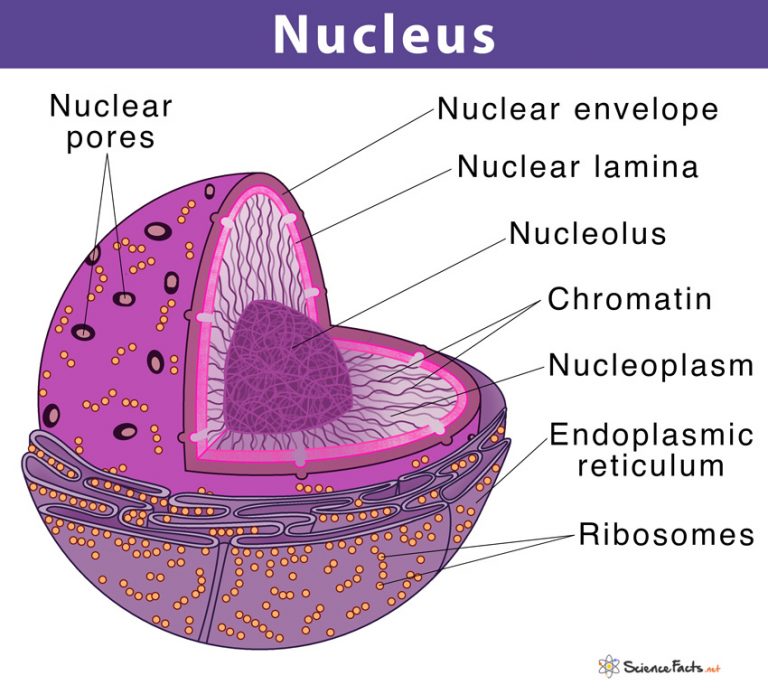
The nucleus is a membrane-bounded compartment in most eukaryotic cells that houses much of the cell's genetic material.
A useful way to understand this topic is to separate the underlying idea from a worked example and from the limits of the explanation. Biological explanations connect structures with processes and inherited information. What a diagram shows at one scale may not describe every cell type or life stage.
How it works
Nuclear pores regulate traffic between nucleus and cytoplasm; DNA is organized with proteins into chromatin.
The mechanism matters because it explains the observation rather than just naming it. The pattern becomes clearer when the structures, context, and evidence are considered together.
An example in context
During gene expression, DNA sequences are transcribed into RNA in the nucleus, and selected RNA molecules are exported for further processing or translation.
This example is best treated as a specific case, not an all-purpose rule. Consider which features are broadly shared and which depend on species, historical setting, or individual circumstances.
What the term should not be confused with
The nucleus differs from the nucleolus, a region within the nucleus important for ribosome production.
These boundaries help keep this page focused. Related subjects may overlap, but a shared word or superficially similar appearance is not sufficient evidence that two concepts are equivalent.
Why the distinction matters
Microscopy, molecular experiments, sequencing, and comparative observations provide complementary ways to examine cells and heredity. No single simplified drawing establishes every mechanism.
For readers, the practical lesson is to ask what is directly observable, what is inferred from a model, and which further evidence would help separate competing explanations. In this topic, the example above illustrates why that difference can matter.
Common mistakes and limitations
Not every cell contains a nucleus: mature mammalian red blood cells lack one, and bacteria have no membrane-bound nucleus.
In biology, patterns often depend on organism, tissue, and environment. A classroom example should not be assumed universal without additional evidence.
Frequently asked questions
What is Nucleus function? The nucleus is a membrane-bounded compartment in most eukaryotic cells that houses much of the cell's genetic material.
What is a clear example? During gene expression, DNA sequences are transcribed into RNA in the nucleus, and selected RNA molecules are exported for further processing or translation.
What is a common misconception? The nucleus differs from the nucleolus, a region within the nucleus important for ribosome production.
Continue exploring
Cell Biology and Genetics Explained — a broader topic overview.
Plant Cell Diagram — a focused explanation of a related concept.
Codominance — a focused explanation of a related concept.
