Elegant Christmas Tree Decorating Ideas With a Cohesive Look
Create an elegant Christmas tree with restrained colors, layered textures, balanced ornament sizes, and polished details without overspending.
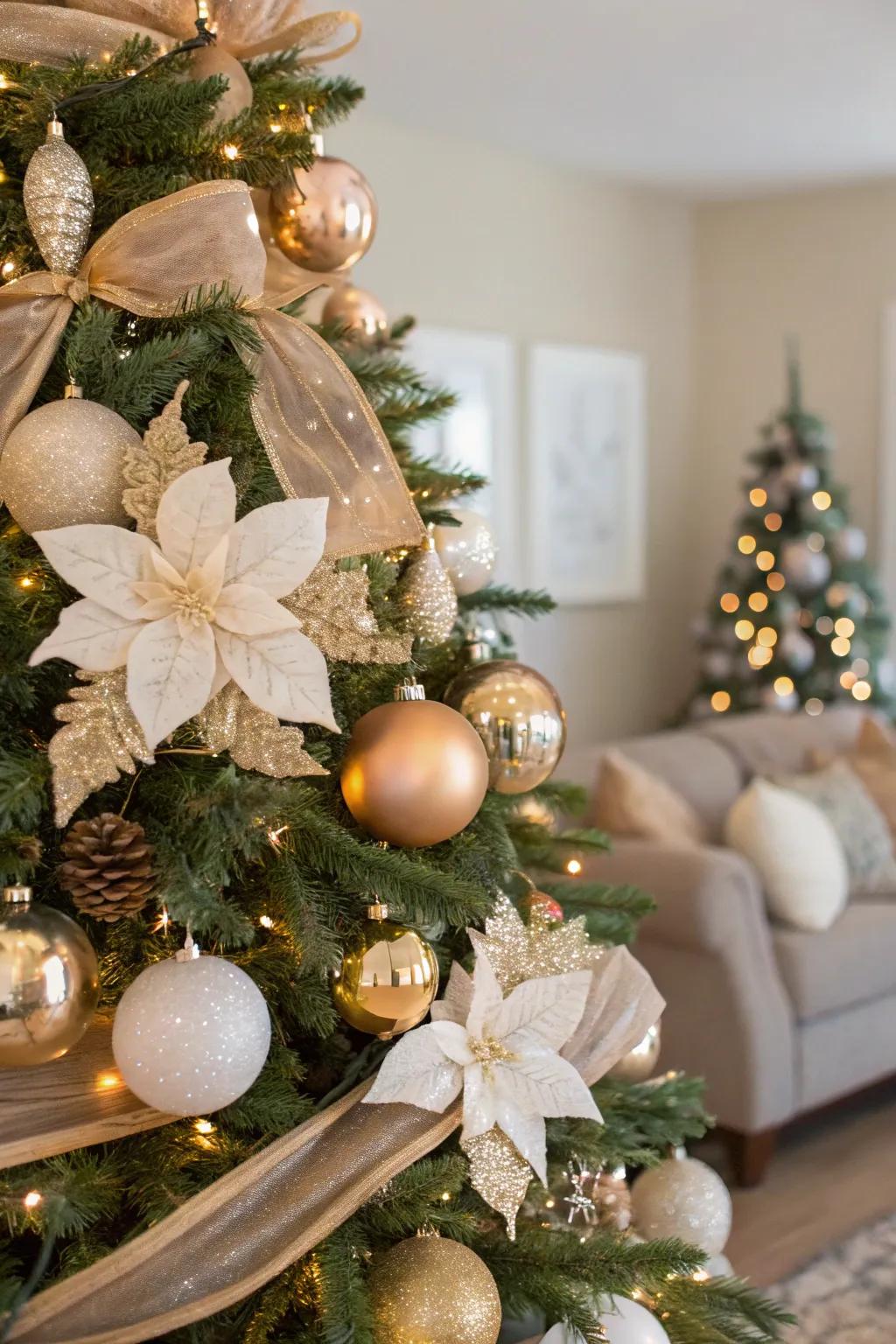
Elegant Christmas Tree Decorating Ideas With a Cohesive Look
An elegant Christmas tree is not necessarily expensive. What makes it look polished is a controlled palette, thoughtful spacing, and a few intentional contrasts. Instead of buying matching boxes of ornaments, start by editing what you have and deciding how the tree should feel from across the room.
Define what makes a tree look polished
Polish comes from restraint and repetition. Choose a dominant finish, a secondary texture, and a quiet accent: for example, matte ivory, antique gold, and clear glass. Leave enough visible branches that individual pieces can be appreciated. The silhouette should feel balanced, with weight distributed from top to bottom instead of most of the ornaments sitting on the outer lower branches. Avoid using five different ribbon widths or multiple unrelated novelty collections in the same focal tree. If a cherished ornament does not fit the palette, give it a prominent intentional spot. Elegance is more convincing when a tree still feels personal.
Build a restrained palette with texture contrast
Build a palette in layers rather than matching every object. Champagne and warm white can be softened with linen or natural wood; forest green and brass gain depth from a few glass accents. Use a mix of matte, satin, and reflective surfaces so neighboring ornaments do not disappear into one another. Limit highly patterned pieces to a small group and repeat them at different heights. Look at the surrounding furniture before settling on a metallic finish. Cool silver might suit a bright modern room, while antique brass warms wood furniture. A palette should connect with the room without needing to reproduce its colors exactly.
Use a deliberate mix of ornament shapes and sizes
Use fewer ornament styles in more deliberate sizes. Large shapes create rhythm and anchor sections, medium ones bridge the spaces, and small delicate pieces provide highlights. Repeat each style across the tree instead of placing an entire box in one quadrant. For a refined effect, allow a little negative space around a distinctive heirloom or sculptural piece. Some ornaments can hang deeper in the branches, where their reflections create depth. Walk around the tree and check for clusters of identical size or finish. A polished arrangement is balanced from its most common viewing angles, not mathematically symmetrical on every branch.
Choose ribbon and lighting for a subtle finish
Ribbon looks graceful when it follows the branch structure in short, relaxed sections rather than making a rigid spiral. Choose one substantial ribbon or two related textures and keep folds softly tucked. For lighting, a consistent white-light appearance can make metallic ornaments shimmer without competing colors. Follow product instructions and inspect cords before use; the 'elegant' effect never justifies concealing unsafe electrical connections. A topper should complement the tree's proportions rather than dwarf it. If the top already looks busy, a small bow or simple star may finish it more effectively than a towering ornament.
Create an elegant look using budget-friendly materials
Edit first, then fill gaps with inexpensive pieces that share the palette. Wide fabric ribbon, plain matte ornament balls, and reused clear ornaments can look luxurious when arranged carefully. An ornament collection that feels mismatched in its original packaging may work after you sort by color and scale. Keep a few striking accents and remove duplicates that crowd the branches. Use a simple skirt or collar that hides the stand without taking attention from the tree. Invest in storage that protects favorites instead of buying new decor annually. Quality of composition often matters more than purchase price.
Troubleshoot visual clutter and uneven spacing
If the tree feels busy, remove one type of ornament and reassess before adding anything new. If it looks top-heavy, move several large pieces lower and reduce the topper's scale. If all the shine sits on the front, distribute reflective ornaments deeper among branches. A thin tree may need a narrower ribbon rather than more ornament volume. Avoid treating elegant styling as a single universal recipe: what looks refined in a high-ceilinged room may overwhelm a small apartment. For basic lighting and ornament installation, use the general tree-decorating guide; this page stays centered on the visual finish.
Three looks to try
Winter white: Ivory matte ornaments, clear glass, and one soft linen ribbon.
Old-world warm: Antique gold, deep red velvet accents, and a few sentimental ornaments.
Modern woodland: Dark green, wood textures, brass accents, and intentionally open branches.
Frequently asked questions
How can I make my Christmas tree look expensive on a budget?
Limit the palette, repeat a few shapes, use ribbon sparingly, and edit clutter before buying more.
How many colors make an elegant tree?
Two dominant tones and one accent are a useful starting point, not a strict rule.
Should an elegant tree be perfectly symmetrical?
No. Balanced spacing and a coherent silhouette matter more than identical branches.
Explore related Christmas decorating guides
Christmas tree decorating techniques
Christmas living room decorating ideas