Animals of Temperate Deciduous Forests: Food Webs and Adaptations
Temperate forest mammal/bird/insect communities and seasonal adaptations.
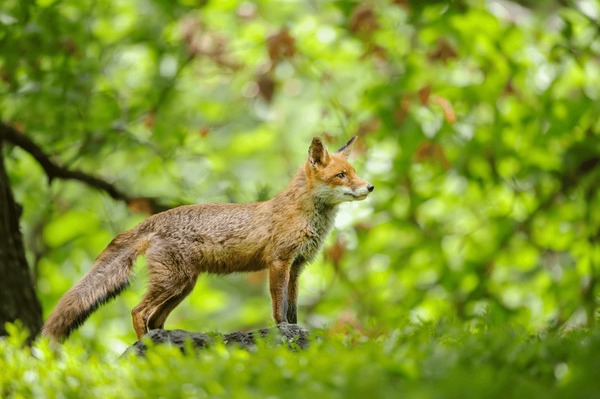
Animals of Temperate Deciduous Forests: Food Webs and Adaptations
Temperate deciduous forests support animals adapted to major seasonal changes as trees lose and regrow leaves. The key is a precise definition supported by examples that do not confuse related concepts.
Meaning and key distinctions
Definitions matter because everyday terms can cover different scientific mechanisms. Start with what is being classified, then ask what evidence would make one interpretation preferable to another.
Where the concept applies
The forest canopy, understory, fallen logs and soil layer create different habitats. North American examples include deer, squirrels, woodpeckers and many invertebrates.
Ecological processes can look different when researchers change the geographic or time scale being studied.
How it works in an ecosystem
Food availability shifts with spring growth, summer insects and autumn seeds. Predators, herbivores and decomposers exchange energy through linked food webs.
Real ecosystems are networks with feedback loops. Changes in one part can alter several others.
Examples and changing conditions
Some animals migrate, hibernate or change activity patterns; others store food or use insulated shelters. Seasonal timing is central to ecology.
Mechanisms need to be distinguished from outcomes. Similar-looking outcomes can arise for different reasons.
Common misconceptions
A useful explanation distinguishes direct observation from interpretation. For classroom answers, clearly state the definitions being used rather than treating ambiguous classifications as universal truths.
A deciduous forest in eastern North America may contain squirrels, deer and many migratory birds, but a comparable forest in East Asia has a different species list. The seasonal ecological pattern is more transferable than names.
How to use the term accurately
A clear definition is the first step; a good example then shows where the boundary of that definition lies. Scientific terms are useful only when assumptions are stated and examples match those assumptions.
When checking an example, name the organisms and conditions involved rather than relying only on a textbook diagram.
Quick takeaways
The forest canopy, understory, fallen logs and soil layer create different habitats.
Food availability shifts with spring growth, summer insects and autumn seeds.
Not every deciduous forest has the same species.
Frequently asked questions
Which animals live in temperate deciduous forests?
Temperate deciduous forests support animals adapted to major seasonal changes as trees lose and regrow leaves.
Where can the idea be applied?
The forest canopy, understory, fallen logs and soil layer create different habitats.
What is an important limitation?
Not every deciduous forest has the same species.
