Examples of Decomposers: Fungi, Bacteria, and Soil Food Webs
Decomposer vs detritivore distinctions, materials breakdown, ecological nutrient recycling.
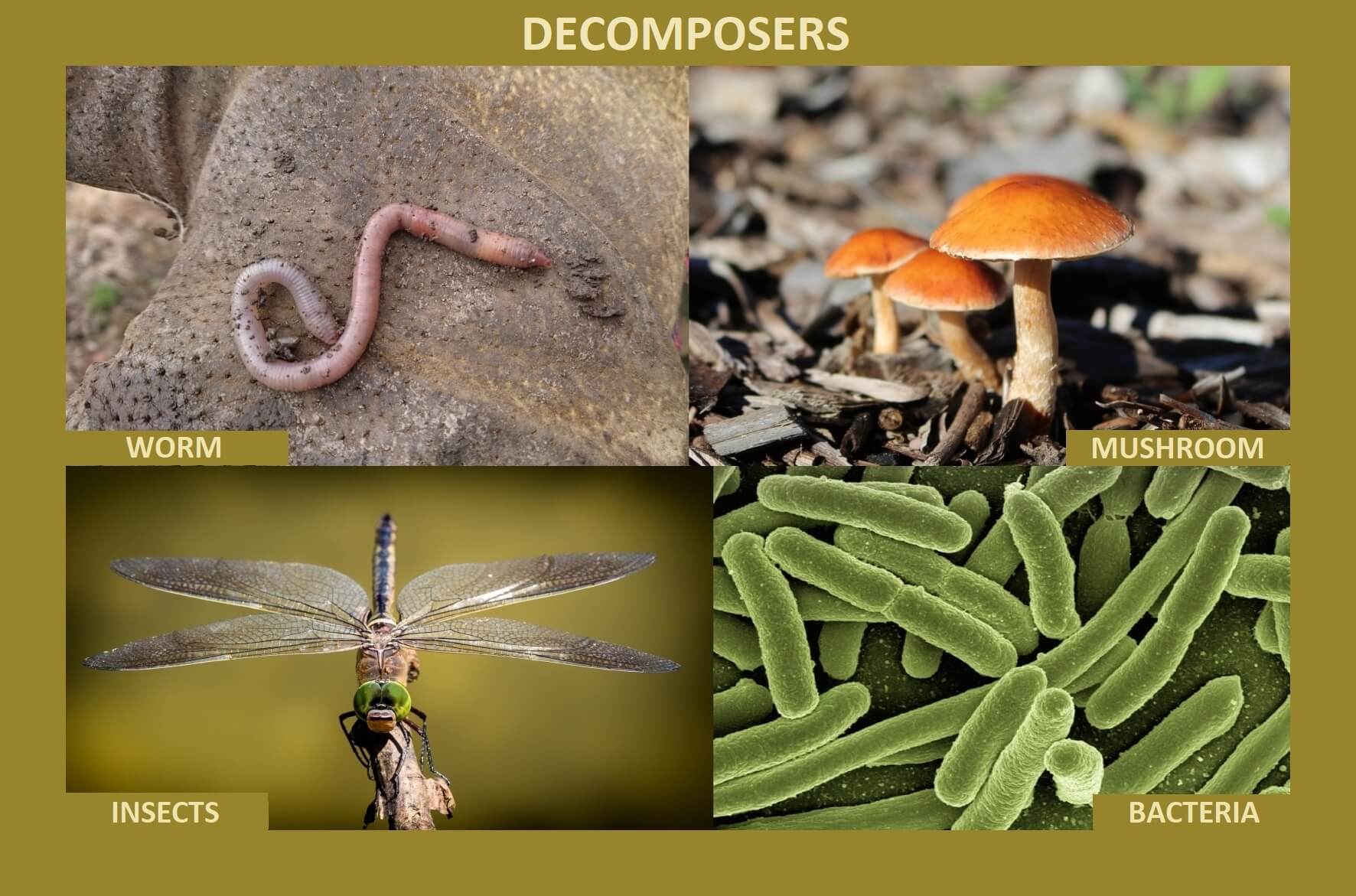
Examples of Decomposers: Fungi, Bacteria, and Soil Food Webs
Decomposers break down dead organic matter and release nutrients into forms that ecosystems can reuse. The key is a precise definition supported by examples that do not confuse related concepts.
Meaning and key distinctions
Fungi and bacteria are major decomposers.
Definitions matter because everyday terms can cover different scientific mechanisms. Start with what is being classified, then ask what evidence would make one interpretation preferable to another.
Where the concept applies
They operate in soil, freshwater, oceans and on fallen wood or leaves. Moisture, oxygen and temperature affect the speed of decomposition.
Ecological processes can look different when researchers change the geographic or time scale being studied.
How it works in an ecosystem
Detritivores such as earthworms and many isopods fragment dead material, helping microbial decomposers access it. The two roles overlap but are not identical.
Real ecosystems are networks with feedback loops. Changes in one part can alter several others.
Examples and changing conditions
Decomposition returns carbon and nutrients to food webs and soils, supporting new plant growth. It does not create energy from nothing.
Mechanisms need to be distinguished from outcomes. Similar-looking outcomes can arise for different reasons.
Common misconceptions
Fungi and bacteria are major decomposers.
A useful explanation distinguishes direct observation from interpretation. For classroom answers, clearly state the definitions being used rather than treating ambiguous classifications as universal truths.
An earthworm breaking up a fallen leaf is a detritivore, while fungi and bacteria chemically decompose the material. Both can cooperate in decay without being identical ecological roles.
How to use the term accurately
A clear definition is the first step; a good example then shows where the boundary of that definition lies. Scientific terms are useful only when assumptions are stated and examples match those assumptions.
When checking an example, name the organisms and conditions involved rather than relying only on a textbook diagram.
Quick takeaways
They operate in soil, freshwater, oceans and on fallen wood or leaves.
Detritivores such as earthworms and many isopods fragment dead material, helping microbial decomposers access it.
A mushroom is a fruiting structure of a fungus, not a complete picture of decomposition.
Frequently asked questions
What are examples of decomposers?
Decomposers break down dead organic matter and release nutrients into forms that ecosystems can reuse.
Where can the idea be applied?
They operate in soil, freshwater, oceans and on fallen wood or leaves.
What is an important limitation?
A mushroom is a fruiting structure of a fungus, not a complete picture of decomposition.
