Choosing a Dining Bench That Works With Your Table
Compare dining bench lengths, backs, materials, and how benches fit with tables in real kitchens and dining rooms.
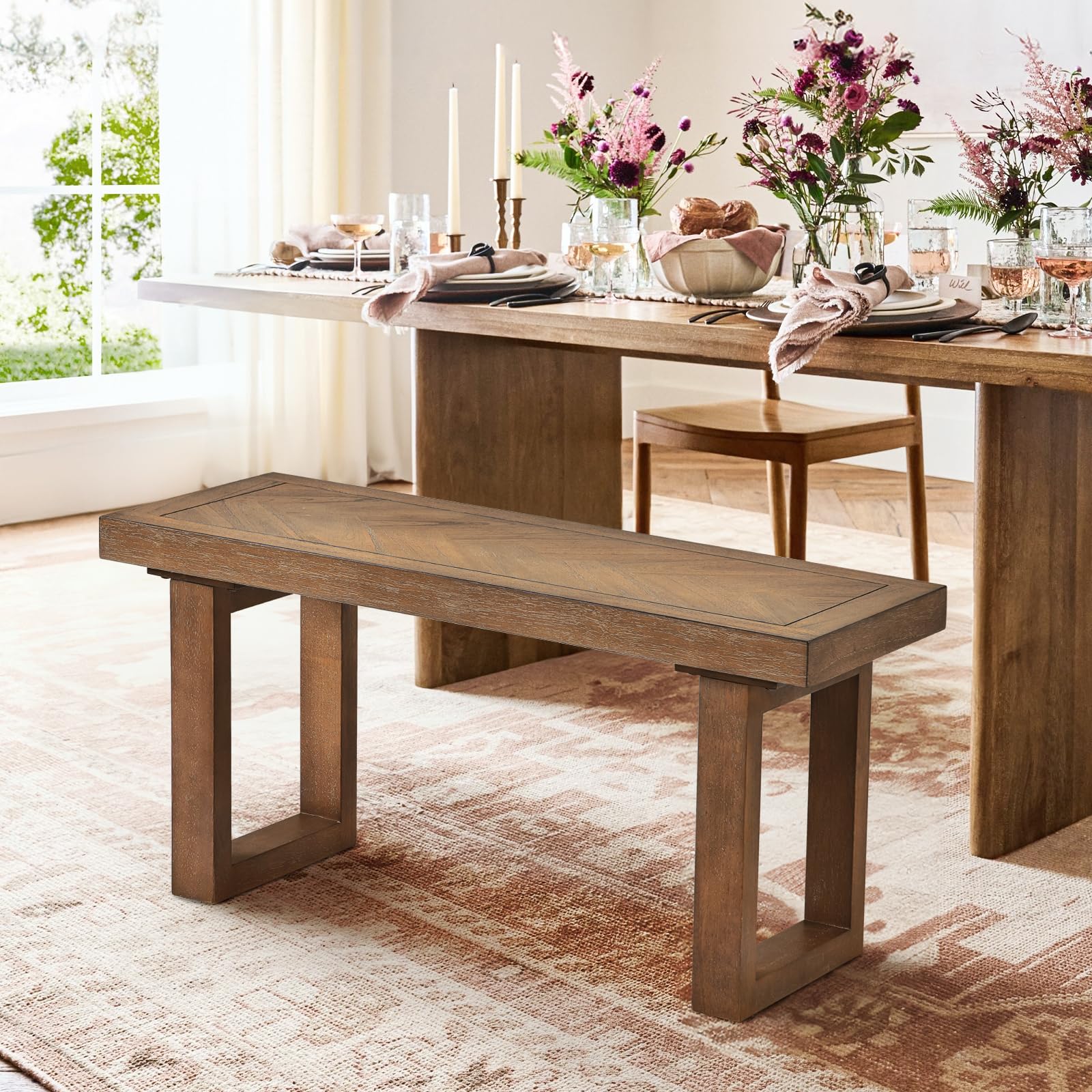
Choosing a Dining Bench That Works With Your Table
A dining bench can make a table feel relaxed and accommodating, but the right bench is not simply the one that looks best in a product photo. Its length, seat height, leg placement, and ease of movement need to work with the table already in the room. A freestanding bench is also a different purchase from a built-in banquette: it should remain useful if the dining layout changes.
Start with the table, not the bench
Measure the distance between the inside faces of the table legs or pedestal supports where the bench will sit. That is the practical space available for a bench that tucks underneath. Compare that opening with the bench's total outside length, including any flared legs or decorative arms. A bench that is shorter than the tabletop can still fail to fit between the base supports.
Next, note the height of the table's underside, not just its overall height. Aprons and structural rails can reduce legroom. As an initial ergonomic check, an ordinary dining table is often around 29–30 inches high and a typical dining seat around 18 inches, but cushioning and individual body size change the fit. Verify the exact dimensions of the actual pieces before ordering.
Decide between backless and backed seating
A backless dining bench has a smaller visual footprint and is easy to approach from either end. It can often tuck away beneath an open table. For occasional meals in a compact room, those advantages are meaningful. The trade-off is that people may miss back support during longer dinners or work sessions.
A dining bench with a back feels more like a small sofa and can help define a dining zone. It usually needs more space behind it, especially if the bench has to slide out before someone sits. Check the depth from the front seat edge to the farthest point of the back, as well as any angled back legs. Do not assume a backed bench has the same footprint as a backless one.
Make seating practical for everyday meals
For a household with young children, wipeable finishes and a stable, easy-to-clean base may matter more than decorative details. Solid wood shows crumbs quickly but is generally straightforward to clean with the manufacturer's recommended product. Upholstery adds comfort and may absorb spills; removable covers, seam design, and fabric-care instructions deserve attention.
Think about the people who will use the bench. A continuous seat allows diners to move closer together, yet it can also make it awkward for the middle person to get up. A bench paired with chairs on the opposite side of the table offers more flexibility for guests who need armrests or individual seat adjustment.
Plan how the bench moves through the room
Use painter's tape to mark the table, the bench's full depth, and the route to the kitchen or hallway. Then imagine someone entering the bench while another diner remains seated. A catalog image rarely reveals the circulation space that everyday use requires. If the bench must pull out, include that movement in the floor plan.
A bench placed against a wall may appear space-efficient, but it can make the inside sitter climb past someone else. If access from both ends matters, leave a real route around the table. Where the dining room also serves as a passage, give traffic flow priority over squeezing in one more nominal seat.
Check the materials and construction
Look below the seat at how the legs are attached and how the frame is braced. A long bench with no adequate support may flex; the appropriate design depends on its construction and manufacturer's stated load rating. Try the bench in person if possible, particularly for wobble and edge comfort. When ordering online, confirm assembly hardware, replacement part availability, and the cost of returning an oversized item.
A bench that matches the table's wood tone perfectly is not necessary. Repeating a finish, silhouette, or upholstery color can create a coherent room without buying a complete set. But a dramatic mismatch in seat height or scale will be noticeable at every meal, regardless of how well the colors coordinate.
When a banquette is the better choice
If the table will always stay in a narrow corner, a wall-side banquette may use that fixed location more efficiently than a movable bench. A banquette can integrate a backrest and sometimes under-seat storage. The trade-off is less flexibility, plus additional fitting and installation decisions.
Choose a freestanding dining bench when you value rearranging the room, moving house, or replacing individual pieces over time. Choose a banquette when the room's geometry and long-term use justify a dedicated seating installation. The most useful purchase is one you can enter, sit on comfortably, clean, and move around—not merely one that photographs beautifully.
Related planning guides
Continue with how enclosed booth seating differs.