Tom Brady’s Cloned Dog: What We Know About Junie and Lua
Tom Brady said in November 2025 that Junie was cloned from late family dog Lua. Here is the reported timeline, the genetics and what cloning does not replicate.
Tom Brady’s Cloned Dog: What We Know About Junie and Lua
Tom Brady said on November 4, 2025, that his family’s dog Junie is a clone of Lua, a beloved pit bull mix who died in December 2023. The revelation appeared in reports about Colossal Biosciences, a biotechnology company in which the retired NFL quarterback has invested. It is a documented 2025 announcement—not a new disclosure made in November 2026.
The story attracted attention because Brady described obtaining a blood sample from Lua before her death and later welcoming Junie. But the case also raises a distinction that headlines often miss: a cloned pet may share genetic information with another animal, yet it is not the same individual returned to life.
Who were Lua and Junie?
Lua was the family dog Brady shared with his former wife, Gisele Bündchen. Public reporting described Lua as a pit bull mix and confirmed her death in December 2023. Her loss was discussed publicly at the time. Junie is the dog Brady subsequently identified as a clone of Lua in a statement circulated through Colossal Biosciences.
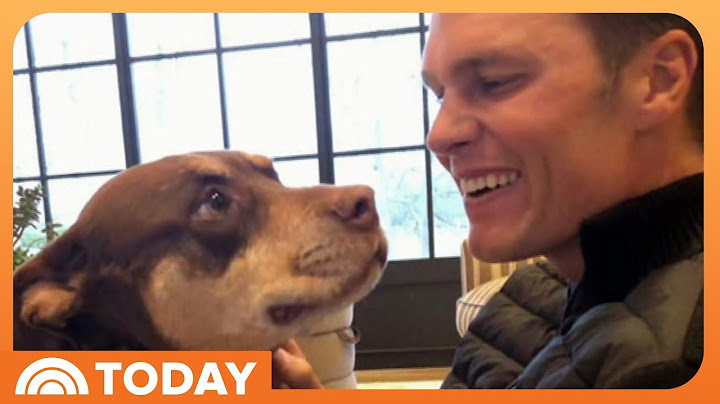
That description explains the relationship between the animals without suggesting that Junie has Lua’s memories or that the two dogs must behave identically. Both pets have their own lives, even where the underlying genetics are closely matched.
What did Tom Brady actually say?
In reporting published November 4, 2025, Brady said he had worked with Colossal and used a blood draw from his family’s older dog before she died. He described the subsequent cloning outcome as a second chance for his family to have a dog genetically connected to Lua. ABC News and other outlets reported the statement as part of a company announcement.
The wording matters: it is Brady’s description of the process and Colossal’s presentation of its technology, not an independently released, step-by-step laboratory record. Claims about the precise method, the sample type, or the company’s proprietary approach should be attributed accordingly.
The timeline: 2023 loss, 2025 public reveal
December 2023: Lua died, according to public accounts from the family and later news reports.
Before her death: Brady said a sample was obtained from Lua while she was alive.
November 4, 2025: Brady publicly said Junie was created as a clone of Lua through work with Colossal Biosciences.
The same day: Colossal announced its acquisition of ViaGen Pets and Equine, connecting the announcement to a broader discussion of commercial animal-cloning services.
The public sources do not establish every private step between Lua’s sample collection and Junie’s birth. Do not interpret a rough timeline or a marketing description as a complete veterinary case record.
How is Colossal involved, and what is ViaGen?
Colossal Biosciences is known for biotechnology and species-conservation projects. News coverage of Brady’s announcement also reported that he was an investor in Colossal. On the announcement date, the company said it had acquired ViaGen Pets and Equine, a provider of animal cloning and genetic-preservation services.
ViaGen publicly describes pet cloning using cell nuclear transfer and surrogate pregnancies. That is useful background for understanding the science. It does not establish that every detail of Brady’s reported blood-sample case followed ViaGen’s ordinary retail protocol. The companies’ public disclosures should not be treated as a substitute for independent access to private medical and lab records.
How does cloning differ from simply looking alike?
Somatic cell nuclear transfer is designed to create a new animal with the donor’s nuclear genetic information. In common descriptions, the outcome is compared to an identical twin born at a later time. That analogy is helpful but limited: development, gene expression, health, learning, and environment can lead to differences in the animals’ appearance and behavior.
The FDA notes that even cloned mammals can have somewhat different markings and do not necessarily share temperament. No biological cloning procedure transfers an animal’s memories, lifetime experiences, or unique bonds with people. A puppy raised in a different home or era will still develop as a new individual.
Does Junie prove cloning always works?
No. One highly publicized successful case cannot provide a population-wide success rate or settle questions about animal welfare. The British Small Animal Veterinary Association stated in February 2026 that it does not support commercial companion-animal cloning, pointing to potential harms for surrogates and clones and gaps in long-term health evidence.
These concerns exist alongside the reasons some families are interested in preserving an animal’s genetics. A balanced discussion should acknowledge both the emotional motivations and the biological realities without implying that all experts agree.
What is still unknown publicly?
The precise amount Brady or his family paid, if any, for the process has not been established in the reporting cited here.
A complete independent technical record of the sampling and cloning procedure was not supplied in the public announcement.
Specific long-term health outcomes for Junie cannot be inferred from short news accounts.
The story does not establish a general consumer guarantee for cloning timelines or results.
ViaGen’s published $50,000 dog-cloning price is a company service listing, not evidence of Brady’s personal expenses. Keep the commercial price question separate from the celebrity news story.
What the story means for pet owners
Junie’s story illustrates what genetic replication may make possible, but it should not set expectations that cloning replaces a lost pet. Families weighing the idea should ask how living cells are preserved, what care donors and surrogates receive, what uncertainty remains, and whether preserving genetics is actually the outcome they want.
There is also room to value the original dog without seeking a genetic copy. Remembering a pet, choosing to adopt again, or supporting animal shelters can all be meaningful responses to loss. No single choice is right for every household.
Frequently asked questions
Did Tom Brady really clone his dog?
Brady said in a November 4, 2025, statement that Junie was cloned from the family’s late dog Lua. ABC News and other outlets reported the announcement.
Who was Lua?
Lua was a pit bull mix who belonged to Brady’s family and died in December 2023. Brady later identified Junie as her clone.
Is Junie the same dog as Lua?
No. A clone is a separate animal born later. Genetic similarity does not transfer memories or guarantee identical temperament and behavior.
How much did Tom Brady pay to clone Lua?
His personal cost has not been established in the reporting used here. A provider’s advertised dog-cloning price must not be presented as Brady’s bill.