Eels: Types, Habitats, Life Cycle, and How They Differ From Other Fish
Eels. Explain true eels, eel-like lookalikes, freshwater-to-ocean migration, and species.
Eels: Types, Habitats, Life Cycle, and How They Differ From Other Fish
True eels belong to the order Anguilliformes.
Which fish are true eels?
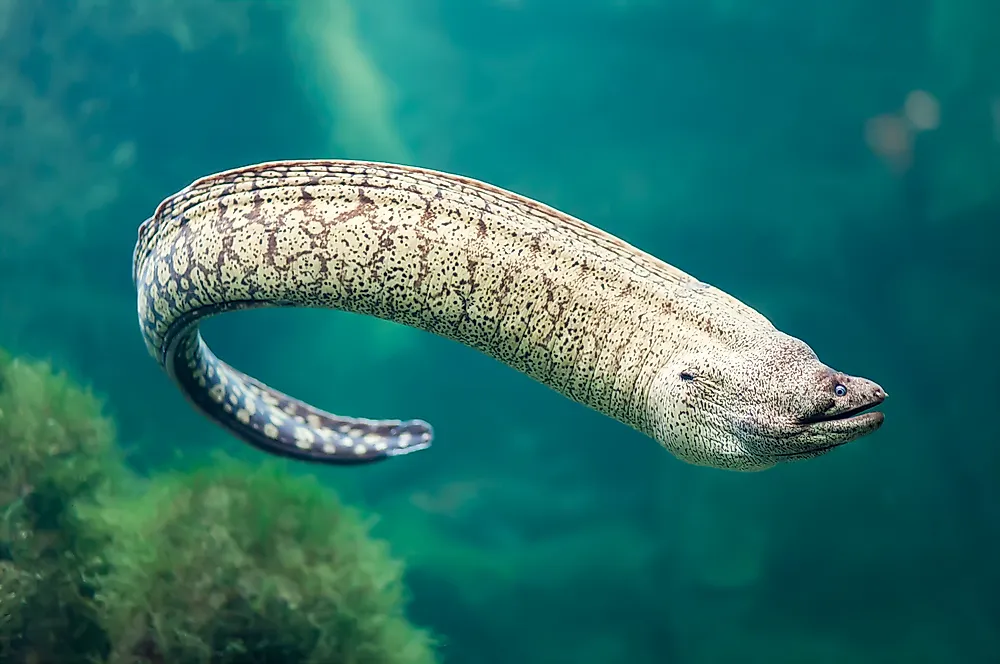
Their long bodies are usually flexible, with dorsal, tail, and anal fins forming a continuous ribbon around much of the body. Moray eels live around reefs, while freshwater eels in Anguilla spend much of their lives in rivers or estuaries. Electric eels are not true eels: they are knifefish.
A remarkable migration
The American eel is catadromous, which means it grows in fresh or coastal water and reproduces at sea. Adults migrate toward the Sargasso Sea; young transparent larvae are carried by Atlantic currents toward the coast. They develop into glass eels and then pigmented juveniles. Not all eel species follow this pattern, so “all eels return to freshwater” is incorrect.
Where eels live and what they eat
Eels inhabit habitats as different as reef crevices, continental slopes, estuaries, lakes, and rivers. Many hunt at dusk or at night, taking crustaceans, fish, worms, or other available prey. Their slender shape helps them shelter among rocks and submerged roots. The exact diet depends on the species, size, life stage, and local food web.
Why the distinction matters
Eel populations can be affected by blocked migration routes, damaged estuaries, pollution, and fishing pressure. Eel-shaped animals should not be assumed to share the same conservation status or reproductive strategy. For wildlife observation, photograph body shape, fin placement, habitat, and location rather than trying to handle an unidentified eel.
What changes across species and life stages
A glass eel arriving on a coast and a large moray resting in a reef crevice may both be called eels, but their ecological roles are very different. The American eel changes color and body proportions while maturing for its ocean migration. Morays, by contrast, remain marine fishes throughout their lives. When comparing photographs, first decide whether the animal belongs to Anguilliformes; then ask which family, habitat, and life stage is represented. That simple sequence prevents many misleading species identifications.
Observe the habitat, not just the name
A reliable identification should combine the animal’s range, habitat, appearance, and behavior. A common name or single photograph may hide several similar species. Water temperature, depth, and season can also change what an observer finds. For information about conservation or harvest rules, consult the authority responsible for the specific species and area.
Putting scientific names and ranges in context
Marine populations can move, change with ocean temperature, or contain closely related species that are hard to tell apart. When an article describes a habitat or food-web role, treat it as a typical pattern rather than a promise about every individual. Conservation and seafood guidance are also distinct: a species can have biological importance while regional fishing rules and consumption advisories vary independently. Check the latest species-specific agency material before acting on either.
Frequently asked question
Are electric eels true eels?
No. Despite their common name, electric eels are knifefishes, not members of Anguilliformes.
