Engineering and Invention: How Machines, Measurement Tools and Structures Work
Explore engineering and inventions with carefully defined concepts, evidence-led examples and focused guides to individual questions.
Engineering and Invention: How Machines, Measurement Tools and Structures Work
Engineering combines scientific knowledge with practical constraints to create structures, machines, and measurement systems. It is concerned not only with what works in principle, but also with performance, reliability, cost, and safety.
How the field is organized
Bridge designs manage forces through different structural pathways. Measuring tools such as micrometers and sensing systems such as transducers convert small physical differences into useful information. Engines and furnaces transfer energy using different mechanisms.
Core ideas and how to read them
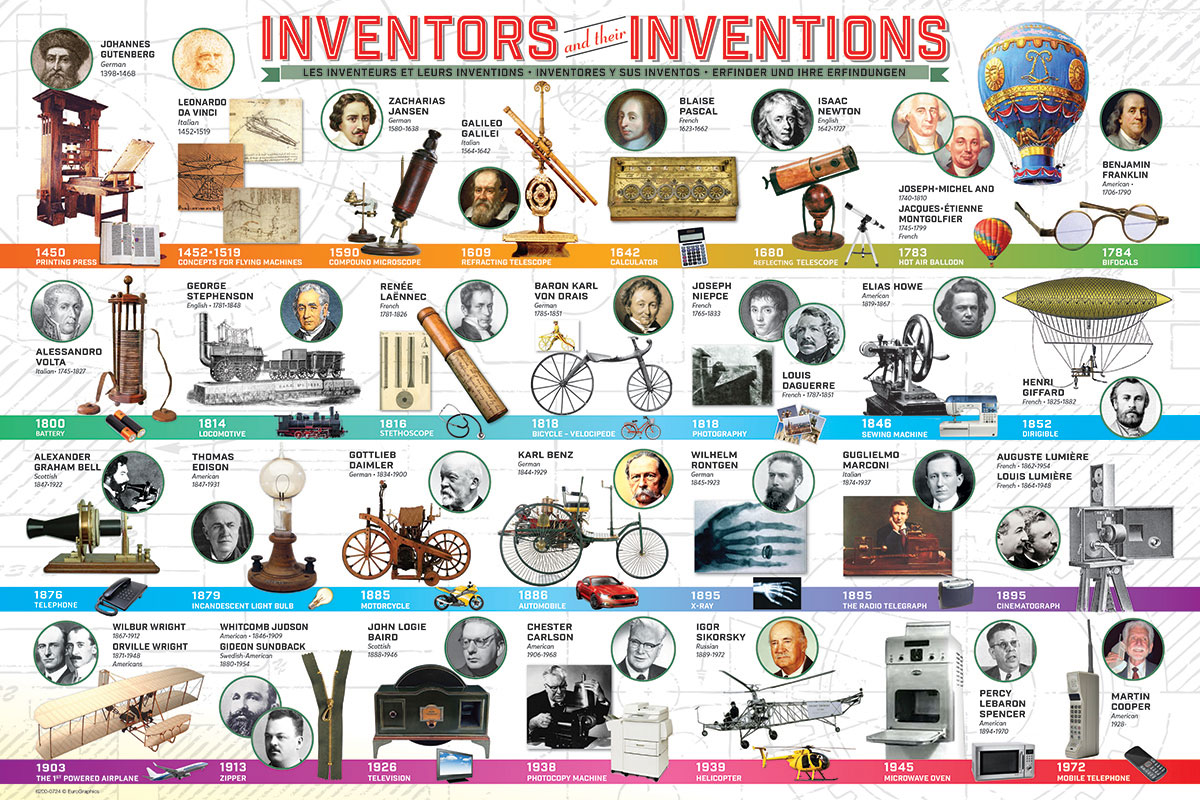
History reveals that important technologies usually evolve through many contributions. The printing press and internet, for example, were enabled by earlier methods and later standards rather than one simple invention moment.
Engineering descriptions begin with a function: what enters a system, what happens inside, and what result it must produce. Different designs can perform the same job using different mechanisms.
Explore the topic library
Who Invented the Printing Press — Johannes Gutenberg is associated with developing a successful system of movable-metal-type printing in Europe in the mid-fifteenth century.
When Was the Internet Developed — The internet developed over decades through research networks and common communication protocols rather than appearing on one invention date.
Micrometer — A micrometer is a precision measuring instrument that uses a calibrated screw mechanism to measure small dimensions.
Magnetic Compass — A magnetic compass uses a magnetized pointer or card that responds to Earth's local magnetic field.
Interchangeable Parts — Interchangeable parts are components manufactured so that one qualifying piece can replace another without custom fitting in a standardized assembly.
Cantilever Bridge — A cantilever bridge uses projecting structural members supported from one end to carry loads over an opening or waterway.
Beam Bridge — A beam bridge carries loads with horizontal members spanning between supports.
Fresnel Lens — A Fresnel lens uses concentric stepped sections to approximate the optical action of a much thicker lens with less material.
Wind Tunnels — A wind tunnel is an apparatus that directs controlled airflow past a model or test object to study aerodynamic behavior.
Capacitor — A capacitor is an electrical component that stores energy in an electric field between conductors separated by an insulating region.
Electric Furnace — An electric furnace uses electrical energy to generate heat for industrial, commercial, or residential purposes.
Transducer — A transducer converts one form of energy or physical signal into another for sensing, actuation, or communication.
Jet Aircraft — A jet aircraft is propelled by engines that accelerate air or exhaust to produce thrust.
Two-Stroke Engine — A two-stroke engine completes a power cycle in two piston strokes, usually one crankshaft revolution.
Wrought Iron — Wrought iron is an iron material historically produced with low carbon content and characteristic slag inclusions.
Portland Cement — Portland cement is a hydraulic binder used to make concrete and mortar.
How explanations are evaluated
A useful engineering explanation identifies the input, the governing mechanism, and the output. It should also name the limits: load, temperature, precision, flow conditions, or other factors that determine whether a design can be used safely.
Design calculations, instrument calibration, prototypes, historical records, and real-world testing help distinguish an explanation from an appealing but untested story.
Questions worth asking
What exactly is being defined? Which mechanisms have been established, and which statements describe simplified models? How does the evidence change when time, location, scale, or context changes?
Use the linked articles for the detailed definitions, examples, and limits. This page is a directory and overview rather than a replacement for the individual subject entries.
