Finding Your Way Through the Hotel in Escape the Backrooms
Navigate the hotel area in Escape the Backrooms using reliable landmarks and a version-checked route, rather than an invented floor plan.
Finding Your Way Through the Hotel in Escape the Backrooms
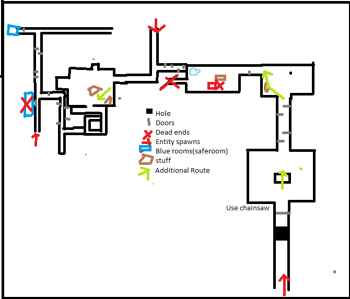
The Hotel portion of Escape the Backrooms is easier to navigate when you treat it as a sequence of objectives rather than one giant corridor puzzle. Guides commonly group the stage into a Main Hall, guest-room section, and Boiler Room. This is a text-based landmark guide; it does not pretend to provide a verified top-down map or a fixed location for every randomized clue.
Establish the Main Hall as your anchor
Start by recognizing the grand hotel space and the route toward the locked elevator access. The surrounding rooms can be confusing, but the main objective gives you a consistent point to return to. Documented hotel guides describe a painting-order challenge followed by a resource exchange involving a dumbwaiter and keys.
Rather than sending every teammate into a separate hallway, assign one person to track which requirement has been completed. A useful mental map begins with named landmarks—lobby, dumbwaiter, locked gate—before worrying about the precise angle of a corridor.
Navigate the guest rooms and mailboxes
The guest-room phase centers on numbered doors and mailbox clues. Identify the open mailboxes, check the corresponding rooms for the relevant papers, and bring the findings back to the mailbox area. When the puzzle is completed, look for the displayed clue that directs your attention upward for the code needed at Room 235.
Do not rely on a code repeated in a random comment: the clue displayed in your own run is the more defensible source. Also do not assume that a room shown open in somebody else's screenshot must be open in your game. Track the room numbers involved in the current attempt.
Work through the Boiler Room cautiously
After the room-code section, the atmosphere changes to pipes, heat, and an increased need for environmental awareness. Look for the actual progression route rather than opening doors at random. A distinctive room or sign is a better checkpoint than “turn right twice,” especially when players are stressed or looking at the environment from different angles.
Groups should regroup before crossing into a new section. If one member says “I am at the pipes” and another says “I am at a door,” neither description is specific enough. Use the named puzzle or entry point that everyone recognizes.
Why a generic Level 5 map can mislead
Community-fiction Level 5 is the Terror Hotel, but its wiki descriptions are not a guaranteed map of this playable stage. The game borrows imagery and then adds its own objectives. Check the update date on any guide, confirm the stage in its screenshots, and favor observed clues over an unverified diagram.
If the team loses its bearings, return to the last solved landmark, identify the next unfinished objective, and rebuild the route from there. A simple shared route plan often works better than an elaborate map from an unknown version.
Frequently asked questions
Is there one permanent hotel code?
Do not rely on a fixed code from a screenshot. The safest approach is to complete the mailbox and paper clues in your own run, then read the displayed result.
What landmarks matter most?
The Main Hall, dumbwaiter, mailbox area, Room 235, and Boiler Room create a practical sequence. Name these locations aloud in co-op to avoid confusing similar corridors.