Hamster Cage: Choosing a Safe Home and Layout
Choose a hamster enclosure by usable floor area, burrowing depth, ventilation and safety, with a practical setup checklist for US readers.
Hamster Cage: Choosing a Safe Home and Layout
A suitable hamster cage is not defined by how many colorful accessories fit inside it. The important starting point is continuous floor space, enough depth for stable burrows, an appropriately sized running wheel, and secure access to food and water. The guide below helps you evaluate the enclosure itself before spending money on tunnels or decorative extras. A playpen is useful enrichment, but it cannot compensate for a cramped permanent home.
Quick answer: how to choose a hamster cage
Start by measuring the usable inside floor, not the box dimensions on a retailer's listing. A long, uninterrupted base lets a hamster forage, carry bedding, and create separate areas for sleeping and toileting. PDSA cites at least 100 by 50 centimeters of floor space as a minimum reference, with more space preferable. Treat that figure as animal-welfare guidance rather than a universal US law. If an enclosure looks enormous in a photograph, check its measurements against the furniture or shelf where it will actually sit.
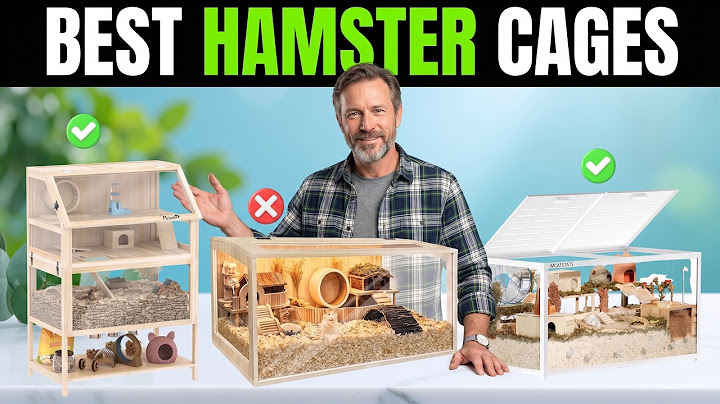
Continuous floor space vs shelves and tiny cages
A shelf or second level may hold a dish or hide, but it does not add equivalent burrowing territory. A tall, narrow multi-story unit can leave very little room for natural behavior and may create fall hazards. Calculate base area using its internal length multiplied by internal width. Beware measurements inflated by attached tubes, detachable lofts, or outside handles. A short enclosed ramp can improve access to an elevated platform, yet a deep single-level habitat should remain the priority, particularly for a hamster with limited climbing ability.
Glass tank, bin cage and barred enclosure trade-offs
Glass tanks and well-designed transparent enclosures can retain a deep substrate layer and allow burrows to be observed, but the top must ventilate properly and close securely. Some barred cages ventilate well and are easier to attach a bottle to; their shallow bases often spill substrate and restrict burrow depth. A purpose-built bin enclosure may be practical if its dimensions, structural strength, ventilation and lid are suitable. Check every latch, corner, sharp edge and chewable seam, especially after a cage is moved or cleaned.
PDSA guidance: at least 100 x 50 cm continuous floor area and 25 cm burrowing bedding
PDSA's bedding guidance describes a deep burrowing zone of at least about 25 centimeters. This requires more height than a shallow tray provides; the enclosure must also accommodate the wheel above the substrate without crushing a sleeping chamber underneath. Avoid exposed wire floors. Place heavy ceramic hides, sand trays and wheels on supported platforms so they cannot settle into tunnels. Keep the cage in a ventilated, calm indoor space away from direct sun, drafts, radiators and pets that may frighten the hamster.
Quick comparison
| Choice / feature | Strength / purpose | What to check |
| Large single-level tank | Deep bedding, uninterrupted base | Needs secure ventilated lid; heavy |
| Deep-base barred cage | Good airflow and attachment points | Verify bar gaps and base depth |
| Well-built bin enclosure | Customizable footprint | Ventilation and escape-proofing require care |
| Tall tube tower | Looks compact and entertaining | Not a substitute for floor space |
Secure ventilated lids, solid flooring and temperature
Plan the layout around the hamster's movement. One side can offer deeper bedding and multiple hide entrances; another can support the wheel, sand bath and a water station. Leave an unobstructed route between resources. Supply chew-safe objects and foraging opportunities, not just a plastic wheel. A wheel needs a solid running surface and must allow the animal to run without an obviously arched back. Observe the hamster in the new layout before deciding that a manufacturer-supplied wheel is large enough.
Layout: wheel, hides, food and water without covering deep bedding
Make a setup sketch before filling the cage: base, bedding zone, wheel, sand, hides, water, food and access doors. Ensure you can reach the toilet area for spot cleaning without destroying the main nest every day. After setup, test latches and lids twice, remove loose strings or breakable ornaments, and run a clean water-flow test. Introduce familiar, clean nesting material during routine changes when safe to preserve scent cues. Never use a cleaning timetable as an excuse to leave wet or moldy substrate in place.
Practical setup checklist
Measure continuous interior floor space.
Check that deep bedding and a properly sized wheel fit together.
Keep all platforms and heavy objects supported.
Confirm secure latches, ventilation and no exposed wire floor.
Provide hides, sand, chew materials and daily water access.
Observe behavior and inspect soiled areas every day.
Setup and routine maintenance checklist
Inspect the water source daily, remove visibly soiled bedding, and monitor whether buried food has spoiled. Full habitat disruptions can stress a hamster, so clean selectively while maintaining hygiene and follow veterinary advice for illness. Keep a written note of escape attempts, unusual inactivity, repeated bar chewing, and changes in eating or drinking. These observations help distinguish a housing problem from a potential health concern. Do not assume that a hamster that sleeps during the day is lethargic; hamsters are naturally active later in the day.
When cage design causes stress or injury
Persistent climbing, repetitive chewing on enclosure edges, poor sleep, wounds or falls are reasons to inspect the habitat urgently. Check whether floor space, wheel fit, digging depth, hiding opportunities and water access are adequate. A hamster suddenly refusing food, limping, breathing abnormally, or showing signs of pain needs veterinary attention; changing cage accessories alone is not treatment. Upgrading an undersized home can improve opportunities for natural behavior, but it should be done thoughtfully so the animal retains a secure place to hide during the transition.
Example setup and buying decision
Imagine choosing between two enclosures that cost about the same. One is a tall, narrow tower with six short tubes; the other is a broad single-level unit with a deep base. The second may provide substantially more useful habitat even if it has fewer accessories. For a practical layout, place a stable wheel and water source on one supported side and reserve a large area on the other side for compactable bedding. Add a multi-chamber hide near the deep section, a sand tray on a secure surface and several low tunnels that connect sheltered areas. Before bringing home an animal, test how you will spot-clean a wet corner without removing its nest. If you cannot fit the wheel and deep bedding without crowding, reconsider the enclosure rather than cutting both essentials down.
For a final buying decision, measure the actual base, check wall height, look for secure ventilation, and calculate the amount of bedding needed for a deep zone. A large-looking 'starter kit' may be a poor value if its most visible accessories need replacement. When in doubt, spend the budget on usable habitat rather than novelty add-ons.
Frequently asked questions
Is a multi-level hamster cage enough?
Multiple levels do not replace one spacious continuous base. Prioritize floor footprint and deep bedding, then add low, stable features only if useful.
Can a hamster live in a fish tank?
A large tank can work when it offers adequate floor area, depth, ventilation and a secure mesh lid; avoid an airtight solid top.
How much bedding should go in a hamster cage?
PDSA recommends a deep layer around 25 cm or more to support burrowing; use suitable low-dust material that can hold tunnels.
Should a hamster cage be kept in a bedroom?
Choose a quiet, temperature-stable indoor location away from sun, drafts and other pets. Remember the hamster may run and dig at night.
Does a playpen replace a big cage?
No. A supervised playpen can add stimulation but a hamster spends most of its time in its permanent enclosure.