Indoor Rabbit Hutches: Shelter, Safety and Space
Learn what an indoor rabbit hutch can provide as a shelter, which features to inspect and why rabbits still need a much larger living area.
Indoor Rabbit Hutches: Shelter, Safety and Space
An indoor rabbit hutch can be useful as a shelter, quiet sleeping nook or familiar retreat inside a much larger rabbit living area. It should not be treated as the rabbit's entire home. A sensible hutch has easy entrances, smooth surfaces, adequate ventilation and space for rabbits to turn and rest, while an attached or surrounding open area remains available for running, exploring and using their litter station all day.
This distinction matters when shopping. A product that looks like a miniature wooden house may photograph well but still be too small or restrictive as full-time accommodation. The Rabbit Welfare Association & Fund (RWAF) advises that a hutch must not be the sole or main accommodation, and PDSA emphasizes continuous access to substantial exercise space.
What an indoor rabbit hutch should actually do
The hutch's most useful job is offering shelter and a place to retreat. Rabbits are prey animals; many feel more comfortable when they can move into a shaded hideaway without losing access to the wider habitat. An indoor shelter can be a sturdy wooden housing unit, an appropriately sized pet hide or a simpler cardboard structure, depending on the rabbit's chewing habits and the household.
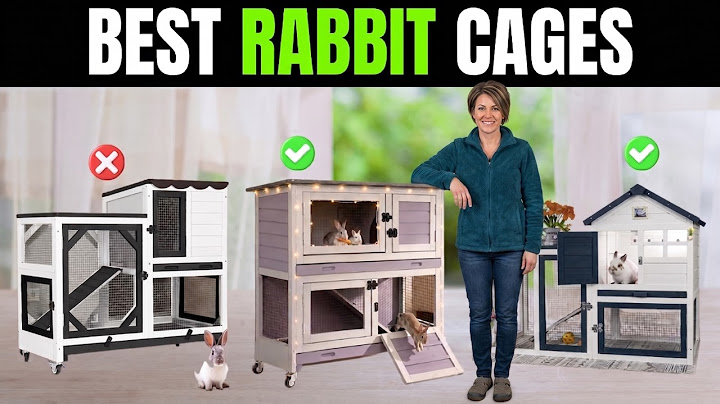
A hutch is different from a cage shopping guide. Instead of comparing small enclosures as possible complete homes, evaluate the hutch as one object within a much larger protected space. For layout, floor space and bunny-proofing basics, use our indoor rabbit habitat setup guide.
Why a hutch alone is not enough
For a pair of average-size rabbits, RWAF recommends a single continuously accessible area at least 3 m by 2 m by 1 m high. This is a minimum welfare recommendation; taller shelves do not substitute for the ground-level floor they need for running. The sleeping quarters are part of the habitat, not a separate excuse for reducing its overall footprint.
A rabbit shut in a small hutch for most of the day can struggle to stretch, sprint or choose between resting and toileting. Even if a seller calls the hutch "extra large," check the real usable floor area and whether there is a permanent route to an exercise area. Free access should not depend on someone remembering to open a door twice a day.
Check entrances, exits and interior clearances
A good hide gives a rabbit room to enter, turn around, lie comfortably and leave without rubbing against sharp edges. Prefer shelters with two exits where feasible, particularly in a bonded pair: an animal should not be trapped by a companion sitting in the only doorway. Avoid high thresholds, narrow openings and hanging hardware that can catch fur or feet.
Inspect the interior as carefully as the outside. There should be no protruding nails, exposed staples, splintered wood or unfinished cutouts. If a hinged door might swing shut and block access, remove it or secure it safely in an open position according to the product's design. A decorative second floor is unnecessary if reaching it requires a steep, slippery ramp.
Materials, chewing and safe finishes
Rabbits explore with their teeth, so any material within reach should be considered for chewing risk. Choose sturdy, smooth materials without flaking paint or unknown chemical coatings. Avoid loose fabrics with threads that can be swallowed and lightweight plastic components that become sharp when gnawed. If you cannot verify whether a treatment or finish is safe for animals, choose a simpler untreated alternative or ask the manufacturer for documentation.
Wood can absorb urine and moisture, making some hutches harder to clean. Consider whether you can reach every interior surface and replace a soiled floor panel. A shelter that looks charming but cannot be cleaned thoroughly may be a poor long-term choice. Inspect for damp patches, persistent odor and deteriorating joints during regular maintenance.
Flooring, ramps and access for older rabbits
Solid non-slip flooring is preferable to mesh or wire. For an indoor unit, a secure low-pile mat or other easily washed surface can give traction, provided it cannot be chewed apart. A raised platform may be enjoyable for a healthy rabbit, but it must not be the only route to hay, water or a resting place.
If a rabbit is elderly, recovering from injury or reluctant to hop, lower access and a roomy ground-floor refuge are more useful than extra levels. Watch for signs of pain, reduced mobility, dirty fur around the hindquarters or unwillingness to climb. These changes deserve a veterinarian's assessment rather than simply a new ramp.
Place the shelter without crowding the habitat
Position the hutch in a calm corner away from direct sun, radiators, drafts and startling appliances. Leave clear walking space around the entrance. Do not place a tall heavy structure where it could tip or where a rabbit could jump into an unsafe gap behind it. In a shared habitat, give each rabbit more than one option for hiding so a dominant animal cannot monopolize the only safe spot.
Keep a litter tray, clean hay and fresh drinking water readily available in the surrounding enclosure. The shelter should not become a cramped multipurpose box with a litter tray, hay rack and water vessel all blocking each other. If your rabbits have a suitable large open pen, a simple removable hideout may work better than a bulky hutch.
Cleaning, ventilation and household safety
Check ventilation at rabbit level; a closed solid-front box can trap dampness or become warmer than the surrounding room. Use openings that allow air to circulate without leaving sharp edges or trapping limbs. Remove wet bedding promptly and scrub hard surfaces with a rabbit-appropriate cleaning method, then rinse and dry before allowing access again.
Inspect the hutch after moving furniture or washing floors to ensure it still sits securely. Watch for loose screws, swelling wood, damaged hinges or exposed staples. Never seal a rabbit inside a poorly ventilated shelter to reduce noise or keep it from chewing; fix the wider habitat instead. Your rabbit should always be able to reach fresh water—our rabbit bottle versus bowl comparison covers placement and routine checks.
When a simpler hideout is the better choice
A large cardboard hide with two openings, a washable wooden hide or a secured tunnel may offer the sense of refuge a rabbit wants without consuming most of its exercise space. The best option depends on whether your rabbits chew, climb, hide together or prefer separate retreats. Replace cardboard when it becomes wet, torn into unsafe pieces or too flimsy to hold its shape.
Avoid claiming that any hutch is "stress-free" or "escape-proof" without evidence. Observe the rabbits themselves: they should rest comfortably inside, come and go without hesitation, and still have wide paths to run and forage around it.
Frequently asked questions
Can an indoor hutch be a rabbit's permanent home?
Not by itself. A hutch can be a shelter within a continuously accessible larger habitat, but welfare organizations advise against using a small hutch as the rabbit's sole living accommodation.
Is a two-story indoor hutch better than a single-level one?
Not automatically. Extra levels can provide variety if safe, but they do not replace an adequate uninterrupted ground-level exercise area. Ramps and drop-offs may be unsuitable for rabbits with limited mobility.
Does the hutch need two doors?
Two exits are desirable in a shelter where practical, especially for bonded rabbits, because one rabbit is less likely to block the other's way out. Check that every opening is smooth and large enough for easy movement.
Is wood or plastic easier to clean?
Many smooth surfaces are easier to wipe, but chew safety and product construction matter as much as convenience. Wood may absorb moisture, while brittle plastic can become a hazard if gnawed. Inspect whichever material you choose.
What if my rabbit refuses to use the hutch?
Do not force the rabbit inside. Check entry size, floor grip, heat, noise, odors and whether the rabbit prefers a less enclosed hide. Multiple safe shelter options are often more helpful than insisting on one product.