Isopods: What They Are, Anatomy, Habitat, and Food Web Role
Crustacean identity, terrestrial vs aquatic habitat, decomposition.
Isopods: What They Are, Anatomy, Habitat, and Food Web Role
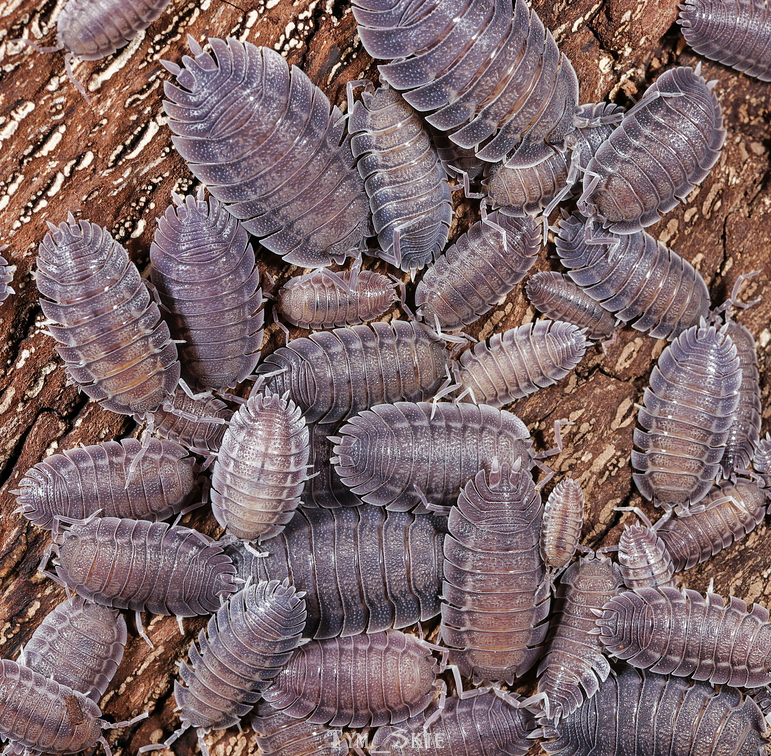
Isopods are crustaceans with flattened, segmented bodies and multiple pairs of walking legs. Understanding its body plan, habitat and feeding role is more useful than relying on a common name.
How to identify and classify it
The group includes familiar woodlice and a wide range of aquatic forms.
Invertebrates are extraordinarily diverse, so shared appearance does not guarantee close ancestry. Legs, body segments, feeding parts and modern taxonomic evidence often settle an identification more effectively than color.
Where it is found
They live in seas, freshwater and damp land habitats. Land isopods generally require moist refuges because their respiratory surfaces can dry out.
Tiny shifts in moisture, substrate or shelter can change an invertebrate community markedly.
What it eats and its ecosystem role
Many consume decaying organic material, but some are predators or parasites. Their roles vary from litter decomposition to marine scavenging.
Feeding categories are descriptive. An animal may play several roles over the course of its life.
Reproduction and special adaptations
Females brood young in a specialized pouch, unlike insects that undergo complete metamorphosis. Some species roll into a ball while others cannot.
Life cycles differ substantially among groups; examples need to be labeled with their own taxonomic scope.
Common mistakes and safety
The group includes familiar woodlice and a wide range of aquatic forms.
For safety and conservation, observe unfamiliar animals without handling them. Scientific claims about stings, toxins or pathogens should be tied to a known species and reliable source.
A terrestrial woodlouse and a marine isopod share crustacean ancestry, despite living in very different habitats. Neither is an insect, even when it is found among insects in leaf litter.
How scientists study this group
Anatomical terms help more than vague resemblance: count body regions, look at appendages and compare modern group descriptions. Wildlife safety and scientific classification are separate questions. Do not infer that an unfamiliar animal is safe to touch.
Photograph unfamiliar invertebrates in place instead of handling them, especially where venom, parasites or protected species may be involved.
Quick takeaways
They live in seas, freshwater and damp land habitats.
Many consume decaying organic material, but some are predators or parasites.
An isopod is not an insect; both are arthropods.
Frequently asked questions
What is Isopods?
Isopods are crustaceans with flattened, segmented bodies and multiple pairs of walking legs.
Where is it found?
They live in seas, freshwater and damp land habitats.
What does it eat or how does it feed?
Many consume decaying organic material, but some are predators or parasites.
