Specific Gravity: Definition, Principles, Formulas and Real Examples
Understand specific gravity with clear definitions, examples, scientific context, and notes on common misunderstandings.
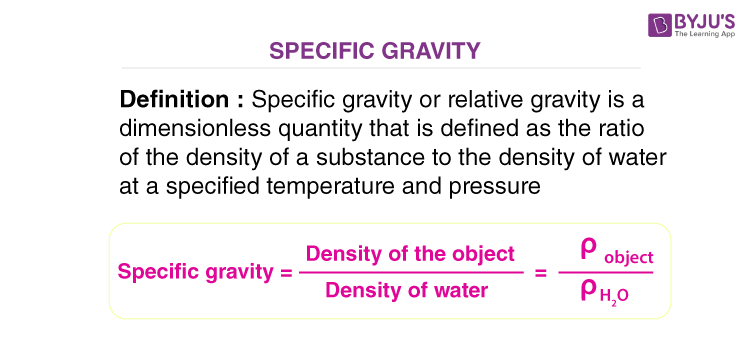
Specific Gravity: Definition, Principles, Formulas and Real Examples
Specific gravity is the ratio of a material's density to the density of a reference substance, commonly water for solids and liquids.
A useful way to understand this topic is to separate the underlying idea from a worked example and from the limits of the explanation. A useful physics model declares what is being measured, what is held constant, and which forces or transfers are included. Without those details, even a correct equation can be used incorrectly.
How it works
Because it is a ratio of like units, specific gravity has no units. It expresses relative density under stated reference conditions.
The mechanism matters because it explains the observation rather than just naming it. Different conditions can change the outcome, so a good explanation states which variables or assumptions matter.
An example in context
A liquid with a specific gravity lower than water tends to float on water if the two liquids do not mix significantly.
This example is best treated as a specific case, not an all-purpose rule. Consider which details of the example would need to remain the same for the comparison to be sound.
What the term should not be confused with
Specific gravity is not interchangeable with absolute density: density has units, while specific gravity does not.
These boundaries help keep this page focused. Related subjects may overlap, but a shared word or superficially similar appearance is not sufficient evidence that two concepts are equivalent.
Why the distinction matters
Measurements, repeated experiments, and the consistency of units help test a physical account. For complex systems, models may be refined to include friction, thermal effects, geometry, or quantum behavior.
For readers, the practical lesson is to ask what is directly observable, what is inferred from a model, and which further evidence would help separate competing explanations. In this topic, the example above illustrates why that difference can matter.
Common mistakes and limitations
The reference temperature and reference material can affect the value. Comparisons require consistent conditions.
Introductory examples frequently idealize the situation. The model is valuable when its simplifications are stated rather than hidden.
Frequently asked questions
What is Specific gravity? Specific gravity is the ratio of a material's density to the density of a reference substance, commonly water for solids and liquids.
What is a clear example? A liquid with a specific gravity lower than water tends to float on water if the two liquids do not mix significantly.
What is a common misconception? Specific gravity is not interchangeable with absolute density: density has units, while specific gravity does not.
Continue exploring
Understanding Physics — a broader topic overview.
Magnetic Fields — a focused explanation of a related concept.
Gauss's Law — a focused explanation of a related concept.
