Rabbit Hay Feeder: Rack Styles, Placement and Safety
Compare rabbit hay feeder and hay rack layouts, learn how to position hay beside the litter tray, and check feeding access, cleaning and safety.
Rabbit Hay Feeder: Rack Styles, Placement and Safety
A rabbit hay feeder should keep fresh hay easy to reach, encourage natural grazing, and make cleaning manageable. The best choice is not necessarily the tidiest-looking rack: it is the design that lets your rabbit pull out hay comfortably without sharp edges, restrictive openings or competition from another rabbit.
Rabbits need continuous access to good-quality grass hay or grass. A rack near a litter tray can be convenient because rabbits often graze while toileting, but a feeder does not replace the need for enough overall hay, water, space, and enrichment.
What a hay feeder should actually do
A well-designed feeder holds a usable supply of hay, allows easy refilling, and gives a rabbit a natural head-and-neck position while eating. Hay should not be packed so tightly that a rabbit must tug forcefully for every mouthful. Some dropped strands are normal; saving every strand of hay is less important than steady intake.
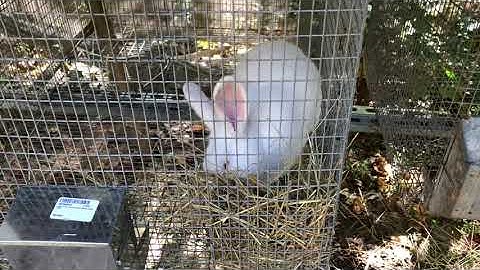
Choose placement that suits the rabbit's routine. A feeder over or alongside the litter area may keep food from being scattered throughout the room, while a second hay station can help if multiple rabbits share one home or if your rabbit avoids eating near the toilet.
Compare common hay feeder layouts
Wall-mounted rack
A wall-mounted rack can keep hay off a wet tray floor and free up walking space. Its disadvantages include possible hard-to-clean gaps, uncomfortable feeding height, and narrow openings that encourage awkward pulling. Fasten the rack securely and position it so the rabbit can graze with all four feet comfortably supported.
Open hay basket or bin
A wide, stable open bin can be easy to refill and can allow natural nose-first foraging. Check for tipping, sharp wire ends, exposed staples, loose paint, and any handle or loop that might catch a paw. If the rabbit climbs into the bin, confirm the base is safe and nothing can collapse or pinch.
Hay placed at the clean end of a litter tray
Loose hay on one clean end of a spacious tray is inexpensive and often easy for rabbits to use. It can be messier and requires frequent removal if damp. This arrangement works best when the rabbit has plenty of turning room and hay is replaced before it becomes soiled.
Combined feeder-and-tray products
Integrated units may simplify setup, but their advertising dimensions can be misleading. Check the usable floor space after the feeder has been installed, not just the outside measurements. A tidy enclosure is not a success if it makes the rabbit hunch, squeeze or compete for hay.
For a complete toilet-station walkthrough, use our rabbit litter box with hay feeder setup guide.
Position hay at a comfortable height
Place the feeding edge around the rabbit's natural resting head position rather than high enough to require standing or repeated neck extension. Observe your rabbit actually eating: does it approach confidently, take long strands without struggle, and move away without catching fur or feet? If not, lower or change the feeder.
Mobility-limited rabbits often do better with a low, wide opening or a clean loose-hay section than with a tall rack. A large rabbit may need wider clearances than a small rabbit. The large rabbit litter box sizing guide explains how to preserve room when a feeder occupies the same station.
Why reducing waste should not restrict intake
It is tempting to choose a narrow dispenser that releases a single strand at a time. But hay is a dietary staple, not a treat to ration. Rabbits need to graze frequently, and resistance or hard-to-reach hay may make them eat less. Refill a feeder before it empties and leave extra accessible hay if you will be out for part of the day.
Try putting a washable mat under a separate hay station or using a tray deep enough to catch loose strands. These methods may reduce floor mess without restricting access. Composting or disposal options depend on whether the hay has contacted urine, litter or cleaning products; do not put contaminated hay back into the feeder.
Materials and chew hazards to check
Select sturdy, smooth, rabbit-safe materials without exposed wire points or brittle edges.
Avoid loose string, elastic ties, plastic-coated wires, splintering finishes and small pieces the rabbit could swallow.
Check that gaps cannot trap the rabbit's head or limbs during playful investigation.
Be cautious about fabrics or liners your rabbit chews; eating nonfood material can be dangerous.
Confirm that mounting hardware is out of reach and the rack cannot fall into the litter tray.
Hay racks made of natural materials still need inspection. A woven basket, for example, may be chewed into a sharp or unstable shape. If your rabbit starts eating a nonfood component, remove the item and speak with a rabbit-experienced veterinarian if ingestion is suspected.
A simple refill and cleaning routine
Look at the feeder morning and evening, adding hay whenever it runs low. Remove wet, dusty or visibly soiled hay immediately. Wash surfaces as needed with a pet-safe approach, rinse and dry well, then check the fasteners again. Keep the feeding station away from sprays, perfumes, and litter dust.
If a bonded pair uses one feeder, watch both rabbits eat at the same time. A dominant rabbit may silently block access, so consider a second hay station. Unlimited hay and a choice of eating positions are more valuable than forcing both rabbits through one narrow opening.
When a feeding change signals a health problem
If hay is always left untouched, do not assume your rabbit simply dislikes the brand of rack. Check whether the feeder is hard to use, but also monitor appetite, fecal output, and behavior. Eating less hay, drooling, selective eating, or refusing food can indicate dental or digestive problems. A rabbit that stops eating needs urgent veterinary attention.
Bedding and absorbent litter have a different purpose from edible hay. If you are deciding what belongs under the tray versus where the rabbit rests, see our rabbit bedding and litter materials guide.
Frequently asked questions
Does a rabbit need a hay rack?
No. Clean loose hay in a spacious, dry area can work well. A rack is optional and useful only if it improves access, hygiene or the daily routine without making feeding harder.
Should a hay feeder go above the litter tray?
It can, because many rabbits like to eat while toileting. Mount it at a reachable height and keep fresh hay away from damp litter; give the rabbit another way to access hay as well.
Are narrow metal hay racks safe?
Safety depends on spacing, finishing and how the rabbit uses the rack. Avoid sharp points, tight gaps and designs that force the rabbit to yank hay through uncomfortable openings.
How much hay should I put in the feeder?
Enough to keep clean grass hay continuously available. Check and top up frequently; the right refill quantity depends on the rabbit, feeder size and how quickly hay is eaten.
Can two rabbits share one hay feeder?
Sometimes, but observe both animals. If one guards the feeder or the other waits to eat, supply another accessible hay station so neither rabbit has to compete for a staple food.