Rabbit Playpen: How to Choose and Set Up a Safe Pen
Compare rabbit playpen sizes, materials and safe indoor setups. Learn about non-slip flooring, escape prevention and practical checks before buying.
Rabbit Playpen: How to Choose and Set Up a Safe Pen
Compare rabbit playpen sizes, materials and safe indoor setups. Learn about non-slip flooring, escape prevention and practical checks before buying.
Quick answer
A rabbit playpen can create a practical, flexible home base for an indoor rabbit, but the word 'playpen' tells you almost nothing about welfare suitability. The useful questions are how much uninterrupted floor space the panels enclose, whether the rabbit can stand and move naturally, what happens when it jumps or pushes a panel, and whether the floor is comfortable and secure. A good pen makes room for hay, water, a litter area, places to hide, and meaningful movement rather than becoming a crowded holding box. This guide explains how to select and arrange an indoor exercise pen without treating a product's marketing dimensions as a promise of safety.
What a rabbit playpen should actually do
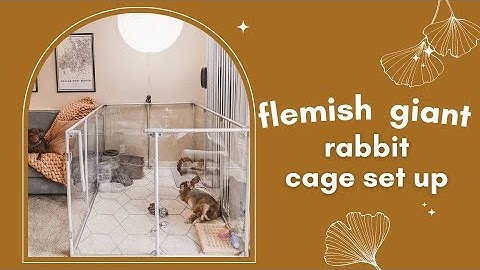
An exercise pen is a configurable boundary around a rabbit-safe area. It can support daily movement and make cleaning easier when it is large, stable, and connected to the rabbit's other resources. The important distinction is between a small temporary enclosure used while supervising an animal and a main living enclosure available throughout the day and night. Rabbit Welfare Association & Fund guidance for a pair of average-size rabbits recommends a single continuous living area of at least 3 by 2 meters with 1 meter of height, including the sheltered area. It is welfare guidance, not a universal US law or proof that every pen sold online is suitable. A compact square pen may be useful as a barrier or temporary station but should not replace adequate permanent room to move.
Compare a playpen with a cage and an outdoor run
An ordinary cage has rigid walls and often a fixed footprint, which makes it convenient for transporting or temporarily separating an animal but can limit running. A modular indoor pen can be arranged around a larger stretch of floor and connected to a rest station. An outdoor run has a different risk profile: predators, digging, weather, and secure roofing all matter. A lightweight indoor x-pen is not automatically safe for outdoor unsupervised use, even if its panels are tall. Start with the space and activity the rabbit needs, then choose the boundary system that allows it. For broad cage-buying questions, see our rabbit cage guide; for secure outdoor structures, use the outdoor rabbit enclosure guide.
Measure usable floor area before ordering
Ignore the number of panels on the box until you have measured the actual room layout. Mark out the proposed pen footprint with painter's tape, subtract the area blocked by furniture, and check whether there remains a continuous route for moving at speed. A 4-by-4-foot arrangement can illustrate panel placement, but it is only 16 square feet and should not be presented as the full recommended living area for a typical rabbit pair. Wide spaces that allow sustained movement are more useful than a maze of narrow connected corridors. Check that the enclosure permits a full stretch, comfortable turning, standing upright, and separation between litter, food, and resting zones. Measure interior clearances rather than counting the space beyond the bars.
Choose panel height and bar spacing for your rabbit
Some rabbits barely test a fence; others jump, climb, push, or squeeze between bars. Watch the individual rabbit's behavior before assuming an advertised panel height will contain it. A pen should not allow a rabbit's head or limbs to become trapped in gaps. Rabbit Welfare Association guidance warns that some adapted pet pens may need additional safely secured mesh to close risky bar spacing. Inspect all connectors, hinges, and exposed edges. Avoid loose zip-tie ends or flexible covering that can be chewed and swallowed. If a rabbit repeatedly jumps a panel, a securely designed covered enclosure or a differently organized room may be safer than simply stacking unstable panels higher.
Practical comparison
| Option | Best role | Important limit |
| Indoor x-pen | Flexible safe-room boundary | Needs adequate area and stable joints |
| Traditional cage | Short-term station or attached shelter | Often too small as sole housing |
| Outdoor covered run | Secure outdoor movement area | Requires predator and dig safeguards |
| Rabbit-proofed room | Ample freedom and flexible zones | Needs cable and hazard control |
Build a safe floor that protects feet and furniture
The enclosure floor should be solid, non-slip, easy to clean, and free of loose strands or backing a rabbit is likely to ingest. Bare smooth tile or polished laminate can make it difficult to accelerate and turn. Choose washable mats that sit flat, secure seams away from teeth, and replace damaged sections. Avoid exposed wire floors that concentrate pressure on feet. If using a waterproof protector below a rug, prevent the rabbit from reaching plastic edges. Check whether urine can wick under the floor covering and create persistent dampness. A floor that performs well in a quick photo may fail once the rabbit starts digging at an unsecured corner, so inspect after the first several sessions.
Arrange litter, hay, water, and hideouts
Keep the litter tray near a predictable toilet corner with hay accessible; many rabbits prefer to eat while using their litter area. Put clean water where it cannot be tipped and where a rabbit does not have to squeeze past another animal to reach it. Provide at least one safe hiding place per rabbit and ideally additional choices, with exits that prevent an animal from being cornered. Leave the longest uninterrupted movement path open rather than distributing every accessory across the center. Cardboard tunnels and chew-safe enrichment can offer activities, but they cannot make an undersized pen adequate. In bonded pairs, duplicate resources where needed to reduce blocking and competition.
Prevent pushing, tipping, digging, and escape
Test the pen at the exact spot it will occupy. Press gently at joints to see whether a panel folds in, shifts across the floor, or opens a gap. Connect sections in accordance with the manufacturer's directions and make sure the gate latches completely. Do not fasten a pen to an unstable piece of furniture. Protect electric cords, houseplants, adhesives, and dangling fabric outside the panels, because a rabbit can often reach farther than expected. Check corners that could become leverage points for climbing. For a rabbit that persistently digs at one edge, redesign floor protection rather than using a surface that damages feet. Never treat an open-top indoor pen as predator-resistant outdoors.
Daily inspection and cleaning routine
Once a day, check water, hay, wet litter, floor grip, hideout condition, and any new tooth marks. After a cleaning, confirm that the gate is latched and that the floor covering has not curled upward. Periodically remove panels far enough to inspect behind them for chewing and moisture. Observe the rabbit moving: hesitant hopping, slipping, repeated jumping attempts, or avoiding a section may indicate a poor layout. Introduce changes gradually and allow choice rather than forcing the animal into a new arrangement. An effective pen is a living setup that gets adjusted as behavior, age, health, and household routines change.
Quick inspection checklist
Measure usable floor area with accessories in place.
Test every panel joint, gate, and entrapment gap.
Lay down a stable solid non-slip floor.
Provide hay, water, litter space, and multiple hides.
Recheck chewing, tipping, and slip hazards after use.
Frequently asked questions
Can a rabbit live in a playpen full time?
Only if the overall living setup is suitably spacious, secure, and equipped for exercise and daily needs. Many small retail pens are inadequate as permanent housing on their own.
Is a 4-by-4-foot rabbit pen big enough?
It may be useful for a temporary arrangement, but its area is below the 3-by-2-meter continuous footprint recommended by RWAF for an average rabbit pair. Use the guidance as context, not a universal legal rule.
Can rabbits jump out of playpens?
Yes. Individual rabbits vary in jumping and climbing ability. Observe behavior and use a securely designed enclosure that prevents escapes and entrapment.
What should go on the floor of a rabbit playpen?
Choose a solid, grippy, washable surface without accessible loose plastic or chewable backing. Avoid exposed wire flooring.
Should the pen stay open during supervised roaming?
If the surrounding room has been rabbit-proofed and supervision is appropriate, an open gate can give voluntary access to more space. Secure the pen again when unattended risks require it.