A Skin Care Brand Naming Strategy That Makes Sense
Find a memorable skin care brand name using positioning, pronunciation, trademark screening and a simple shortlist test.
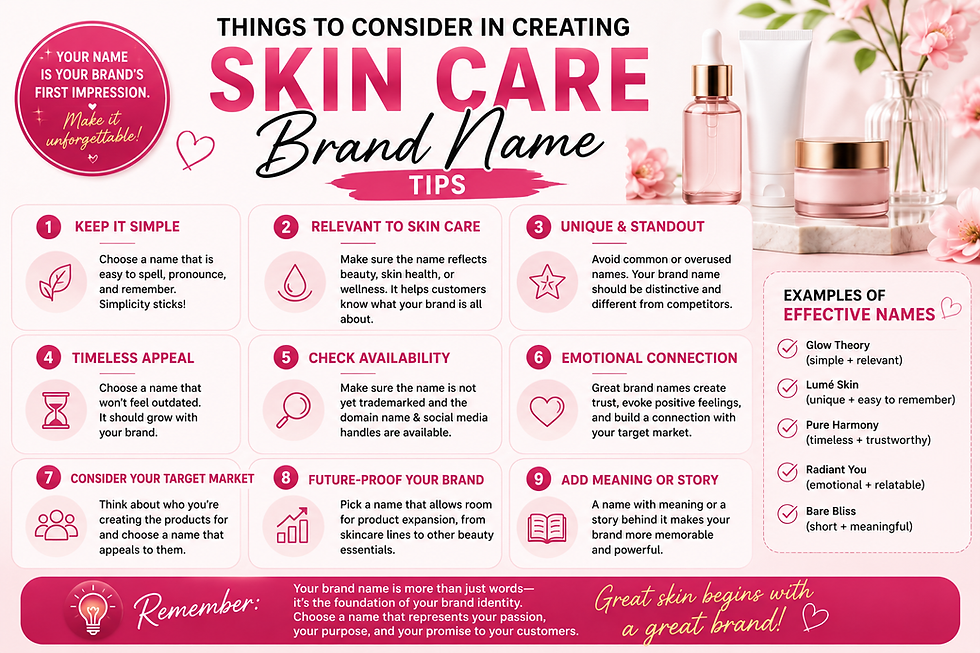
A Skin Care Brand Naming Strategy That Makes Sense
A memorable skin care brand name should help people recognize your positioning without promising what the formula cannot deliver. Founders often start by collecting beautiful words; the harder work is checking whether shoppers can pronounce them, tell them apart, and associate them with a specific promise. A disciplined naming exercise is faster than falling in love with a name that cannot be used.
Begin with the audience, not a name generator
Write down who the brand serves, its price position, and the product category it plans to lead with. A line built around uncomplicated daily basics needs a different tone from a specialist retail concept for salon buyers. Capture three adjectives your intended customer should feel after seeing the label.
Then list expressions you want to avoid. Terms such as “medical,” “organic,” or “dermatologist approved” can carry factual implications. Do not use them as decorative language if you cannot support the claim. Naming is part of how expectations are set.
Create candidates that sound different from each other
Build three shortlists: descriptive names, evocative names, and invented names. Try each aloud. Ask someone unfamiliar with the project to spell it after hearing it once. Watch for confusing consonants, accidental meanings, and phrases that look similar to established beauty labels.
An unusual spelling may be visually distinctive but costly to explain in conversation and search. A plain descriptive name may communicate immediately yet be difficult to distinguish from competitors. Balance the two based on your distribution plans, not an abstract rule that shorter is always better.
Run availability and trademark checks early
Search for similar names in the relevant categories, not just identical spellings. Check federal trademark records and, where applicable, state records with qualified advice. Examine social usernames and domain availability, but remember that obtaining a domain does not grant trademark rights.
Look at how the name appears on packaging, product labels, a checkout page, and a small phone screen. Your legal and marketing teams may identify different issues. A final decision deserves both kinds of review before packaging is printed.
Test meaning before paying for a full identity
Show a small set of names to people who fit the intended audience. Ask what kind of product they expect, what price level they infer, and which option they can recall later. Avoid telling them what each name is supposed to mean first; that makes the test less useful.
Document repeated misunderstandings and confusing similarities. Then compare candidates against your original criteria. The winner is not necessarily the most poetic word. It is the name that communicates adequately, is distinguishable, and can be used responsibly.
Try a five-name scoring exercise
For each finalist, score customer fit, pronunciation, distinguishability, label readability, and preliminary legal concerns on a simple one-to-five scale. Ask two people to pronounce the candidates without coaching and write down what they think the brand sells. A name that performs well visually but creates confusion aloud should move down the list. Scores are a discussion tool, not a substitute for legal clearance; note qualitative concerns alongside the numbers.
A useful checklist
Write a one-sentence positioning statement before brainstorming.
Test pronunciation, spelling, and packaging legibility.
Screen similar trademarks and domains before committing to design costs.
Keep notes explaining why each finalist passed or failed.
Questions readers ask
Should a skin care brand name include “skin” or “beauty”?
Only if it improves clarity. Category words help some new brands but can also make names less distinctive.
Does an available web domain mean a name is safe to use?
No. Domain registration and trademark rights are separate questions; professional clearance can be important.
Treat the final shortlist as a business decision. A name that works across labels, customer conversations, and legal review is more durable than one that only looks good in a mood board.
Keep exploring
Once the name is established, Skin Care Social Media Ads: Creative and FTC Basics.