SVXY ETF: What It Tracks and How Its Risk Works
Learn how SVXY targets -0.5x daily VIX short-term futures index returns, why that differs from inverse spot VIX, and the risks of holding it.
VIX & VOLATILITY PRODUCTS | US FINANCIAL EDUCATION
SVXY ETF: What It Tracks and How Its Risk Works
Source check: November 6, 2026 • Evergreen guide • No live price feed
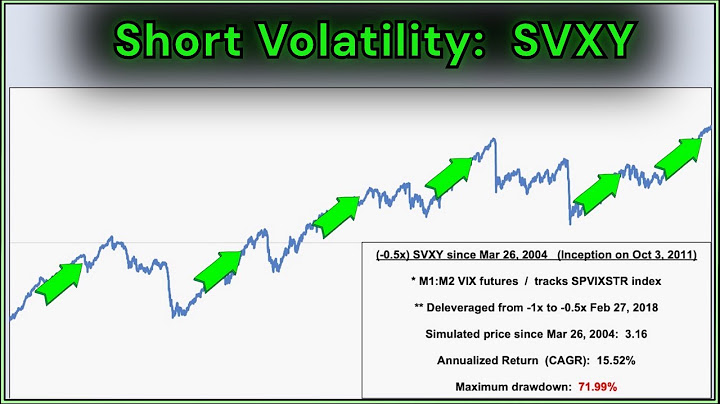
SVXY is the ProShares Short VIX Short-Term Futures ETF. Its published target is one-half the inverse (-0.5x) of the daily return of the S&P 500 VIX Short-Term Futures Index, before fees and expenses. It does not promise a -0.5x return against the spot VIX reading or over a month.
What SVXY actually owns exposure to
SVXY trades under a stock-market ticker, but the economic reference for the fund is a short-term VIX futures index. That index uses a rolling portfolio of monthly VIX futures, designed to maintain an average maturity around one month. The fund uses financial instruments to seek inverse exposure to that benchmark.
The word “short” in the name describes short exposure to the futures benchmark rather than a conventional bet against an individual company. This matters because changes in futures prices and the futures curve do not have to match the headline VIX index that appears in financial news.
How the -0.5x daily objective works
Suppose the relevant benchmark falls 4% in a single trading day. A simplified -0.5x daily target points to a gain around 2% before fees, expenses, tracking differences and other market effects. If the benchmark rises 4%, the idealized one-day target points to a loss around 2%. These are arithmetic illustrations, not predictions.
The multiplier applies to the specified index for a single day. It is not a guarantee that investors can make half the return from a fall in spot VIX. On difficult trading days, the relationship between futures, share prices and net asset value can produce outcomes that do not resemble a simple VIX chart.
Why holding SVXY longer than one day is different
After each daily move, percentage changes apply to a new asset base. Consider a benchmark that rises 10% on day one and falls about 9.09% on day two, finishing roughly flat. A perfect hypothetical -0.5x daily series loses 5% first and then gains about 4.545% on the reduced base. It ends slightly below its starting level before costs.
Different sequences can yield better or worse outcomes than that example. Strong trends and choppy markets have different compounding effects. ProShares cautions that multi-day results can deviate materially from the daily multiplier, and investors should read the current prospectus rather than extrapolating a two-day illustration.
The futures curve can dominate the story
The benchmark rolls exposure from the nearer futures contract toward the next month. In contango, longer-dated futures trade above nearer ones; in backwardation the pattern reverses. That structure can change returns even when the spot VIX level moves little. There is no permanent free return from a particular futures curve.
Inverse futures exposure may benefit from some ordinary market environments but can also suffer severe losses during a sharp volatility shock. A sudden repricing of near-month futures is especially relevant: an investor who only watches a broad stock-market index may miss the exposure that drives this fund.
SVXY compared with SVIX
The most important first difference is objective size. SVXY seeks -0.5x of its named short-term futures index on a daily basis; SVIX seeks daily results linked to the -1x SHORTVOL index. Both are inverse volatility-linked products, but the benchmarks, implementation details and realized outcomes can differ.
A more negative daily multiplier can mean greater sensitivity to an adverse futures move, yet fees, derivatives, index definitions and execution also matter. Do not assume two similarly named short-volatility products have identical share-price paths or can be swapped without reading their issuer documents.
What can go wrong
Rapid volatility spikes, crowded short-volatility positions, wide bid-ask spreads, market closures, tracking differences and index methodology changes can all affect results. Large losses are possible in a short period. Even when a forecast of calmer markets eventually proves right, the fund may lose value before that outcome arrives.
A useful due-diligence routine is to verify the exact ticker and fund name, benchmark description, current prospectus, objective reset period, and how performance is calculated. Recent NAVs and fees change; this evergreen explanation intentionally does not publish live prices or promise return targets.
Where SVXY fits in the VIX learning path
Readers unfamiliar with the difference between spot VIX and futures should begin with the parent VIX ETF guide. The neighboring SVIX article is useful only for the specific question of a -1x inverse approach. For full contract mechanics, consult the separate VIX futures guide rather than treating SVXY as a direct futures position.
No ticker-specific page can remove the economic risk of short volatility. Understanding the daily benchmark is a prerequisite to interpreting any displayed performance number.
Frequently asked questions
Does SVXY short the VIX index itself?
No. It targets -0.5x daily performance of a short-term VIX futures index, not the directly quoted VIX index.
What does -0.5x mean for SVXY?
It is a daily inverse multiplier applied to its specified futures benchmark before fees and expenses.
Can SVXY lose money when the VIX eventually falls?
Yes. Timing, the futures curve, daily compounding and the specific benchmark path can all cause losses.
Are SVXY and SVIX equivalent?
No. Their daily objectives and benchmark methodologies differ. SVXY is not a duplicate ticker for SVIX.
Where can I verify current fund terms?
Use the official ProShares SVXY page and current prospectus; check dates on expenses and other changing data.
