Weapons Movie Review: What Works, What Does Not, and Who It Is For
How does Weapons (2025) work as a horror mystery? Explore its unsettling structure, performances, scares and drawbacks in this focused review.
Weapons (2025) Review: What Critics Admire and Where It Divides Viewers
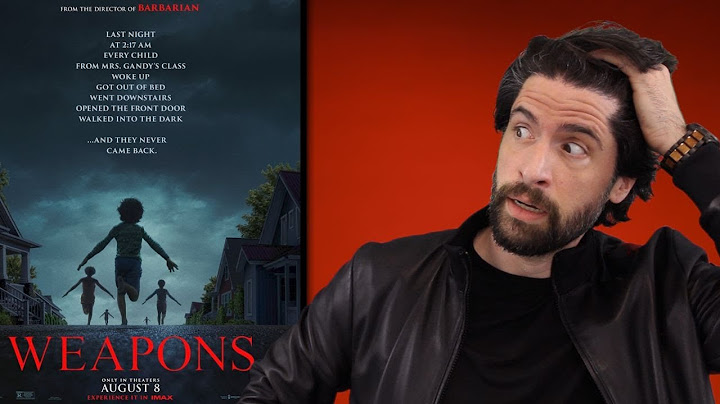
Weapons became one of 2025's most talked-about horror mysteries by asking a frighteningly simple question: why did nearly an entire class of children leave home at the same time? The bigger critical question is whether the film turns that mystery into a satisfying experience once the initial surprise wears off. Its branching viewpoints, relentless unease and sharp tonal changes are central to that discussion.
This is a critical-response analysis, not a claimed first-person screening review. It draws on the film's documented premise, structure, public critical consensus and classification information. An editor who wants to publish a personal verdict should add observations from an actual viewing and label them separately. No invented personal score is presented here.
Critical verdict in brief
The broad critical response has been strongly positive, with reviewers commonly highlighting Zach Cregger's confidence in withholding information, the construction of the central mystery and the shifts between dread and startling release. Rotten Tomatoes describes the film as a highly accomplished horror mystery in its published consensus. That is a report about reception, not proof that every viewer will share the same reaction.
The likely dividing line is tolerance for uncertainty. Audiences who enjoy piecing together clues across multiple characters have a clear reason to try Weapons. Viewers who want a steady pace, a single protagonist or straightforward procedural logic may find the chaptered approach disorienting. Its intense violence also places a firm limit on how widely it can be recommended.
The mystery is an engine, not merely a twist
At the start, the mystery is immediate and concrete: 17 children disappeared at 2:17 a.m., leaving one classmate behind. The movie turns that absence into a test of the whole community. Adults look for evidence, but they also look for someone to blame. The tension is therefore social as well as supernatural, especially when a teacher becomes a convenient focus for suspicion.
From a storytelling perspective, this is stronger than relying on a late surprise alone. An audience can stay engaged with the choices people make in a crisis before the literal explanation arrives. The unanswered question still matters, but it is supported by behavior, conflict and consequences. That combination helps explain why the premise produced substantial discussion after release.
Why the chaptered structure matters
Weapons does not keep a camera attached to one hero. It revisits the town through different lives, letting information accumulate unevenly. A scene can be ominous from one perspective and more legible from another. That technique can produce a valuable sensation in horror: the realization that an apparently minor detail had greater significance than the audience assumed.
There is a trade-off. Every switch asks the viewer to leave a developing emotional thread and invest in another one. If someone becomes attached to Justine's or Archer's immediate investigation, a digression may initially feel like an interruption. Readers assessing whether they will enjoy the film should consider this structural choice more seriously than generic promises of twists.
Performances and character perspective
Julia Garner's role as Justine positions an ordinary teacher against escalating community hostility. Josh Brolin's Archer embodies a parent's anger and determination, while Cary Christopher's Alex adds a quieter, more guarded presence. Amy Madigan's Gladys is especially important to the film's tonal identity, even though discussing her in depth would spoil the story for newcomers.
A useful way to assess the performances is to ask whether the actors make the different chapters feel connected despite their varying emotional registers. The cast has to move between fear, resentment, confusion and moments of heightened genre absurdity. That demands more than a series of startled reactions: the human stakes must remain visible while the plot becomes stranger.
Scares, violence and dark humor
Classification agencies in the UK and Australia describe strong bloody violence, gore, supernatural threat and jump scares. The film's intensity therefore comes from a mixture of anticipation and explicit payoff. It is not simply a quiet psychological thriller with occasional ominous music. Prospective viewers who avoid graphic horror should take that warning seriously, regardless of the positive review consensus.
Cregger's horror style also allows bizarre or darkly comic moments to sit near frightening material. For some audiences, sudden tonal contrast makes the dread more unpredictable. For others, the contrast can momentarily weaken the mood. Neither reaction is an objective flaw; it is a useful distinction when deciding whether the movie is a good fit.
Where the film may not work for everyone
One possible objection is that the central answer may not reward every kind of viewer equally. Mystery fans sometimes prefer a solution grounded in evidence and ordinary cause and effect. Supernatural horror can instead prioritize a nightmare's internal rules. Weapons is best approached with room for the genre to change how the final explanation operates.
Another concern is the difficulty of balancing a multi-character film. Some arcs naturally receive more attention than others, and the emotional focus can shift sharply. Reviewers and audiences may also differ on how the final act handles escalation. These are questions for a thoughtful critique, not reasons to announce an unsupported numerical rating.
Who should watch Weapons?
The strongest recommendation is for adults who enjoy eerie puzzle films, shifting points of view, morally pressured characters and horror that becomes intense rather than staying merely suggestive. If you liked the unpredictable storytelling energy of Barbarian, the director's earlier film, this is a relevant next choice, though it is not a sequel.
It is a weaker recommendation for people looking for light suspense, family-friendly entertainment, minimal gore or an entirely realistic police investigation. Checking the parents guide first is sensible even for adult viewers with specific content sensitivities. Readers who already know the film's conclusion can move to a spoiler-focused explanation instead of expecting this review to repeat the plot.
Frequently asked questions
Is Weapons worth watching?
Critical reception has been strongly favorable, especially around structure and sustained suspense. Whether it is worth watching for you depends on tolerance for gore, ambiguity and changing points of view.
Is Weapons more mystery or horror?
It combines both. The central investigation supplies the mystery, while the supernatural threat and graphic violent scenes put it firmly in adult horror territory.
Is the review spoiler-free?
Yes. This article discusses craftsmanship and reception without revealing the cause of the children's disappearance or the final act.
Did this article assign a star rating?
No. It is an analysis of available critical response, not a personal screening review or an original scored rating.