Is Weapons (2025) Based on a True Story?
Is Weapons based on real missing children? Understand the fictional story, Zach Cregger’s emotional inspiration and what the movie does not claim.
Is Weapons (2025) Based on a True Story? The Real Inspiration Explained
No. Weapons is not a dramatization of a documented incident in which 17 schoolchildren vanished from one classroom at 2:17 a.m. The missing children, the town's unfolding mystery and the supernatural events belong to a fictional story written by Zach Cregger. What is real is the filmmaker's emotional starting point: he has described writing the screenplay while dealing with the death of a close friend.
That difference matters because the film's opening presentation and persuasive small-town setting can make it feel like a strange account of real events. The movie borrows the emotional texture of grief, blame and shock; it does not claim that a matching crime or supernatural disappearance was verified by police.
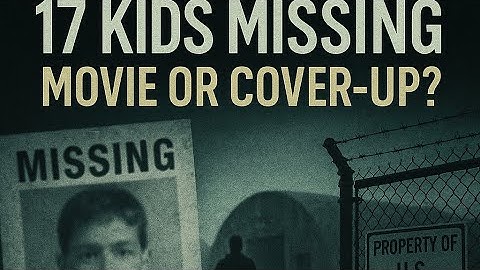
The direct answer: the disappearances are fictional
The scenario is tightly designed for horror. Seventeen children from the same class leave home at exactly the same time, while one classmate remains. The neatness of the pattern gives the story a compelling mystery hook, but it is not evidence that a comparable event occurred in a real American town. There is no verified real-life case on which the film's complete plot is based.
Readers should be cautious with social-media posts that repackage the plot as a local news report. A frightening premise does not become an eyewitness account because it includes a timestamp, a classroom or seemingly everyday place names. Treat claims of a real 2:17 a.m. incident as fiction unless they are supported by independent documentation, not a promotional website.
Why the opening can sound like a true-crime account
Weapons uses storytelling conventions that make a tale feel passed down through a community. A voice recounting a shocking event, precise numbers and a familiar school environment all invite the audience to imagine the event as something that could have appeared on the local news. This is a deliberate narrative effect, not a certification of factual accuracy.
When viewers hear a confident narrator or encounter marketing material designed to look like reporting, they can forget they are inside a fictional framework. Horror frequently uses that trick to close the distance between audience and story. In this case, it serves the mystery rather than establishing a historical record.
Zach Cregger's personal experience of loss
Cregger has spoken about writing Weapons after the sudden death of his close friend and longtime collaborator Trevor Moore in 2021. Moore and Cregger worked together in the comedy group The Whitest Kids U' Know. The filmmaker described using the screenplay to confront feelings of grief rather than writing it from an actual missing-children investigation.
This context gives the movie's emotional environment a meaningful real-world origin. Parents are faced with an absence they cannot explain, and other adults struggle with fear, blame and self-destructive behavior. Those reactions can echo real experiences of bereavement even when the narrative events themselves are invented. Calling the film "emotionally personal" is more accurate than calling its disappearance plot true.
Which parts are autobiographical?
The director has indicated that aspects of characters and their emotional responses drew on his own life. That is not the same as saying a named character stands for a specific historical person, or that an event in the movie corresponds to one event in the director's biography. Creative writing often combines memory, imagination and genre devices in ways that cannot be mapped one-to-one onto life.
A careful explanation should therefore avoid confident equivalences such as "this parent is Cregger" or "that supernatural event represents a specific death." Those can be interpretations worth discussing, but they are not established facts. The reliable distinction is that grief informed the writing process while the external horror story remained fictional.
Is the town of Maybrook a real crime location?
The story takes place in a fictional version of Maybrook, Pennsylvania. The production filmed extensively in Georgia rather than staging a true event in that Pennsylvania community. Confusion can arise because real places elsewhere share similar names and because the film's suburban streets, school and shops look recognizable.
The existence of a real community with a similar name does not establish a link to the missing pupils in the movie. Nor does visiting a filming location reveal a real historical case. Production geography belongs in a filming-locations guide; it should not be used as evidence for a true-crime claim.
What about the movie's viral marketing?
The campaign around Weapons emphasized the central disappearance and sometimes used the style of mystery reporting. A fictional missing-person notice or a website built as part of promotion remains part of the film's storytelling. It should not be passed on as actual public-safety information.
If you encounter a purported "real report" about the 17 children, consider its source. Does it come from official police or credible contemporaneous journalism, or from material tied to the movie's release? The latter may be creative marketing. This distinction protects both readers and genuine missing-person reporting from being mixed with entertainment content.
Why the real inspiration still matters
Knowing the screenplay's emotional origin can deepen a viewing without reducing the movie to a factual allegory. Grief often leaves people with questions that have no reassuring answer. Weapons takes that sensation and turns it into a supernatural puzzle, using collective uncertainty to magnify the response to loss.
For viewers interested in the film's themes, that is the more revealing connection to reality: recognizable human emotions expressed through entirely imagined events. The movie can feel truthful about fear and loss while being untrue as a literal story. The two claims are compatible, and separating them makes a cleaner answer for anyone searching "is Weapons based on a true story?"
Frequently asked questions
Did 17 children really disappear at 2:17 a.m.?
No verified real event matching the movie's premise is the basis of Weapons. It is a fictional horror mystery.
Who inspired Zach Cregger to write Weapons?
Cregger has connected the film's emotional creation to grief following the death of his close friend Trevor Moore.
Is Maybrook a real Pennsylvania town from the story?
The Maybrook shown in the film is fictional. The movie's real-world filming took place largely in Georgia.
Why does Weapons feel like a true story?
Its exact time stamp, plausible school setting and narration use the style of community storytelling, making a fictional event feel close to real news.