Can a President Cancel the 2026 Midterm Elections?
Can a US president cancel or delay the 2026 midterms, including during war? Understand the legal limits and election rules.
Can a President Cancel the 2026 Midterm Elections?
Updated November 2, 2026 | U.S. English | Pre-election editorial edition
No. A U.S. president does not have unilateral authority to cancel the regularly scheduled 2026 congressional elections. Federal election dates rest on congressional law and the Constitution, while states administer voting under state and federal requirements.
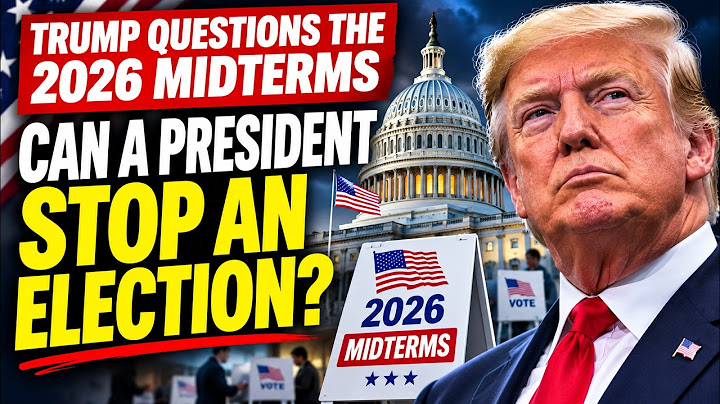
Who sets the date of congressional elections?
Article I, Section 4 of the Constitution gives states primary responsibility for the times, places and manner of congressional elections while allowing Congress to make or alter governing rules. Federal statutes set the regular November election date. This division of powers does not give the president an independent power to erase an election.
For 2026, the regular federal general election is Tuesday, November 3. Executive statements or an emergency declaration do not themselves rewrite congressional election law.
Could Congress change the date?
Congress has legislative authority over aspects of federal election timing within constitutional limits. A change would require legally effective action, not merely a presidential announcement. The constitutional terms of office and the regular operation of representative government impose further limits.
Changing a voting date is legally and practically different from canceling representation indefinitely. Any proposed change would raise questions about statutory authority, constitutional constraints and election administration.
What if the country is at war?
The Constitution does not provide a general exception letting a president suspend midterm congressional elections because of a war. The United States has continued holding federal elections during periods of major national conflict.
Emergencies can produce operational challenges such as damaged polling sites, interrupted transportation or disrupted communications. States may have limited procedures for addressing local disruptions, subject to applicable law. Those procedures should not be confused with nationwide executive power to cancel congressional elections.
What about a local disaster or court order?
A localized polling disruption, court order or extended emergency can raise distinct state-law questions. The appropriate response depends on the specific jurisdiction, legal authority and factual circumstances. A change in polling hours or a relocation is not the same as an order canceling the national midterms.
For voters, the most reliable source of emergency instructions is the official state or county election office. Online rumors that an election has been canceled should be checked against a verifiable government notice.
How to assess election-cancellation claims
Ask who issued the claim, what law supposedly authorizes it, whether a court or legislature has acted, and whether the relevant state election office confirms a change. Avoid spreading a screenshot without its date or context.
As of this article’s November 2, 2026 review, the scheduled federal general election remains November 3. A campaign prediction, partisan argument or hypothetical emergency scenario is not proof of a legal change.
Frequently asked questions
Can the president move Election Day by executive order?
Not on their own: congressional election timing is established by law.
Can a war automatically cancel the midterms?
No. War does not create a blanket presidential cancellation power.
Who should voters ask about a local polling change?
Their state or local election office.
Related guides
2026 US Midterm Elections: Dates, Races, Voting and Results — /topic/2026-midterm-elections/
Editorial note
This guide was prepared using sources reviewed through November 2, 2026. Election procedures, candidate listings and ballot status should be checked against the relevant state or local election office before use. No November 3 vote result or election winner is asserted.