Baikal Seal: Why This Freshwater Seal Lives in Lake Baikal
Baikal Seal. Explain Pusa sibirica, freshwater adaptation, feeding habits and.
Baikal Seal: Why This Freshwater Seal Lives in Lake Baikal
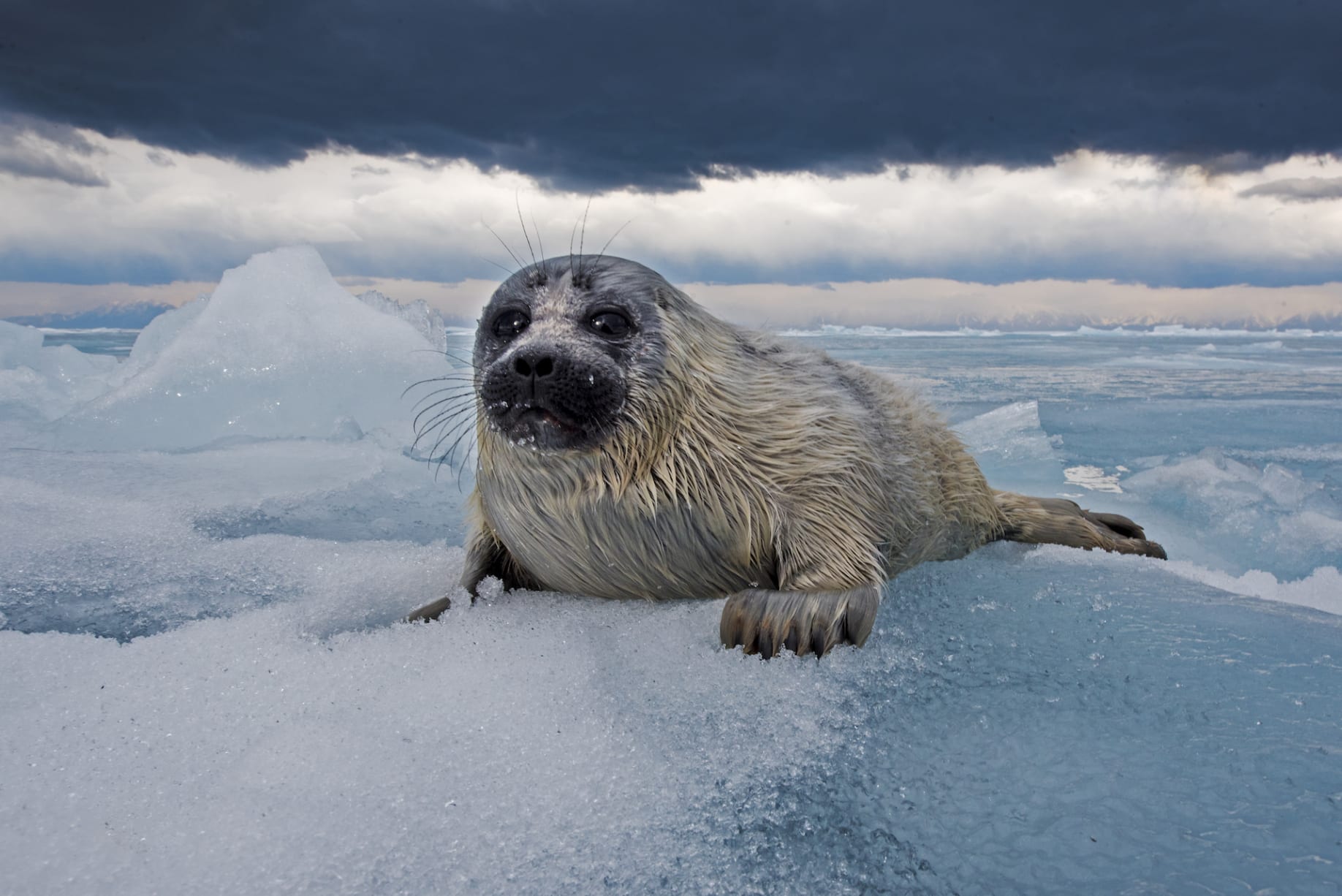
The Baikal seal, Pusa sibirica, is native to Lake Baikal in Siberia, one of the world’s deepest freshwater lakes.
A seal in a giant freshwater lake
Unlike most seals, it spends its life in a freshwater system. Its presence demonstrates how distinctive an isolated lake ecosystem can become over long periods.
Physical and behavioral adaptations
Baikal seals are relatively small, with a rounded body, sensitive whiskers, and strong diving ability. They use underwater vision and touch to locate prey. Ice and seasonal openings matter for resting and reproduction. Their life is adapted to the lake’s conditions rather than to a coastline or ocean reef.
Food and breeding
Baikal seals eat primarily fish found in the lake, including small pelagic species. Females give birth in winter or early spring, often in sheltered snow or ice structures. Young seals depend on maternal care until they can forage independently. Details of breeding timing and diet can vary with lake conditions.
Threats and protection
Changes in ice conditions, disturbance, pollution, and food-web shifts can affect the species. A broad claim that all freshwater seals are endangered would be inaccurate; conservation status must be checked for this species and date. Visitors should avoid approaching pups and use local wildlife guidance.
The lake ecosystem matters
Lake Baikal supports a complex food web, and a seal population depends on much more than open water. Seasonal ice offers places for reproduction and resting; fish supply links the seals to plankton and nutrient cycles lower in the system. Monitoring can involve surveys, diet studies, and assessment of human disturbance. Changes to ice timing may affect behavior without producing the same response in every year. Claims about long-term trends should be traced to current scientific monitoring rather than single-season photographs.
Observe the habitat, not just the name
A reliable identification should combine the animal’s range, habitat, appearance, and behavior. A common name or single photograph may hide several similar species. Water temperature, depth, and season can also change what an observer finds. For information about conservation or harvest rules, consult the authority responsible for the specific species and area.
Putting scientific names and ranges in context
Marine populations can move, change with ocean temperature, or contain closely related species that are hard to tell apart. When an article describes a habitat or food-web role, treat it as a typical pattern rather than a promise about every individual. Conservation and seafood guidance are also distinct: a species can have biological importance while regional fishing rules and consumption advisories vary independently. Check the latest species-specific agency material before acting on either.
Frequently asked question
Is the Baikal seal a sea seal?
It is a true seal whose natural range is the freshwater environment of Lake Baikal.
Related guides
Fish Roe Explained • Surf Clams • Giant Clam (Tridacna gigas)
