Fish Roe Explained: Eggs, Spawning, and Different Types of Roe
Fish Roe Explained. Distinguish fish reproductive eggs from culinary roe and caviar without medical.
Fish Roe Explained: Eggs, Spawning, and Different Types of Roe
Fish roe means fish eggs, commonly discussed in biology, fisheries, and food.
Roe is not one species
The term can refer to eggs still inside a female fish, released eggs, or eggs prepared as food. Caviar is a more specific culinary term traditionally associated with salt-cured sturgeon roe; not every jar of fish eggs is sturgeon caviar.
How spawning works
Many fishes release eggs and sperm into open water, where fertilization occurs externally. Other species attach eggs to plants, guard nests, or carry developing offspring. Egg size, number, color, and protective membranes vary enormously. A fish producing many eggs is not necessarily a species with high juvenile survival.
Eggs in ecosystems
Fish eggs can feed birds, invertebrates, and other fishes. Larvae emerging from them may drift as plankton or develop in sheltered habitats. Conditions such as temperature, oxygen, currents, and predators influence survival. Fishery managers often monitor spawning areas because protecting adult populations alone may not safeguard recruitment.
Food and handling
Roe sold for food should come from a reputable, temperature-controlled supply. Raw or lightly cured seafood presents food-safety concerns, particularly for susceptible people. The right storage and preparation depend on the product; do not infer safety from the color of roe or from a generic claim that fish eggs are nutritious.
What determines whether roe develops
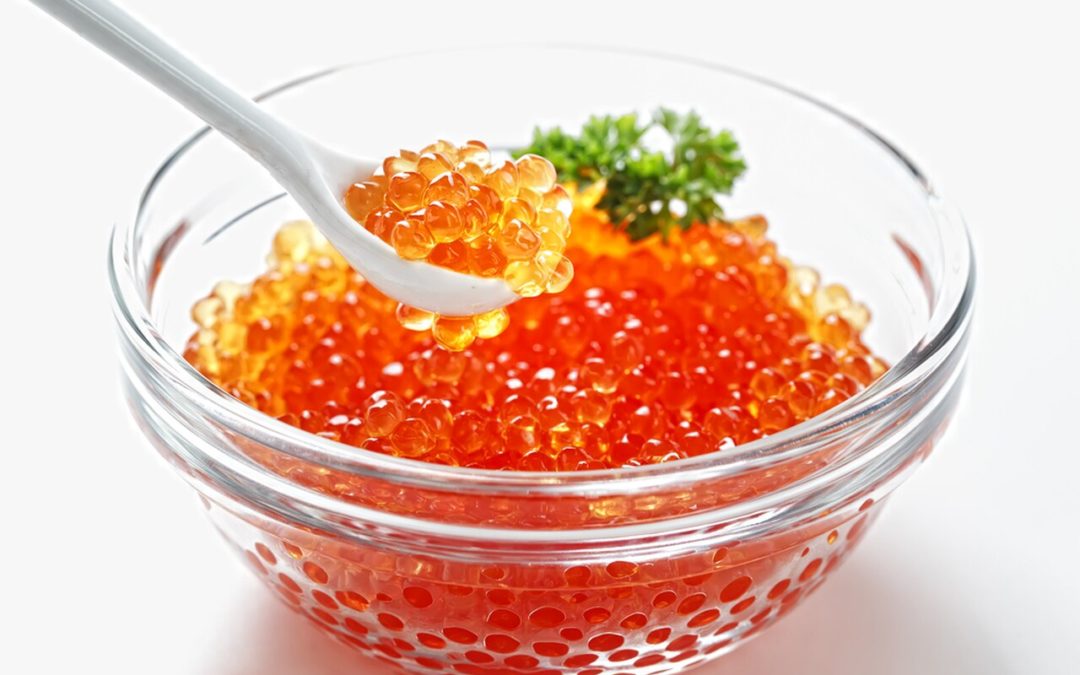
An unfertilized egg will not become a fish larva. Even after fertilization, oxygen, temperature, salinity, and protection from predators can affect survival. Some species scatter many small eggs; others guard fewer eggs near a nest. Culinary roe is a separate issue: eggs can be preserved with salt or other processing, and safe handling depends on the actual preparation. A photograph of orange beads cannot reveal whether they were fertilized, which species produced them, or whether a product is safe to eat.
Observe the habitat, not just the name
A reliable identification should combine the animal’s range, habitat, appearance, and behavior. A common name or single photograph may hide several similar species. Water temperature, depth, and season can also change what an observer finds. For information about conservation or harvest rules, consult the authority responsible for the specific species and area.
Putting scientific names and ranges in context
Marine populations can move, change with ocean temperature, or contain closely related species that are hard to tell apart. When an article describes a habitat or food-web role, treat it as a typical pattern rather than a promise about every individual. Conservation and seafood guidance are also distinct: a species can have biological importance while regional fishing rules and consumption advisories vary independently. Check the latest species-specific agency material before acting on either.
Frequently asked question
Is fish roe the same as caviar?
All traditional caviar is roe, but fish roe from other species is not automatically sturgeon caviar.
