Giant Clam (Tridacna gigas): Size, Reef Ecology, and Conservation
Giant Clam (Tridacna gigas). Clarify scientific-name query; describe symbiosis, range, size variation and protected reef.
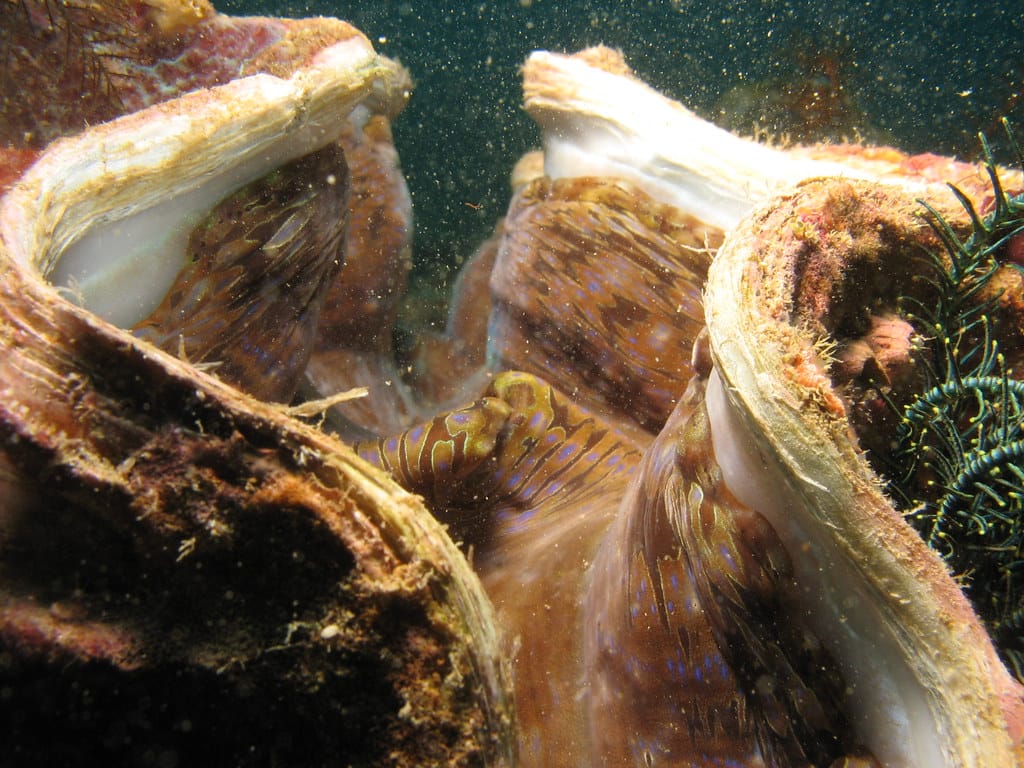
Giant Clam (Tridacna gigas): Size, Reef Ecology, and Conservation
Tridacna gigas is the giant clam, a tropical reef bivalve that can become exceptionally large.
Scientific identity and size
The shell has heavy, fluted valves; the living mantle may show striking colors and patterns. “T. gigas” is an abbreviated scientific name, not a brand or a general label for every large clam.
How a giant clam feeds
A giant clam filters food particles from the surrounding water and also receives energy from photosynthetic symbiotic algae living in its tissues. Light availability therefore affects its habitat. The algae do not replace the clam’s own feeding and metabolism, and a living clam must not be treated as a passive ornament.
Reefs and reproduction
Giant clams live on Indo-Pacific coral reefs and associated shallow habitats. They release eggs and sperm into seawater during spawning events, with larvae dispersing before settling. Survival depends on suitable substrate, water quality, and interactions with other reef organisms. They contribute to habitat complexity and nutrient cycling.
Protection and observation
Giant clam populations face collection pressure and reef degradation in parts of their range. Trade and possession may be regulated, including under CITES for giant clams. Snorkelers should not touch mantles or pry shells open; educational photographs should show the animal in place without disturbance.
How to distinguish reef clams
Several Tridacna species are sometimes casually called giant clams, yet they differ in size, mantle patterns, shell form, and habitats. Even a large shell washed ashore is not proof that it belonged to Tridacna gigas. Identification is best made with the shell and, where possible, observations of living tissue and locality. Because many reef species are protected or traded under restrictions, photography is preferable to collection. Reef restoration discussions should address larval settlement and water quality, not just moving adults.
Observe the habitat, not just the name
A reliable identification should combine the animal’s range, habitat, appearance, and behavior. A common name or single photograph may hide several similar species. Water temperature, depth, and season can also change what an observer finds. For information about conservation or harvest rules, consult the authority responsible for the specific species and area.
Putting scientific names and ranges in context
Marine populations can move, change with ocean temperature, or contain closely related species that are hard to tell apart. When an article describes a habitat or food-web role, treat it as a typical pattern rather than a promise about every individual. Conservation and seafood guidance are also distinct: a species can have biological importance while regional fishing rules and consumption advisories vary independently. Check the latest species-specific agency material before acting on either.
Frequently asked question
Can a giant clam trap a diver?
The popular diver-trapping story is a myth; clams close their valves relatively slowly and should not be disturbed.
