Calming Collars for Dogs: What to Check Before Use
Evaluate dog calming collars by fit, formulation, realistic evidence and safe use with behavior support.
Calming Collars for Dogs: What to Check Before Use
A calming collar is a wearable product marketed to support dogs in stressful situations. Some collars release a dog-appeasing pheromone; others rely on fragrance or other claims. The difference matters, because a pleasant smell to a human does not establish that a product helps a dog cope. This guide concentrates on fit, supervision, product identity and realistic expectations, leaving diffuser installation and spray use to their own guides.
Start by identifying the collar type
Pheromone collars are designed to release an analog of a dog-specific chemical signal. Fragrance collars may contain essential oils or scent compounds and should be judged for canine safety rather than automatically categorized as pheromone products. Always check whether the package explicitly identifies the active technology, dog-specific intended use and cautions.
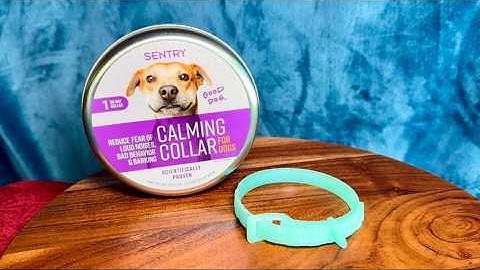
A calming collar is not a prescription medication, and wearing one is not the same thing as receiving behavior therapy. A dog may react to the collar's feel, and a tight or snagging collar may create more distress than it helps. If the dog becomes uncomfortable, fit and safety take priority over any marketed benefit.
The fit and safety checklist
| Item | What to inspect |
| Size | Use the exact product's neck measurement range |
| Fit | Follow the maker's guidance; check regularly |
| Skin | Look for rubbing, irritation or moisture problems |
| Play and confinement | Consider snag risk with crates, rough play and vegetation |
| Leash attachment | Do not attach a leash unless the product explicitly allows it |
| Replacement | Use the label's time period, not an assumed lifetime |
Some pheromone collars require contact with the dog's body to perform as designed; other products may have different construction. Do not improvise by tying a collar tightly, placing it under a restraint or altering the buckle. Use a separate ordinary walking harness or collar where needed and follow the product manufacturer's specific instructions.
Which situations might a collar suit?
A collar moves with a dog, so it can be more practical than a room diffuser when the dog spends time in multiple settings. That may include routine walks or travel preparation. It does not mean it will solve leash reactivity, fear of other dogs, carsickness or aggression. Those problems can have different causes, and the same behavior can reflect pain or illness rather than stress alone.
For noise-sensitive dogs, a collar may be considered as one optional element alongside a safe retreat, consistent routine and professional support. If a dog attempts to escape or becomes frantic during storms, ask a veterinarian about an evidence-based plan before relying on a wearable product.
What can pheromones realistically do?
Some veterinary references discuss pheromones as adjunctive tools that may help some animals, but response varies. A collar cannot train a dog to cope with triggers by itself. There is no universal evidence-based rule that a collar beats a diffuser or spray in every household. A meaningful trial should identify one real-life objective and account for changes in environment and training.
Avoid interpreting quietness as proof that the dog feels safe. Watch posture, willingness to engage, ability to recover after a mild trigger and whether the collar causes discomfort. The goal is a relaxed dog, not a suppressed response.
How to introduce a collar without added stress
Allow the dog to inspect the package and collar without forcing contact. If it dislikes collars, work slowly with positive associations before expecting continuous wear. The dog's normal comfort and safety come first. Never use a calming collar as a punishment, physical restraint or tool to keep a terrified dog near a feared stimulus.
Check the fit after activity and grooming. Watch for skin changes. Remove or discontinue the product according to its safety guidance if discomfort occurs; seek veterinary advice for persistent irritation or behavioral worsening. Consider whether supervision is possible in environments where collars can snag.
Compare collar and non-collar options
A stationary diffuser may be simpler for a dog that spends much of its time in one room. A spray may be practical for a specific carrier or bedding area when the label permits. A chew or powder involves oral ingredients and different medical considerations. Comparing these formats is primarily a comparison of route and setting, not an evidence-free claim that one is more powerful.
For dogs with diagnosed disorders, environmental management, reward-based training and prescribed care may be more relevant than choosing another device. A professional can also help distinguish fear from frustration, overexcitement or medical discomfort.
Before buying a replacement
Confirm the exact product name, packaging and size; check the current expiration and replacement period. Consider the dog's skin history, household activities, and whether it will have access to other dogs that might tug the collar. Avoid products making implausible claims that a collar guarantees an end to anxiety or aggressive behavior. If a new product looks substantially different from what you previously purchased, verify the formula and instructions again.
Read the adjacent guides
For home room coverage, visit Dog Calming Diffusers. For targeted surfaces, see Dog Calming Sprays. For help choosing among formats, use Dog Calming Products.
Frequently asked questions
Is a pheromone collar the same as a scented calming collar?
No. Check the label's active technology. A fragrance does not automatically reproduce a dog-appeasing pheromone signal.
Can I attach a leash to a calming collar?
Do not do so unless the specific manufacturer explicitly permits it. Many calming collars are not designed to withstand leash tension.
How tight should a calming collar be?
Follow the exact product's fit instructions and inspect the dog's skin and comfort regularly. Do not tighten it to force an effect.
Will a calming collar stop aggressive behavior?
Do not rely on it for aggression. A veterinarian or qualified behavior professional should evaluate safety, causes and treatment options.
Is a collar better than a diffuser?
Neither format is universally better. A collar moves with the dog; a diffuser covers a fixed location. Suitability and response depend on the individual situation.